


Rich Gorman: Understanding Lived Experience in Bleeding Disorders Through Arts-Based Research
Rich Gorman, Assistant Professor in Ethics and Social Science at Brighton and Sussex Medical School, shared Brighton and Sussex Medical School’s post on LinkedIn:
“Delighted to be able to share this.
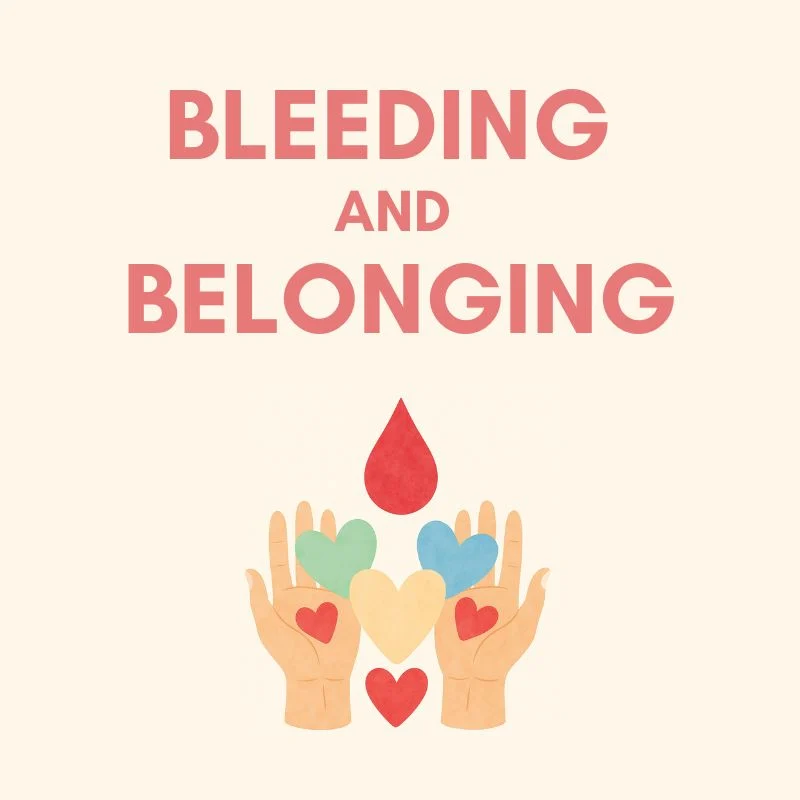
Bleeding and Belonging is a collection of poetry written by families affected by bleeding disorders.
The poems reflect on the emotional, social, and lived realities of living with a bleeding disorder, exploring how families make sense of both inheritance and identity, whilst navigating uncertainty and resilience.
The collection is available to read online.
Produced in collaboration with the charity Local Families with Bleeding Disorders.
The poetry was also featured in a recent Haemnet podcast ‘Veins, Verse, and Voices.’
The research builds on expertise at Brighton and Sussex Medical School that focusses on exploring how creative, arts-based, and participatory approaches can help us understand people’s experiences of health, care, and medicine.
A very personal project for me, and one that I hope can support efforts to develop more sensitive, patient-centered, bleeding disorders care.
The project has also recently received additional funding from the University of Sussex’s Arts and Humanities Research Council (AHRC) Impact Acceleration Account to produce a print-run of the books enabling the further dissemination of the poetry, and explore how engaging with patient-generated narratives might impact healthcare professionals’ learning and development.
If this is of interest, get in touch!”
Brighton and Sussex Medical School shared a post on LinkedIn:
“A new digital poetry collection, produced through research led by BSMS‘ Dr Rich Gorman, titled ‘Bleeding and Belonging‘, tries to understand more about the hopes, expectations, and worries of people affected by bleeding disorders.
Discover more about the collection.”
Stay updated with Hemostasis Today.
-
Sep 30, 2026, 01:52Javed Anees: DADA2 – When a Young Stroke Is More Than a Stroke
-
Sep 30, 2026, 01:51How a Venous Thrombus Becomes Revascularized – ISTH
-
Sep 29, 2026, 22:45Victor Agunyego: Paracetamol – The Most Common Drug We Underestimate
-
Sep 29, 2026, 22:42Nova Sinclair: Advancing the Future of Hematology – Meet Our 2027 Organizing Committee
-
Sep 29, 2026, 22:41Lorenz Räber: Intracoronary Imaging in PCI – Why, When, How, and Which Modality?
-
Sep 29, 2026, 22:31Selma Turkovic: Pleased to Deliver the Opening Presentation at Kingston Hospital
-
Sep 29, 2026, 22:31Miguel Teran: Ultrasound and Simulation in Arterial Blood Sampling
-
Sep 29, 2026, 22:28Mohammad Refaei: Navigating Your Career in Hematology From Training to Practice
-
Sep 29, 2026, 22:27Matteo Foschi: 10 Clinical Pearls for Antithrombotic Therapy in Secondary Stroke Prevention