


Rubi Stephani Hellwege: Why Two Patients With the Same Cardiac Output Can Be Completely Different
Rubi Stephani Hellwege, Intensive Care Medicine Physician in Specialty Cardiology Training at University Hospital Zurich, shared a post on LinkedIn about a recent article by Maurizio Cecconi et al., published in Intensive Care Medicine, adding:
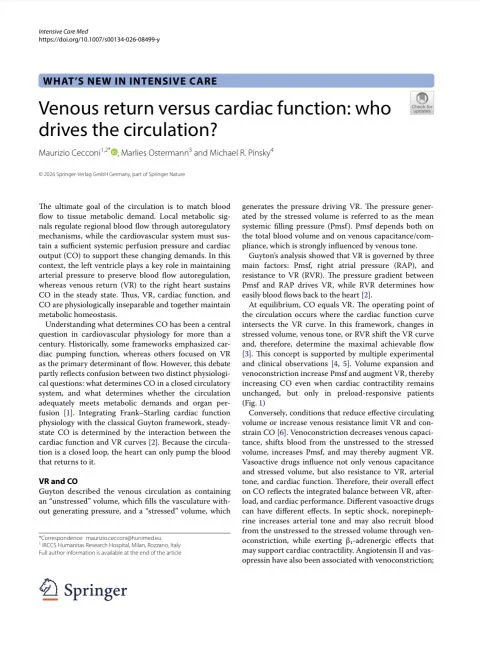
“Venous Return vs Cardiac Function: Who drives the circulation?
A fascinating new review by Cecconi, Ostermann and Pinsky revisits one of the oldest questions in cardiovascular physiology:
Does cardiac output depend primarily on the heart or on venous return?
The answer is: both.
The heart can only pump the blood that returns to it, but adequate organ perfusion also depends on the heart’s ability to generate pressure and sustain flow.
For me, the most important clinical message is that shock cannot be understood by looking at a single variable.
In daily practice we often focus on:
- Cardiac output
- Blood pressure
- LVEF
- CVP
But the circulation is an integrated system involving:
- Venous return
- Cardiac function
- Arterial tone
- Tissue perfusion
- Venous congestion
This is why two patients with the same cardiac output may have completely different physiology and outcomes.
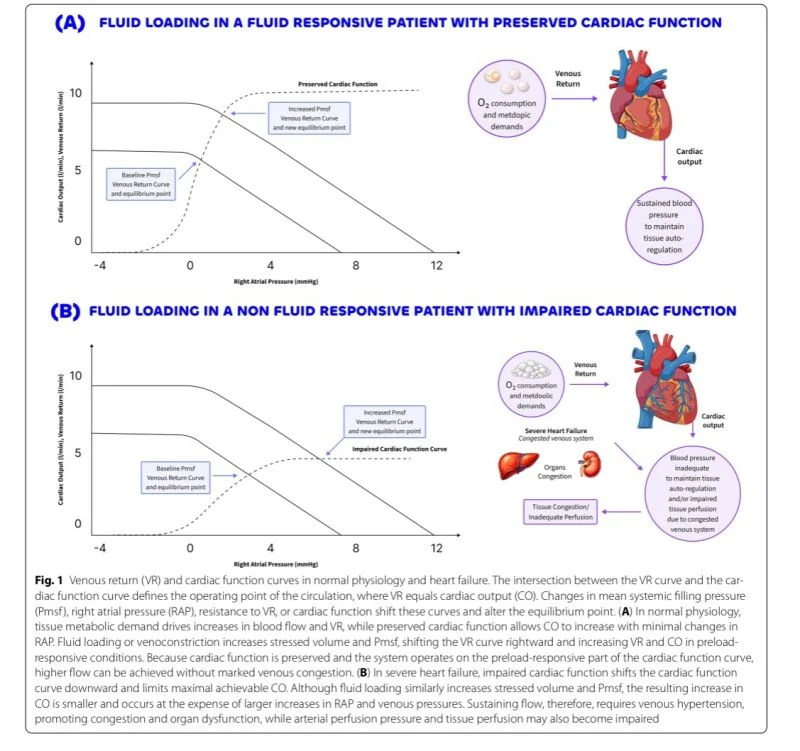
The figure in the paper beautifully illustrates something we see every day in the ICU:
A fluid challenge may increase cardiac output in a preload-responsive patient with preserved cardiac function.
The same fluid challenge in a patient with impaired cardiac function may mainly increase filling pressures, venous congestion, and organ dysfunction.
This is why I believe haemodynamic assessment should move beyond the question:
‘Will this patient increase stroke volume?’
and include:
‘Can this patient tolerate more volume?’
Perhaps this is also why one-size-fits-all haemodynamic protocols continue to struggle in critical care.
At the bedside we are not treating diagnoses.
We are treating physiology.”
Title: Venous return versus cardiac function: who drives the circulation?
Authors: Maurizio Cecconi, Marlies Ostermann, Michael R Pinsky
Stay updated with Hemostasis Today.
-
Sep 24, 2026, 18:43Hugh Nguyen: Honored to Accept the Friend of Singapore Red Cross Award
-
Sep 24, 2026, 18:42Titilope Fasipe: Proud to Support American Society of Hematology’s SCD Initiative
-
Sep 24, 2026, 18:34Ifeanyichukwu Ifechidere: Why Coagulation Samples Can Be “Too Valuable to Throw Away”?
-
Sep 24, 2026, 18:33Aswin K. Mohan: When a Superpower Hears the Call for Blood
-
Sep 24, 2026, 18:31Mercy Lung’aho: Anemia Is Not Only An Iron Problem
-
Sep 24, 2026, 18:29Nick Hanson: Before a Dementia Diagnosis Check Vitamin B12
-
Sep 24, 2026, 18:28Rachel McBryan: Nearly One in Five Older Canadians Has Low Vitamin B12
-
Sep 24, 2026, 18:27Kemal Karaagac: Early DOAC Initiation After Acute Ischaemic Stroke in Atrial Fibrillation
-
Sep 24, 2026, 18:26Mohammed A. AlOmar: What Characterizes Young Stroke in the UAE?