


Samwel Mikaye: Understanding D-Dimer in Clinical Practice
Samwel Mikaye, Medical Doctor at MSK, shared a post on LinkedIn:
”What is D-Dimer?
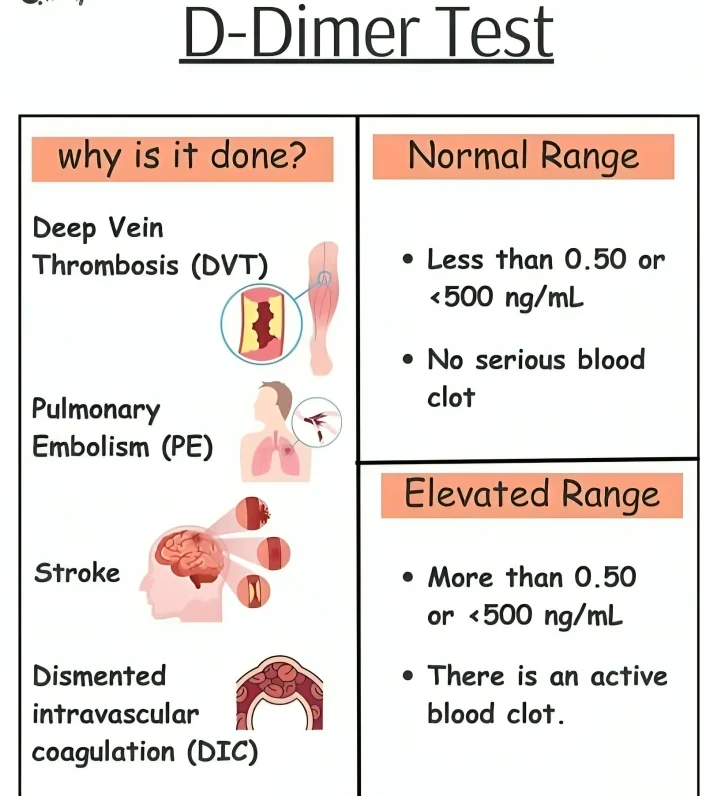
D-dimer is a protein fragment produced when a blood clot is broken down in the body. It is normally undetectable or very low in the blood, but levels rise when the body forms and breaks down clots.
It is used primarily as a lab test to help rule out clotting disorders.
Common Uses of D-Dimer Test
- Suspected Deep Vein Thrombosis (DVT) – Clots in deep veins, usually in legs.
- Pulmonary Embolism (PE) – Clots in the lungs.
- Disseminated Intravascular Coagulation (DIC) – Abnormal widespread clotting and bleeding.
- Sometimes used to monitor clot breakdown in known clotting conditions.
Interpretation
- Normal/Low D-dimer → Clotting disorder unlikely.
- High D-dimer → Suggests recent or ongoing clot formation and breakdown, but not specific. Many conditions can raise D-dimer:
- Infection
- Inflammation
- Recent surgery or trauma
- Liver disease
- Cancer
Important: A high D-dimer does not confirm a clot. Imaging (like Doppler ultrasound or CT scan) is usually needed to diagnose DVT or PE.
Advantages
- Quick blood test.
- Good for ruling out clots in low-risk patients.
Limitations
- Non-specific – many conditions can raise it.
- Not useful alone to diagnose a clot.
- Less reliable in elderly patients or those with chronic illnesses.
Think of D-dimer as a ‘smoke alarm’: a high level signals something may be wrong with clotting, but you need further tests to find the fire (actual clot).”
Other posts featuring Samwel Mikaye on Hemostasis Today.
-
Sep 23, 2026, 13:58The New B12 Diagnostic Algorithm: From Serum Cobalamin to Functional Deficiency
-
Sep 23, 2026, 13:56Noha Soror: Preparing for Hematology and Medical Oncology Board Certification
-
Sep 23, 2026, 13:46Ugochi Ogu: What Can Platelet Proteomics Reveal about Pain and Neurocognitive Vulnerability in Sickle Cell Disease?
-
Sep 23, 2026, 13:42Melissa Hollo: Connecting Obesity and Anemia for Earlier Maternal Risk Intervention
-
Sep 23, 2026, 13:16Beverley Hunt: Advances in Haemostatic Management of Postpartum Haemorrhage
-
Sep 23, 2026, 13:13Ioanna Mela: Recruiting a Research Associate on DNA nanotechnology
-
Sep 23, 2026, 13:04Ben Samelson-Jones: Do Gene Variants Drive PK Differences in FIX-Fusion and N9-GP Therapies?
-
Sep 23, 2026, 12:57Shelly Reed: Advocating for HTCs and CDC Funding with the Hemophilia Federation of America
-
Sep 23, 2026, 12:51Domenico Girelli: How Verona Hospital Transformed ED Anemia Care with Patient Blood Management