


When Hematocrit Exceeds 70 Percent: Challenges in Peripheral Blood Smear Evaluation and CBC Analysis – Seema Dawood
Seema Dawood, Medical Laboratory Technologist at The Aga Khan University Hospital, shared a post on LinkedIn:
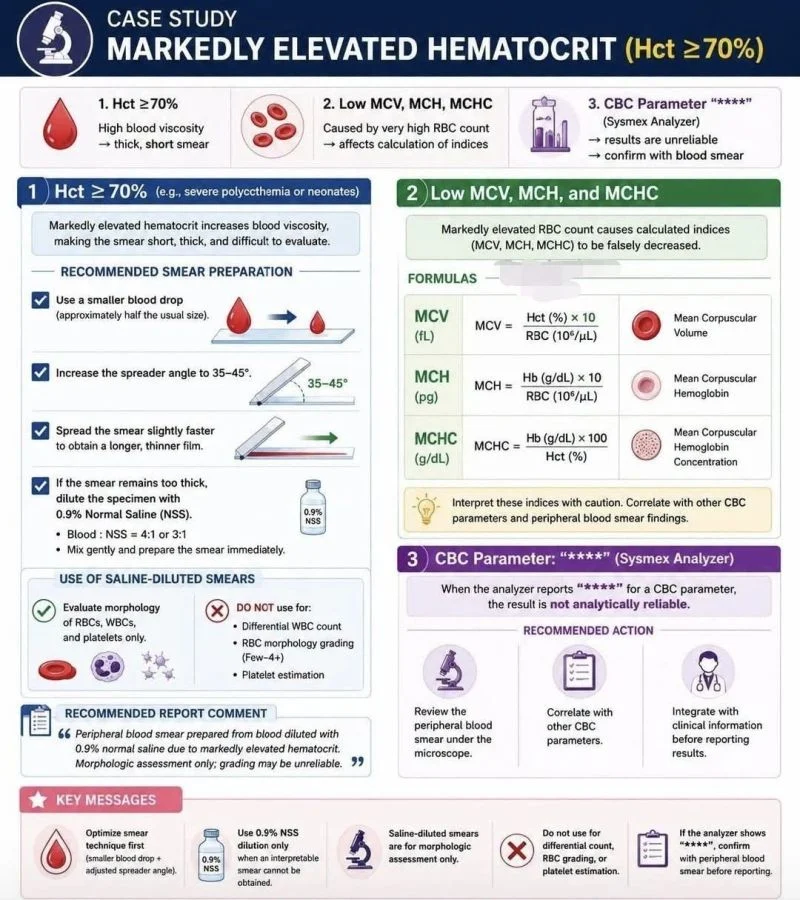
”Interesting Case Study: Markedly Elevated Hematocrit (Hct ≥70%)
1.Hct greater than or equal to 70 percent
(e.g., severe polycythemia or neonates)
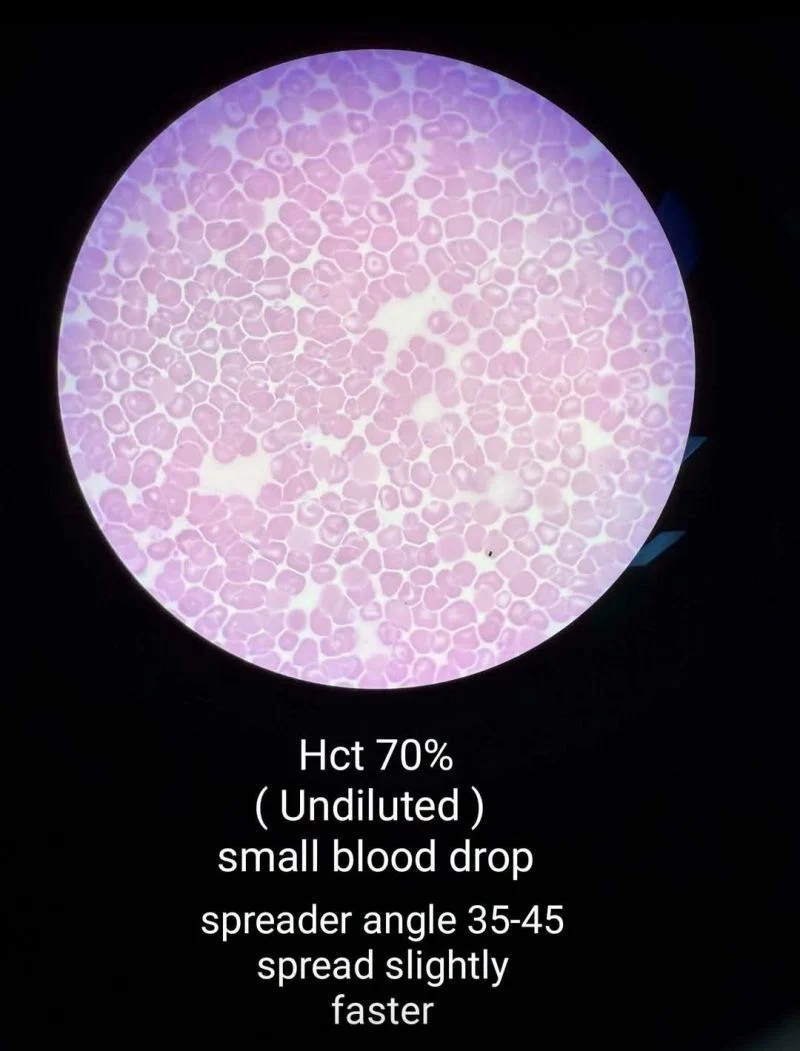
When hematocrit is 70 percent or higher, blood becomes highly viscous, resulting in a short, thick blood smear that is difficult to evaluate.
Recommended Blood Smear Preparation
- Reduce the blood drop size to approximately half of the usual amount.
- Increase the spreader slide angle to 35–45 degrees.
- Spread the blood slightly faster to obtain a longer and thinner smear.
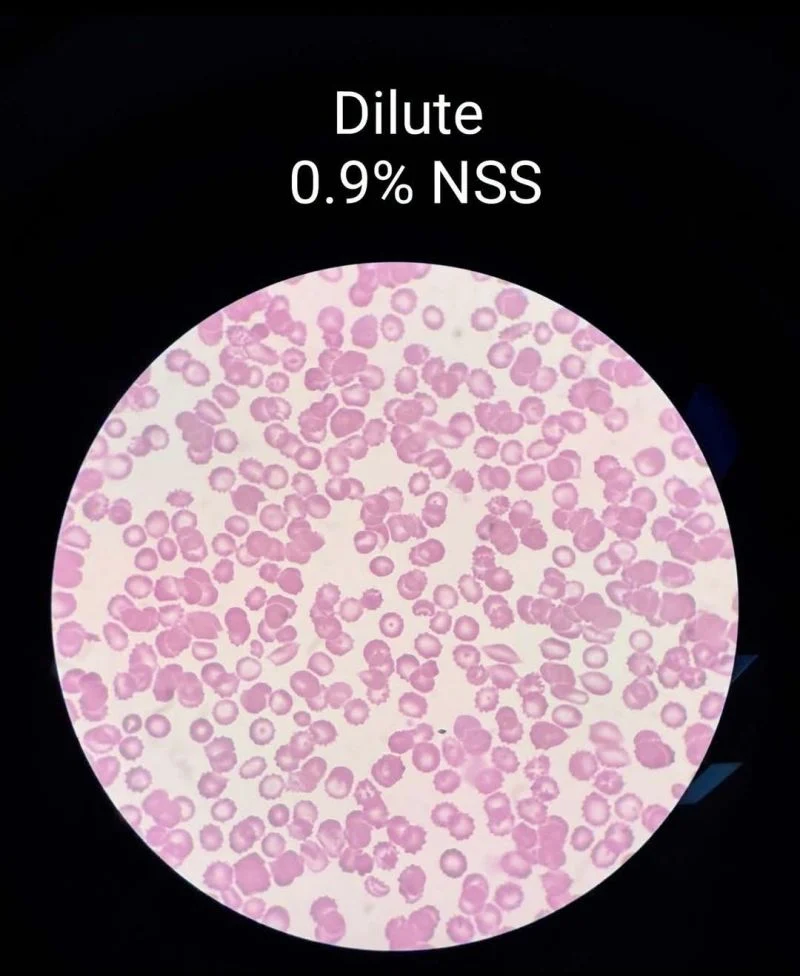
If the smear remains too thick, dilute the blood with 0.9% Normal Saline Solution (NSS).
Suggested dilution ratios:
- Blood to NSS = 4:1 or 3:1
- Mix gently and prepare the smear immediately.
Important Notes
A diluted blood smear should be used only for evaluating the morphology of:
- Red blood cells (RBCs)
- White blood cells (WBCs)
- Platelets
Do not use diluted smears for:
- Differential white blood cell count
- RBC morphology grading (Few– 4 plus)
- Platelet estimation
2. CBC Parameters
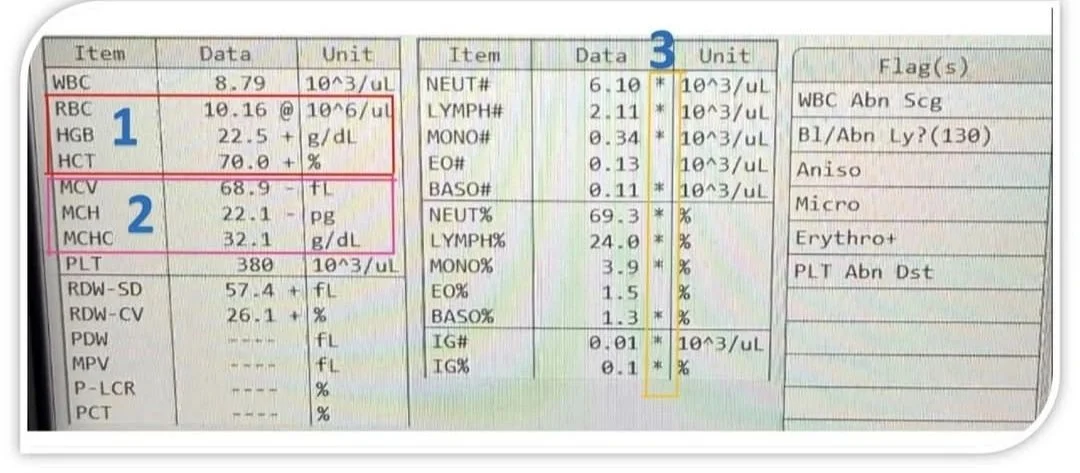
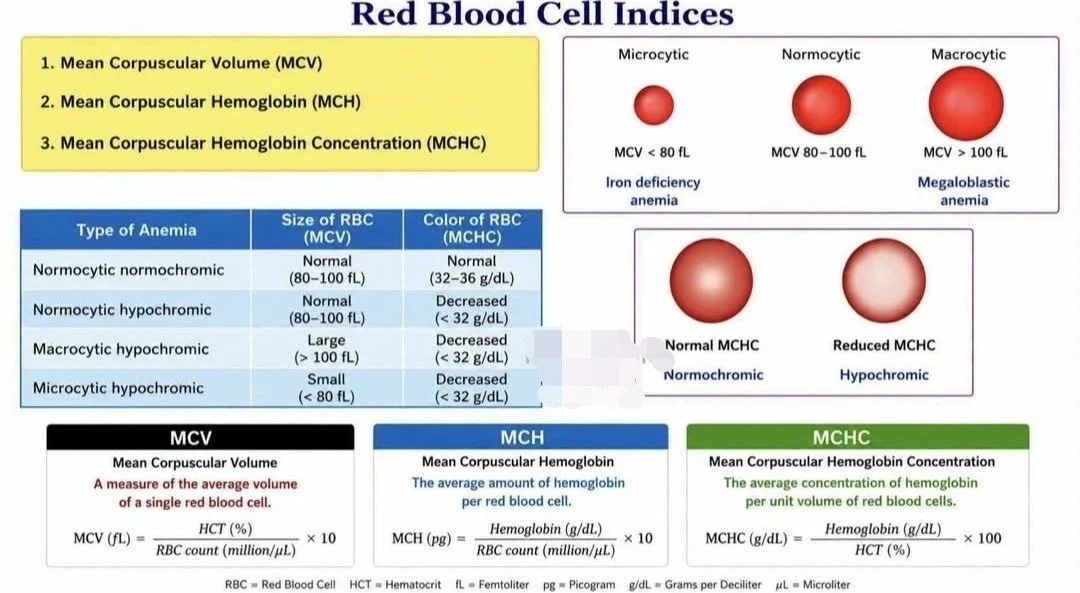
MCV, MCH, and MCHC may be falsely decreased in samples with extremely high RBC counts because the elevated RBC count can interfere with analyzer calculations.
These parameters should always be interpreted together with the complete CBC results and peripheral blood smear findings.
3. CBC Parameter: Instrument Flags (Reported as ****)
When a Sysmex analyzer displays a CBC parameter as “****”, it indicates that the instrument cannot reliably report that parameter.
The reported value should not be interpreted directly.
A peripheral blood smear must be examined microscopically, and the findings should be correlated with clinical information before reporting the result.
Key Messages
Optimize the blood smear preparation technique before considering sample dilution.
Use 0.9% Normal Saline Solution only when an adequate smear cannot be prepared.
Diluted smears are intended only for morphological evaluation.
When the analyzer reports “****”, always confirm the findings with a peripheral blood smear before issuing the final report.”
See more in the gallery.
Other posts featuring Seema Dawood on Hemostasis Today.
-
Oct 10, 2026, 11:32Thrombus Age Assessment Through Advanced Imaging and Biomarkers
-
Oct 10, 2026, 10:55Tzu-Fei Wang: How Should We Approach Anticoagulation for Cancer-Associated Gonadal and Renal Vein Thrombosis?
-
Oct 10, 2026, 10:50Robert Sidonio Joins ATHN Advanced Clinical Research Fellowship Program
-
Oct 10, 2026, 10:45Federica Fogacci: Co-Moderating at CA Meet 2026 in Padua – Elevating Lifestyle Interventions in Cardiology
-
Oct 10, 2026, 10:40Juan Cristóbal Morales Muñoz: Pharmacokinetic Profiling of Factor VIII Concentrates in Chilean Patients
-
Oct 10, 2026, 10:32Randall Schaefer: What Do Blood Product Wastage Rates Really Tell Us in Prehospital Care?
-
Oct 10, 2026, 10:26Simone Strasser: ROTEM-Guided Transfusion Cuts Blood Product Use in Patients with Cirrhosis
-
Oct 10, 2026, 10:18Jérôme S.: WHO Launches Global Roadmap to Combat Hypertensive Disorders of Pregnancy
-
Oct 10, 2026, 10:07Maha Othman: Look Forward to an Amazing ISTH 2027 in Vancouver!