


Spelile Mutupira: Why Hemolysis Remains a Major Laboratory Challenge
Spelile Mutupira, Medical Laboratory Technologist, shared a post on LinkedIn:
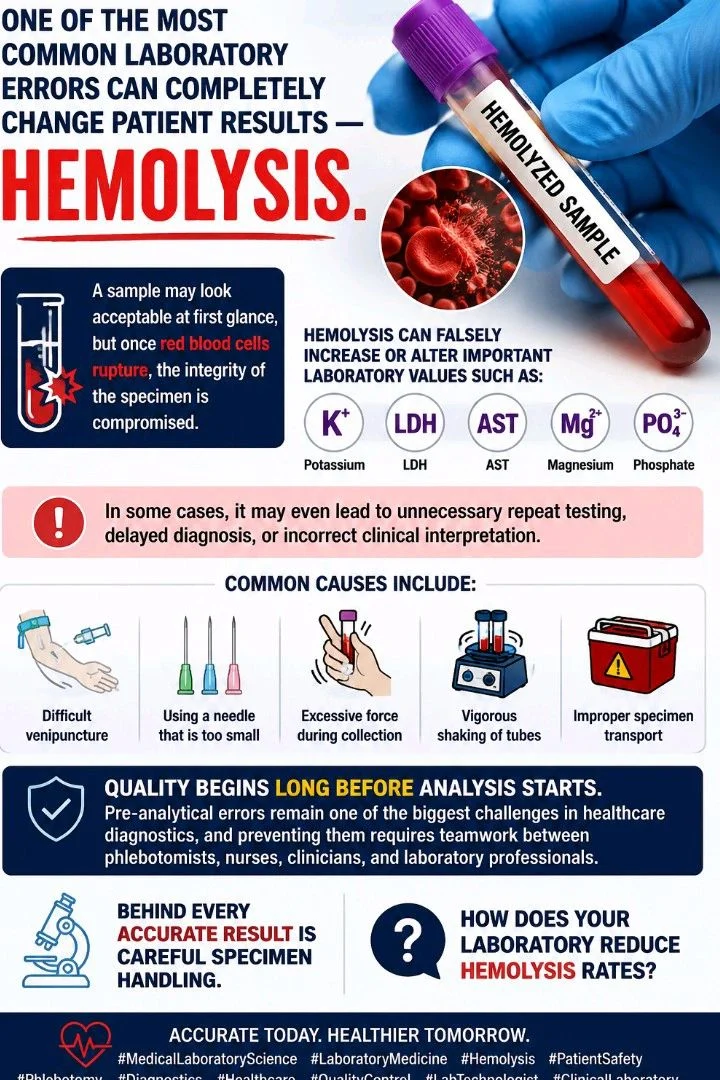
“One of the most common laboratory errors can completely change patient results — hemolysis.
A sample may look acceptable at first glance, but once red blood cells rupture, the integrity of the specimen is compromised.
Hemolysis can falsely increase or alter important laboratory values such as:
- Potassium
- LDH
- AST
- Magnesium
- Phosphate
In some cases, it may even lead to unnecessary repeat testing, delayed diagnosis, or incorrect clinical interpretation.
Common causes include:
- Difficult venipuncture
- Using a needle that is too small
- Excessive force during collection
- Vigorous shaking of tubes
- Improper specimen transport
This highlights an important truth in laboratory medicine:
Quality begins long before analysis starts.
Pre-analytical errors remain one of the biggest challenges in healthcare diagnostics, and preventing them requires teamwork between phlebotomists, nurses, clinicians, and laboratory professionals.
Behind every accurate result is careful specimen handling.
How does your laboratory reduce hemolysis rates?”
Stay updated with Hemostasis Today.
-
Oct 20, 2026, 16:51Suzan Nakasendwa: A Growing Stroke Challenge in Uganda
-
Oct 20, 2026, 16:38Steve Moon: How Does Smoking Cessation Duration Affect Ischemic Stroke Risk
-
Oct 20, 2026, 16:25Cedrice Mentor: Reducing Platelet Wastage Through Cold Storage
-
Oct 20, 2026, 16:09Thirunavukkarasu Angappan: Can a Purified Fibrinogen Concentrate Replace Cryoprecipitate
-
Oct 20, 2026, 16:01Kalyan Roy: Platelet Conservation Through Evidence-Based Transfusion Practice
-
Oct 20, 2026, 15:28Stacy E. Croteau: 33 Countries, One Mission – Better Bleeding Disorder Care
-
Oct 20, 2026, 15:19Teresa Barnes: What Does a Pulmonary Embolism Mean for Jalen Hurts?
-
Oct 20, 2026, 15:04Laura S.: Could Speaking Up Prevent Maternal Deaths from Thrombosis?
-
Oct 20, 2026, 14:44Pete Stibbs: VTE in Professional Athletes – When Fitness Is Not Enough