

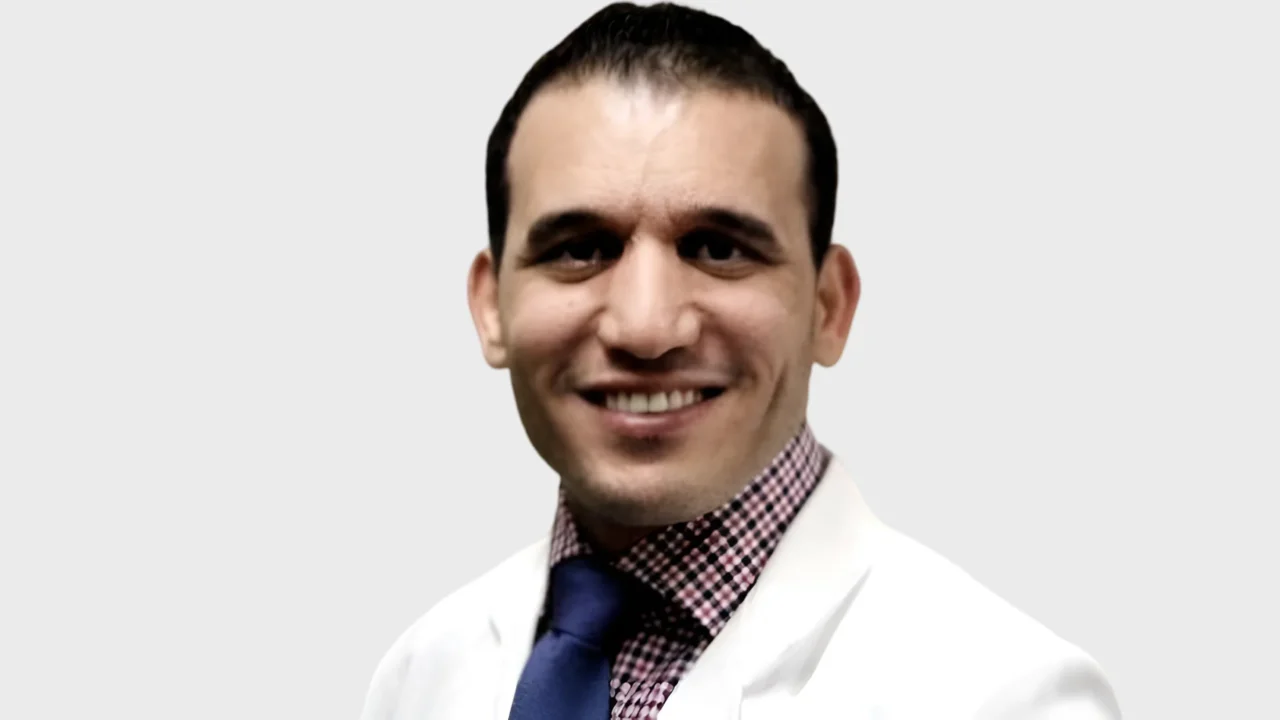
Tarek Dakakni: Mobile Stroke Units Make Treatment Faster, Clearer, and Smarter
Tarek Dakakni, Medical Director Neurosciences at Northeast Georgia Health System (NGHS), shared on LinkedIn:
”Innovation is making stroke care faster, clearer, and smarter.
Now we have to train our systems to keep up.
Technology is no longer the barrier. I think that adoption is.
If we want to save more brain with faster stroke treatment, we must align EMS, nurses, stroke teams, and leaders around one idea: Bring care to the patient, not the patient to the care.
Years ago, when I saw a portable CT scanner roll into a critically ill patient’s room for the first time, no transport team, no elevators, no delays, I started thinking, why move a fragile brain to technology when we can move technology to the brain?
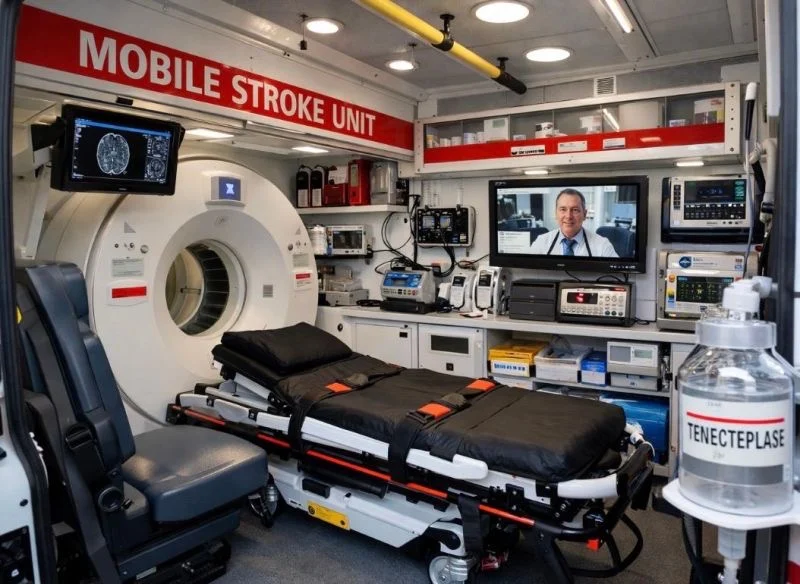
That philosophy is now real in the field through the Mobile Stroke Unit (MSU).
In 2026, new ASA/AHA recommendations formally recognize MSUs as improving outcomes by shortening time to diagnosis and treatment.
A Mobile Stroke Unit is a mini primary stroke center on wheels:
- On-board CT
- Tele-neurology
- Point-of-care labs
- Immediate thrombolytics treatment for eligible patients
Tenecteplase, which is now officially endorsed, makes this even faster.
Unlike alteplase, tenecteplase is a single IV bolus, not a one hour infusion.
That means stroke treatment can begin immediately in the field, not after hospital arrival.
Smarter triage. Faster intervention.
With MSU diagnosis and treatment:
Instead of Home to Primary Stroke Center to Transfer
We can move directly to Home to MSU treatment to Thrombectomy-capable or Comprehensive Stroke Center
This:
- Saves time, therefore, more eligible patients
- Preserves more neurons
- Reduces cost
- Expands access to thrombectomy and thrombolysis
And for hemorrhage?
MSUs allow us to:
- Diagnose intracranial hemorrhage immediately, and triage accordingly
- Start targeted blood pressure control
- Reduce risk of hematoma expansion before hospital arrival
The future is already here.
Portable MRI, AI-driven imaging, and rapid diagnostics are emerging to make bedside stroke diagnosis faster and more precise than ever.
This is not replacing clinicians.
It is amplifying us, helping to make treatment more efficient and faster, which is essential in stroke care.
Now, and more than ever, I’m very excited about the future of stroke care, where innovation, AI, and mobile technology make us faster, safer, and more human.
The question is: What would it take for any system to fully embrace this future?
Because every minute we save is not just brain, it’s life, identity, and independence.”
Stay updated with Hemostasis Today.
-
Sep 30, 2026, 01:52Javed Anees: DADA2 – When a Young Stroke Is More Than a Stroke
-
Sep 30, 2026, 01:51How a Venous Thrombus Becomes Revascularized – ISTH
-
Sep 29, 2026, 22:45Victor Agunyego: Paracetamol – The Most Common Drug We Underestimate
-
Sep 29, 2026, 22:42Nova Sinclair: Advancing the Future of Hematology – Meet Our 2027 Organizing Committee
-
Sep 29, 2026, 22:41Lorenz Räber: Intracoronary Imaging in PCI – Why, When, How, and Which Modality?
-
Sep 29, 2026, 22:31Selma Turkovic: Pleased to Deliver the Opening Presentation at Kingston Hospital
-
Sep 29, 2026, 22:31Miguel Teran: Ultrasound and Simulation in Arterial Blood Sampling
-
Sep 29, 2026, 22:28Mohammad Refaei: Navigating Your Career in Hematology From Training to Practice
-
Sep 29, 2026, 22:27Matteo Foschi: 10 Clinical Pearls for Antithrombotic Therapy in Secondary Stroke Prevention