

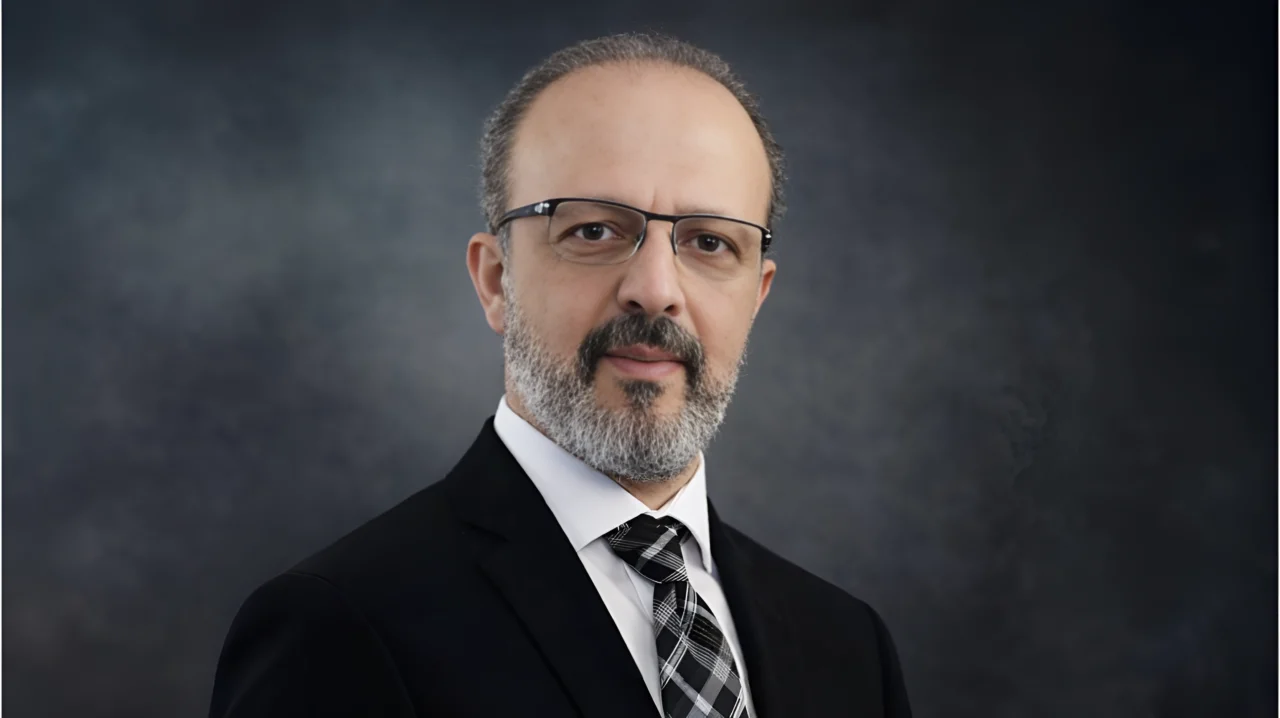
Reza Shojaei: Beyond the Blood – Plasma Divide
Reza Shojaei, Chief Operating Officer at Canadian Plasma Resources, shared a post on Linkedln:
“Beyond the Blood–Plasma Divide
What Blood Operators Can Learn from the Private Plasma Sector, and Vice Versa
A global, practical playbook for resilience, trust, and scale in 2026
The blood and plasma sectors have historically operated in parallel universes: different funding models, different narratives, different risk tolerances. But demand for plasma-derived medicinal products (PDMPs) continues to rise, and supply chains remain highly concentrated and geopolitically sensitive.
The result: blood and plasma organizations are increasingly solving the same problem from different angles, how to build a system that is trusted, scalable, and resilient.
This issue of Blood and Plasma Pulse focuses on a simple idea: the best operators will borrow the best practices, regardless of whether they come from ‘public blood’ or ‘private plasma.’
1) Why this conversation matters now: the world is still structurally dependent
Despite efforts to expand domestic collection in many regions, the global source plasma supply remains heavily concentrated. A widely cited analysis shows the United States contributed ~71% of global source plasma supply (2017), reflecting how donor compensation, infrastructure density, and operating efficiency can shape supply at scale (Hartmann et al., 2020).
Meanwhile, regulators are tightening expectations around donor protection and quality systems. In the EU, the new Substances of Human Origin (SoHO) Regulation (published in July 2024) modernizes safety and oversight standards, reinforcing voluntary donation principles while allowing compensation structured to avoid donor financial disadvantage (European Commission, 2024).
Translation: supply resilience is not just a collection problem; it’s a governance, compliance, and capacity problem.
2) What blood operators can learn from the private plasma sector
A. ‘Scale is a capability,’ not a hope
Large plasma operators treat scale like an engineered system: standardized site design, repeatable staffing models, tight cycle-time management, and relentless performance measurement. This is why the private plasma model is often able to expand capacity quickly when economics and regulation permit.
Global example: The US commercial model built a dense collection footprint over time; this concentration is a key reason the US plays an outsized role in global PDMP supply (Hartmann et al., 2020).
Takeaway for blood systems: Even without adopting compensation, blood operators can adopt operational industrialization, standard work, throughput dashboards, appointment flow engineering, and donor-experience design.
B. Donor lifecycle management powered by analytics
Plasma operations tend to track the donor journey with granular metrics: deferral patterns, lapse risk, visit frequency, and center-level productivity. This supports practical interventions (e.g., targeted reactivation, smarter appointment allocation, staffing matched to visit curves).
Why it matters: Many blood systems still rely heavily on campaigns and seasonal pushes. Analytics can complement that, moving from ‘recruitment bursts’ to ‘retention engines.’
C. Faster piloting and execution
Private operators often have shorter decision loops: test → measure → iterate → deploy. In a world of evolving eligibility rules, labor constraints, and donor expectations, agility is now a strategic advantage.
3) What the private plasma sector can learn from blood operators
A. Trust isn’t marketing, it’s infrastructure
Blood operators have long operated under intense public scrutiny and have developed strong norms around transparency, stewardship, and public accountability. This becomes increasingly relevant as plasma expands into new jurisdictions where social license is not guaranteed.
Global context: WHO continues to emphasize that stable national blood systems should be built on regular voluntary, unpaid donors, and frames voluntary donation as foundational to safe, sustainable supply (World Health Organization, 2025).
Even where compensation exists, public confidence remains central: donor health safeguards, clear communication, and credible oversight.
B. System-wide stewardship: equity, resilience, and long-term sustainability
Public blood systems tend to plan for population needs rather than just site-level optimization. That ‘systems thinking’ is increasingly relevant for plasma operators facing:
- supply concentration risk
- cross-border dependencies
- inspection intensity
- and the need to protect donor health at scale
C. Crisis readiness and coordination
Blood services have deep experience coordinating during shocks (pandemic constraints, weather disruptions, sudden demand shifts). Plasma supply chains are global and commercially interconnected, and can benefit from adopting similar playbooks: surge planning, mutual aid frameworks, and scenario-based inventory governance.
4) Where the worlds are converging: real examples from around the world
The UK’s ‘plasma for medicines’ reset: rebuilding domestic capability
The UK has restarted domestic production of plasma-derived medicines for NHS patients after decades of reliance on imports. NHS communications note that over 250,000 litres of volunteer-donated plasma have been collected and shipped for manufacturing, with products returning to the UK for clinical use (NHS England, 2025). NHSBT also frames this as rebuilding domestic capability amid global PDMP shortages (NHS Blood and Transplant, 2025).
Lesson: Even voluntary systems are adopting a supply-security playbook historically associated with ‘industrial’ plasma models; capacity building, manufacturing partnerships, and long-range contracting.
Europe’s ongoing debate: incentives, ethics, and resilience
In Europe, incentive structures vary by country, and peer-reviewed work documents that financial compensation for plasma donation is available in several countries (e.g., Germany, Austria, Czechia, Hungary, and others) (Koch et al., 2024). At the same time, the European Blood Alliance has continued to argue for voluntary, unpaid donation as a pillar of quality, donor health, and resilience (European Blood Alliance, 2025).
Lesson: The debate is moving away from slogans and toward design details: donor protection, data transparency, and how to prevent unintended harm while meeting patient needs.
Canada’s patchwork reality: provincial models and practical constraints
In Canada, provinces and territories determine whether plasma donors may be compensated, resulting in a mixed national landscape (Health Canada, 2023). Canadian Blood Services has also publicly described contractual approaches designed to comply with provincial legislation, including constraints on site operations and intended domestic use (Canadian Blood Services, 2024).
Lesson: Policy design and procurement structures matter as much as donor recruitment especially where legal frameworks differ by jurisdiction.
5) A shared agenda: five ‘cross-sector’ best practices worth copying immediately
Whether you run a blood operator, a plasma network, a fractionation partner, or a health authority, these are the practical areas where convergence creates value:
- Donor safety and outcomes monitoring as a first-class KPI (not just collections and yield).
- Data transparency dashboards (deferrals, adverse events, retention, and capacity constraints).
- Quality-system scalability (training, deviation management, CAPA effectiveness, inspection readiness).
- Supply-security contracting (manufacturing access, inventory strategy, contingency planning).
- Public trust architecture (clear ethics framing, oversight clarity, donor communications that build confidence).
Closing question
If blood and plasma operators exchanged playbooks more openly, what would change first: donor retention, compliance performance, or national supply resilience?
If you’re comfortable, comment with your view:
- What should blood operators learn from private plasma collectors?
- What should private plasma collectors borrow from public blood systems?
References
- Canadian Blood Services. (2024, April 11). Canadian Blood Services’ statement on paid versus unpaid plasma donors.
- European Blood Alliance. (2025, May 8). Blood is a gift: European Blood Alliance position paper on voluntary unpaid donation (PDF).
- European Commission. (2024). New EU rules on substances of human origin (SoHO).
- Elias, J. J., et al. (2024). Quality and safety for substances of human origin (discussion of SoHO principles and compensation framing).
- Hartmann, J., Klein, H. G., & others. (2020). Supply and demand for plasma-derived medicinal products. Vox Sanguinis.
- Health Canada. (2023). Plasma collection—Question Period notes (provincial/territorial approaches to donor compensation).
- Koch, E., et al. (2024). Incentives for plasma donation (overview of compensation/incentive practices across Europe). Vox Sanguinis.
- NHS Blood and Transplant. (2025). The plasma for medicines programme.
- NHS England. (2025, March 6). For the first time in a generation UK donations of blood plasma are being made into medicines.
- World Health Organization. (2025, May 30). Blood safety and availability (fact sheet).
- World Health Organization. (n.d.). Voluntary non-remunerated blood donation.”
Find more posts featuring Reza Shojae on Hemostasis Today.
-
Oct 7, 2026, 16:44Amor Salah: 2026 NCS/SCCM Guidelines for Managing Antithrombotic-Associated ICH
-
Oct 7, 2026, 16:04NETs in Thrombosis: From Mechanism to Therapeutic Target
-
Oct 7, 2026, 15:28Amir Samimi: Prognostic Value of Platelet Count in Resected HNSCC
-
Oct 7, 2026, 15:21Eloïse Laouenan: Bridging Immunity and Thrombosis in MVTE
-
Oct 7, 2026, 15:10Uthra Sundaram: Honouring Donors During International Plasma Awareness Week
-
Oct 7, 2026, 15:04Daniel Victor Ortigoza: Should Frail Older Patients With AF Switch From VKA to DOACs?
-
Oct 7, 2026, 14:53Susan Noone: Donor Turned Recipient Shares Lifesaving Transfusion Story
-
Oct 7, 2026, 14:49Aimee Burtenshaw: The Impact of the Infected Blood Inquiry on Hospital Transfusion Laboratories
-
Oct 7, 2026, 14:41Vikash Jaiswal: Does Timing Matter for Calcium in Pre-Eclampsia Prevention?