


Tareq Abadl: Differentiating Cold Agglutination from Hemolysis
Tareq Abadl, Medical Laboratory Specialist and Director of the Blood Bank at Dr. Abdelkader Al-Mutawakkil Hospital, shared a post on LinkedIn:
“Differentiating Cold Agglutination from Hemolysis.
1.Cold Agglutination
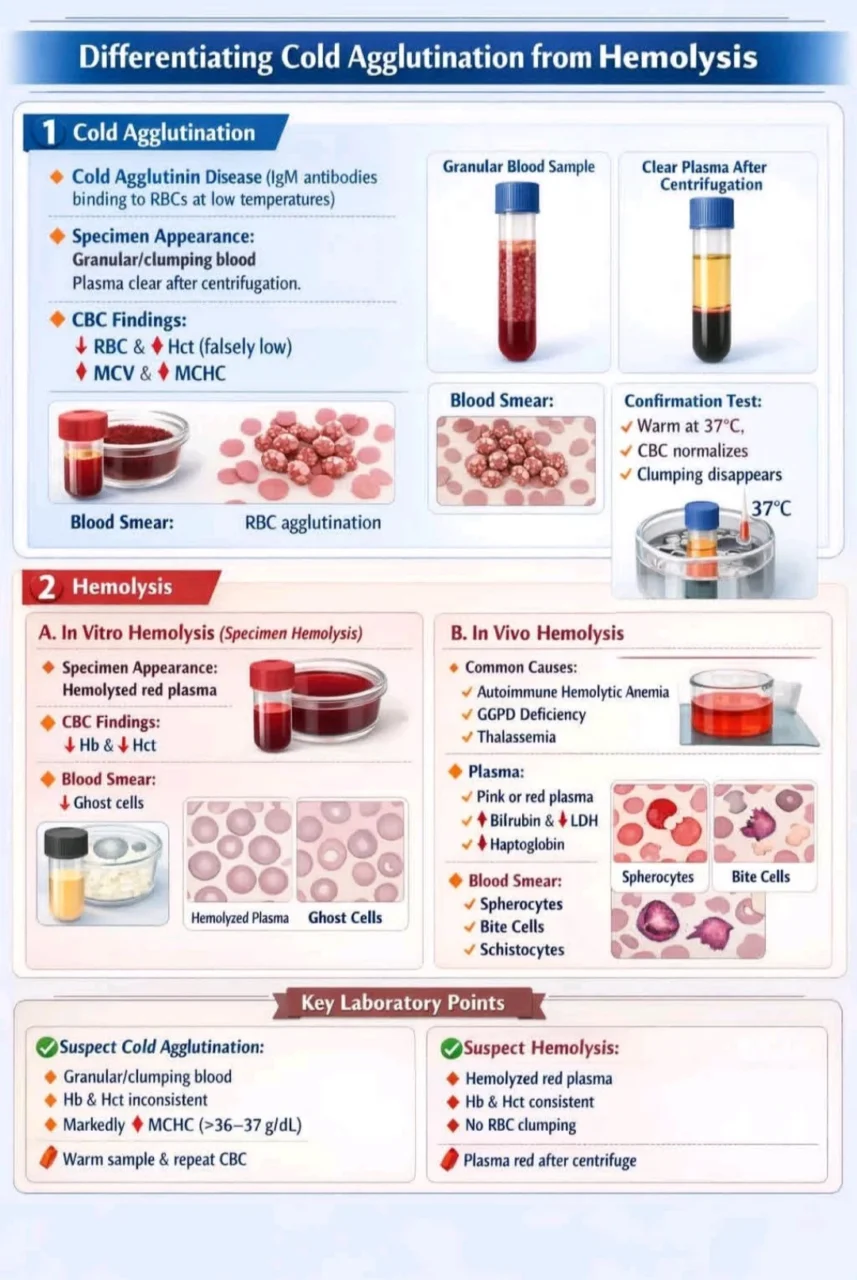
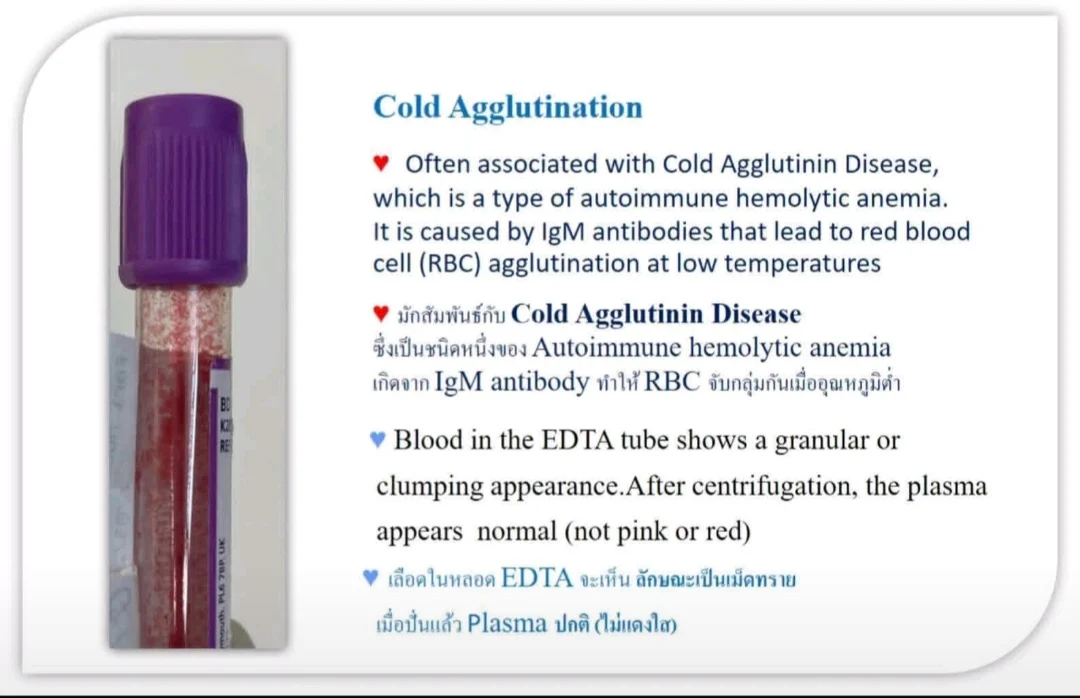
Cold agglutination is commonly associated with Cold Agglutinin Disease, a type of autoimmune hemolytic anemia caused by IgM antibodies that bind to red blood cells (RBCs) at low temperatures, leading to RBC clumping.
Specimen Appearance
- EDTA blood shows a granular or clumping appearance
- After centrifugation, the plasma remains clear and normal (not red)
CBC Findings
- Decreased RBC count (falsely low)
- Decreased hematocrit (Hct)
- Hemoglobin (Hb) remains normal or near normal
- Hb and Hct are inconsistent
- MCV falsely increased
- MCHC falsely increased
Cause: The analyzer counts clumped RBCs as a single cell, producing erroneous results.
Blood Smear Findings
- RBCs appear in irregular clumps (agglutination)
Confirmation Test
- Warm the specimen at 37°C for 15–30 minutes
Re-analyze CBC:
- CBC parameters return closer to normal
- RBC clumping disappears on smear
2.Hemolysis
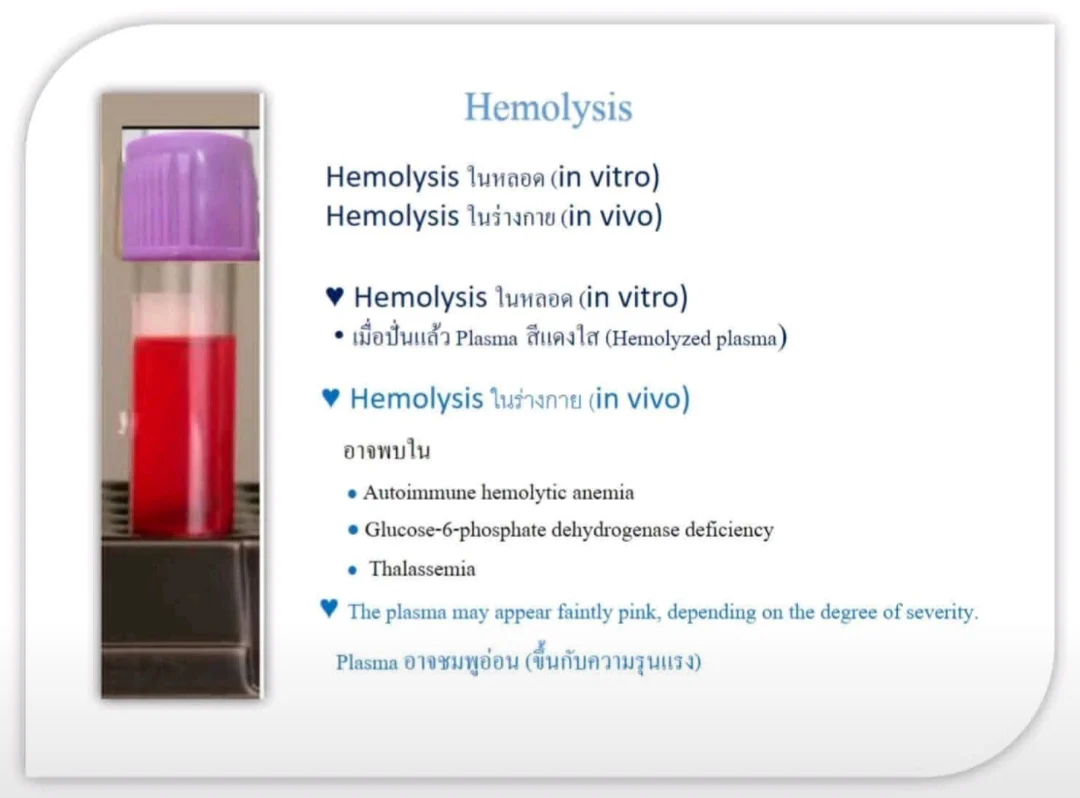
Hemolysis refers to the destruction of RBCs and can occur in vitro (in the tube) or in vivo (in the patient).
A. In Vitro Hemolysis (Specimen Hemolysis)
Specimen Appearance
- Plasma appears clear red after centrifugation (hemolyzed plasma)
- No granular or clumping appearance
CBC Findings
- Hb may decrease slightly
- Hct decreases proportionally
- Hb and Hct remain consistent
Blood Smear
- May see ghost cells
- No agglutination
B. In Vivo Hemolysis
Commonly seen in conditions such as:
- Autoimmune hemolytic anemia
- G6PD deficiency
- Thalassemia
Plasma Findings
- Plasma may appear pink
- Increased bilirubin
- Increased LDH
- Decreased haptoglobin
Blood Smear Findings
- Spherocytes – autoimmune hemolytic anemia
- Bite cells – G6PD deficiency
- Schistocytes – fragmentation hemolysis
Key Laboratory Points (Very Important)
Suspect Cold Agglutination if:
- Granular/clumping blood appearance
- Hb and Hct are inconsistent
- Markedly high MCHC (more than 36–37 g/dL)
Action:
- Warm the sample at 37 degrees Celsius and repeat CBC
Suspect Hemolysis if:
- Plasma is red after centrifugation
- Hb and Hct remain consistent
- No RBC clumping on smear”
More posts featuring Tareq Abadl on Hemostasis Today.
-
Sep 19, 2026, 08:51Zia Ullah Shah: Advancing Early Diagnosis of Wilson Disease With AI and Biomarkers
-
Sep 19, 2026, 03:15Paulus Kirchhof: Europe’s Safe Hearts Plan to Reduce Cardiovascular Mortality
-
Sep 19, 2026, 03:10James Smith: Brain Training and Exercise for Cognitive Recovery After Stroke
-
Sep 19, 2026, 03:03Lesley Van Wyk: ASH Releases New Iron Deficiency Diagnosis Guidelines
-
Sep 19, 2026, 02:53Francisco Chacón-Lozsán: Acute Ischemic Stroke in 2026 – Expanding the Treatment Window
-
Sep 19, 2026, 01:53Thomas Dayspring: Understanding Genome and Lipid Interactions in Lipidology
-
Sep 19, 2026, 01:47Abdurrahman Tufan: Combination Targeted Therapy in Refractory Systemic Autoinflammatory Diseases
-
Sep 19, 2026, 01:44Patrick James Lynch: Mother of a Thousand Sons Premieres at BDC 2026
-
Sep 19, 2026, 01:41Genetic Fate Mapping Reveals Endothelial Cells During Venous Thrombus Resolution – RPTH Journal