


Tareq Abadl: Massive Transfusion – The Hidden Citrate Risk
Tareq Abadl, Medical Lab Specialist, shared a post on LinkedIn:
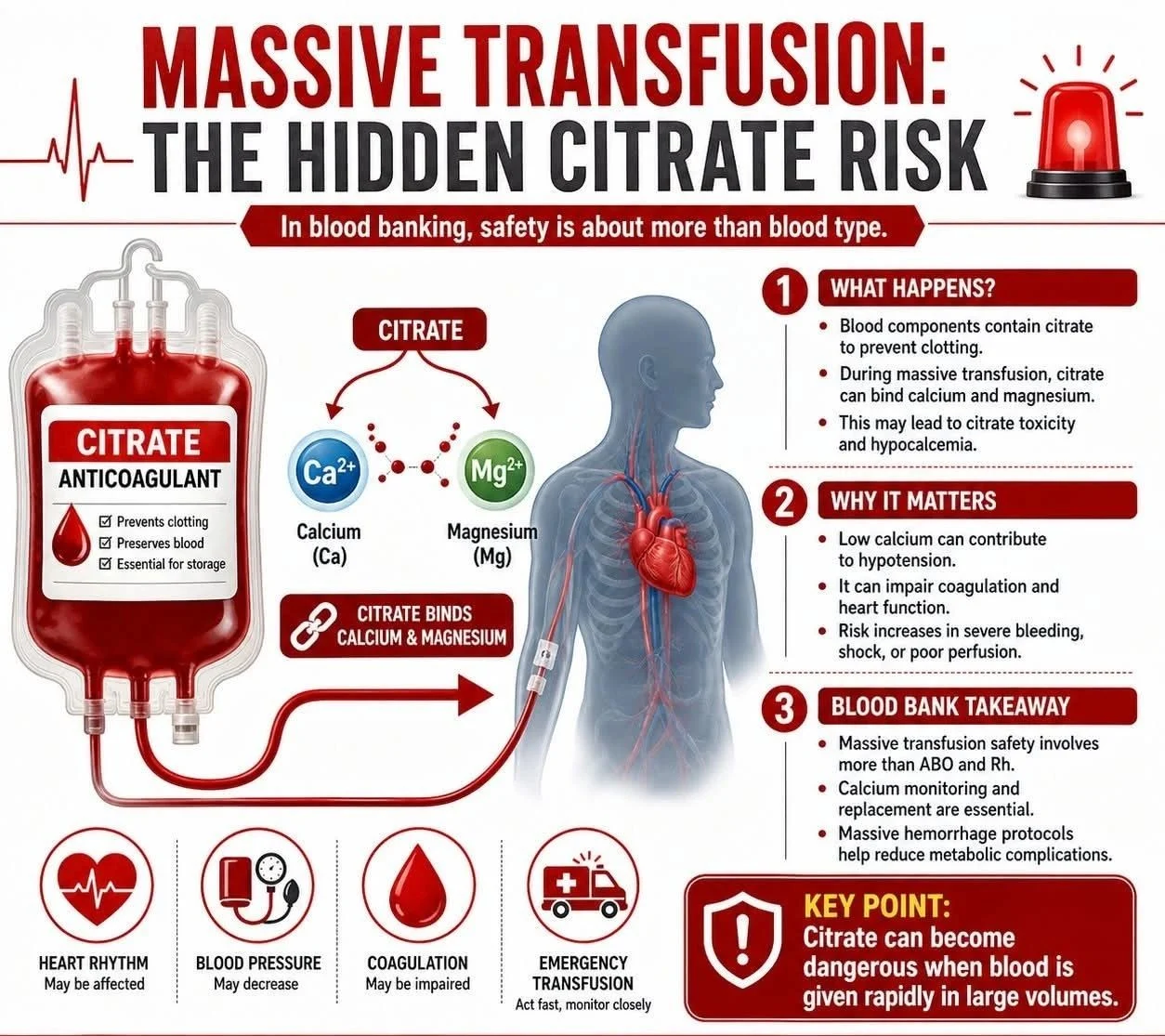
“Did you know that during massive transfusion, one hidden danger is not the blood type – but the anticoagulant inside the blood bag?
Blood components are stored with citrate to prevent clotting.
During massive transfusion, large amounts of citrate can bind calcium and magnesium in the patient’s bloodstream, leading to citrate toxicity and hypocalcemia.
Why does this matter?
Because calcium is critical for:
- Cardiac contractility
- Coagulation pathways
- Neuromuscular function
- Cellular stability.
When citrate accumulates faster than the body can metabolize it, patients may develop:
- Hypotension
- Reduced ventricular function
- Arrhythmias
- Coagulopathy
- Tetany or increased neuromuscular excitability.
Under normal conditions, citrate is rapidly metabolized through the Krebs cycle, mainly by the liver, kidneys, and skeletal muscle. But in trauma, shock, hypothermia, liver dysfunction, or poor tissue perfusion, citrate clearance decreases significantly – making toxicity more likely during rapid transfusion.
An important point in transfusion medicine:
- Hypocalcemia in massive transfusion is often dilutional and citrate-related at the same time.
That is why modern Massive Transfusion Protocols (MTPs) emphasize:
- Monitoring ionized calcium
- Early calcium replacement
- Close assessment of coagulation and electrolytes
Prevention of the ‘lethal triad’:
- Hypothermia
- Coagulopathy
- Acidosis.
Another interesting blood bank fact:
- Plasma and platelets usually contain more citrate than packed RBCs, so the risk may increase when large amounts of these components are transfused rapidly.
This is a powerful reminder that transfusion safety is not only about ABO and Rh compatibility.
Blood bank science also involves understanding metabolic, electrolyte, and coagulation complications during emergency transfusion support.”
Other posts featuring Tareq Abadl on Hemostasis Today.
-
Sep 17, 2026, 20:38Konstantinos Bistas: Reduced Circulating Tregs in Pediatric Chronic Neutropenia
-
Sep 17, 2026, 15:33Gopal Patidar: Honoured to Contribute to the ASFA 2026 Guidelines for Therapeutic Apheresis
-
Sep 17, 2026, 20:36Cosima C. Hoch: Developing a 3D Organotypic Co-Culture Model for Pleomorphic Adenoma
-
Sep 17, 2026, 20:19Riten Kumar: Boston Children’s Hospital Ranked No. 1 in Seven Pediatric Specialties
-
Sep 17, 2026, 20:17Katrina Snow: Whole Blood or Component Therapy – Which Would You Choose?
-
Sep 17, 2026, 16:30Daria Camilli: Empowering Bleeding Disorder Advocacy Through Health Economics
-
Sep 17, 2026, 16:17Mehran Ghasemzadeh: Platelet NK Cell Crosstalk in Advanced Coronary Artery Disease
-
Sep 17, 2026, 16:16Barbara Adams Krolak: Do GLP-1s Affect Blood Clot Risk?
-
Sep 17, 2026, 15:46Heghine Khachatryan: Clinical Context at the Core of Thrombosis and Thrombophilia Management