

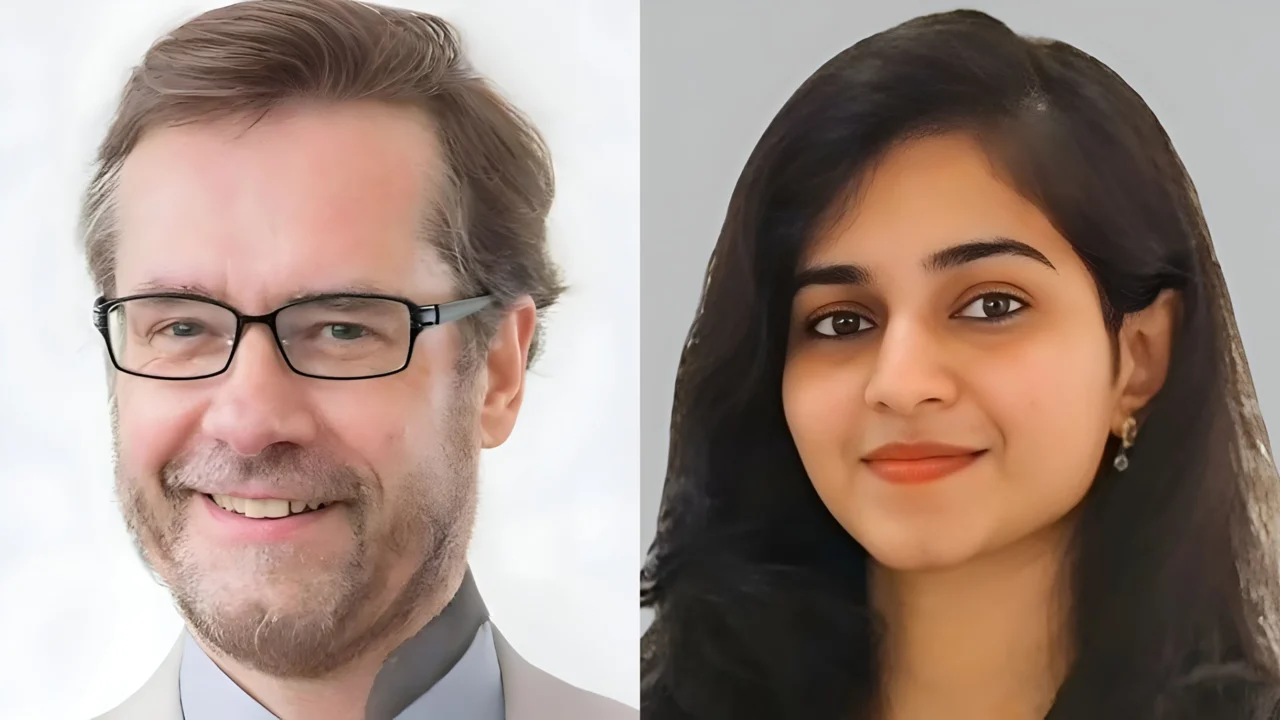
Thierry Burnouf: Taipei Medical University and University of Lille Highlight Platelet Biotherapies in SfN Neuronline
Thierry Burnouf, Vice-Dean, Distinguished Professor, Biomedical Engineering at Taipei Medical University, shared Abinaya Srinivasan’s post on LinkedIn:
“Congratulations to Abinaya Srinivasan, my PhD student at Taipei Medical University, on her scientific journey and her contribution to this new Society for Neuroscience Society (SfN) Neuronline article:
‘Platelet-Derived Biotherapies: From Blood Products to Neuroregenerative Medicine.’
It is a pleasure to see Abi’s research on neural stem cells and olfactory bulb neurogenesis contributing to this emerging field.
Our research has grown through close collaboration between Taipei Medical University and Recherche – Université de Lille, particularly with David Blum, David DEVOS, Luc Buee and colleagues at Lab LilNCog, as well as the EFS in France.
Complementary pioneering research by Tara Walker and her team at the Queensland Brain Institute, University of Queensland, notably on platelet-derived PF4, neurogenesis, and brain aging, further highlights the exciting potential of this field.
One particularly promising aspect of platelet-derived biotherapies is that they build on a biological resource collected worldwide through blood transfusion services.
Platelet concentrates, including units no longer suitable for transfusion, could offer new opportunities for developing multimodal neuroprotective and neuroregenerative therapies.
Translating this potential into treatments will require joining expertise in transfusion medicine, neuroscience, biotechnology, manufacturing, and clinical research.
I hope this article can encourage researchers, blood establishments, and biotechnology partners worldwide to join forces with us in exploring how platelet-derived products can be developed into safe, effective, and accessible therapies for neurological disorders.
Congratulations to Abi and her co-authors, Soaleha Shams and Nguyen NGuyen for sharing these perspectives with the neuroscience community.”
Abinaya Srinivasan, Doctoral Student at University of Lille 1 Sciences and Technology, shared a post on LinkedIn:
With SfN Neuroscience 2026 just a couple of weeks away, I find myself looking back at some wonderful memories from Neuroscience 2025 in San Diego!
I’ll be attending virtually this year, but I’ll definitely miss the energy of being there in person.
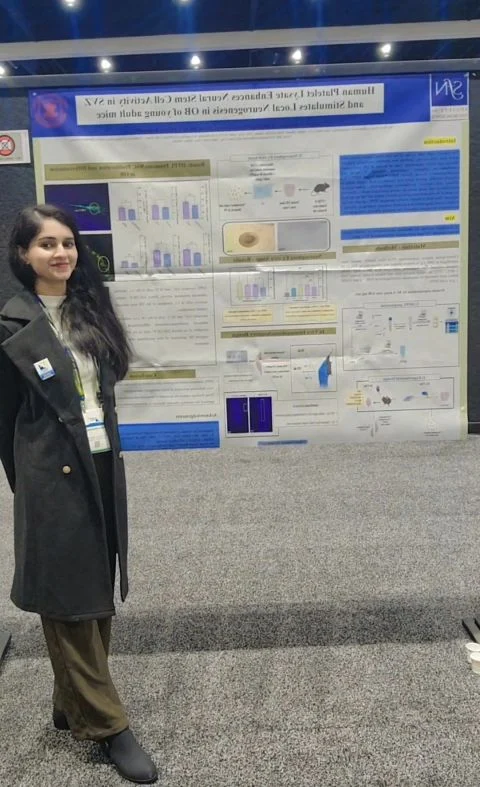
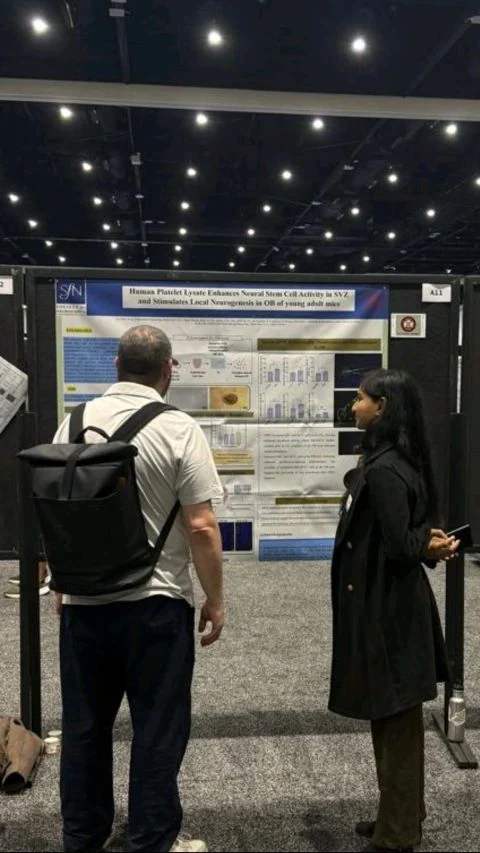
Last year was particularly special as I had the opportunity to present my research poster, “Human Platelet Lysate Enhances Neural Stem Cell Activity in SVZ and Stimulates Local Neurogenesis in OB of Young Adult Mice”
I am sincerely grateful to my University of Lille advisor, Prof. David Blum, for being there in person and supporting my poster presentation and scientific discussions.
My heartfelt thanks to Prof. Thierry Burnouf and the TB Lab at Taipei Medical University for the motivation, sponsoring my conference participation and making this opportunity possible.
I am always thankful to my fellow TB Lab members for their continuous encouragement and support.
I am sincerely grateful to the SfN Neuronline community for the opportunity to contribute and engage in insightful scientific discussions across diverse areas of neuroscience. It has been a wonderful experience exchanging perspectives with researchers working on different aspects of the field.
I am also happy to share that our article, “Platelet-Derived Biotherapies: From Blood Products to Neuroregenerative Medicine,” was published on October 19, 2026, on SfN Neuronline.
Together with our Translational research team, we shared our perspectives on the potential of platelet-derived products in neuroregenerative medicine.
For anyone interested in this emerging area of research, I would be delighted if you could give it a read and share your thoughts!
Looking back, SfN 2025 gave me much more than a poster presentation.
It wad all about new perspectives, meaningful connections, humbling realizations, and renewed curiosity about the research I do.
A reminder to self:
Research is not about reaching a point where we know everything, but about remaining curious enough to keep asking questions, no matter how far we have come.
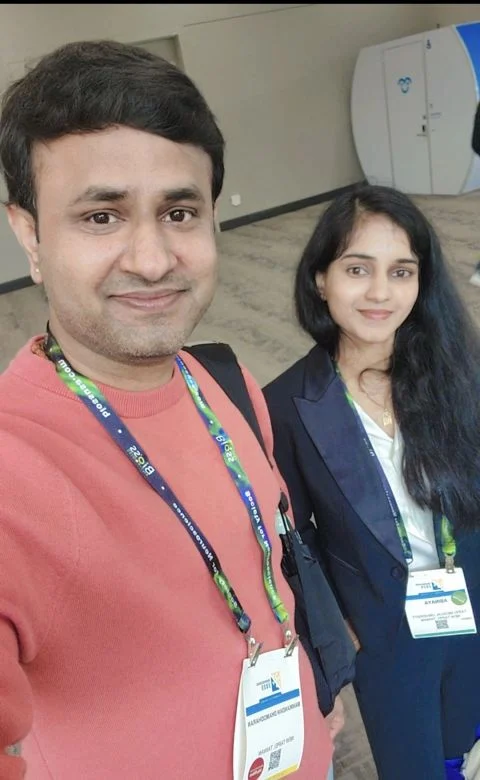
And a special thanks to my hubby Manikandan Dhamodharan, who travelled from another city and managed his work alongside the conference just to be there for me.
Thank you for being part of this experience and supporting me throughout.
Looking forward to Neuroscience 2026, even if it’s through a screen this time!”
Stay updated on all scientific advances with Hemostasis Today.
-
Oct 31, 2026, 12:07Eamon Faulkner: How Oxygen Shapes Platelet–Endothelial Interactions
-
Oct 31, 2026, 12:01Abdul Mannan: IVIG in ITP – When a Temporary Response Is a Success
-
Oct 31, 2026, 11:52Breaking the Silence Around Bleeding Disorders in Women – National Bleeding Disorders Foundation
-
Oct 31, 2026, 11:21Jim Meliezer: Aspirin May Help Prevent Recurrent Preterm Birth
-
Oct 31, 2026, 11:10Elly De Bruyn: QbD Group Quiz Supports the World Federation of Hemophilia
-
Oct 31, 2026, 11:04Abhivandan Nagia: The Expanding Clinical Pipeline in Hemophilia A
-
Oct 31, 2026, 10:54Bartosz Puła: New Advances in Hematology Featured in Acta Haematologica Polonica
-
Oct 31, 2026, 10:47Abhishek Kumar: Amplifying Patient Voices to Transform Haemophilia Care in Bihar
-
Oct 31, 2026, 10:42Josa Hanzlik: The Impact of Double Red Cell Donation