


Can the Immune System Be Reprogrammed to Treat Aplastic Anemia?
Aplastic anemia is usually described as a bone marrow failure syndrome. But in acquired disease, the problem may begin somewhere else: the immune system.
Autoreactive T cells can target hematopoietic stem and progenitor cells (HSPCs), while inflammatory signaling further interferes with blood-cell production. This is why immunosuppression has been central to treatment for decades.
Now researchers are asking a different question.
Instead of suppressing the immune response, can we change it?
The idea is still experimental. But new work on regulatory T cells, IFN-γ signaling and immune-driven clonal selection is making immune modulation a more interesting therapeutic target.
What drives the immune attack?
In acquired aplastic anemia, cytotoxic T lymphocytes can recognize and damage HSPCs. IFN-γ and TNF-α are among the inflammatory mediators involved in this process. These signals can interfere with hematopoietic stem-cell function and contribute to the loss of blood-cell production.
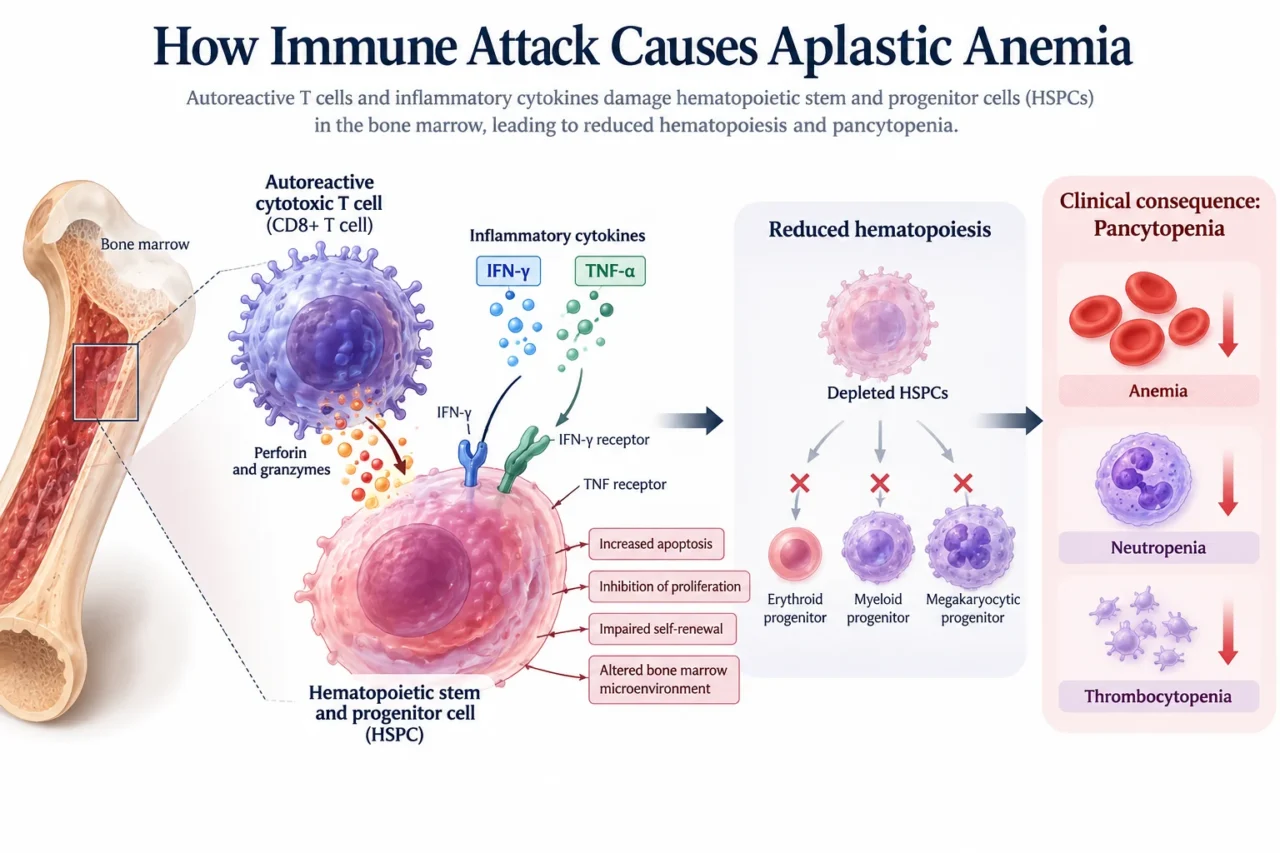
This provides the rationale for immunosuppressive therapy.
Antithymocyte globulin (ATG) and cyclosporine reduce the abnormal immune response and can allow remaining HSPCs to recover. For patients with severe or very severe acquired aplastic anemia, treatment choice also depends on factors such as age, donor availability, comorbidities and transplant eligibility.
The treatment landscape has recently been updated.
The 2026 ASH guidelines suggest adding eltrombopag to standard immunosuppressive therapy for appropriate children and adults with severe or very severe acquired aplastic anemia. The guidelines also address diagnostic evaluation and individualized decisions regarding hematopoietic cell transplantation and second-line therapy.
But immunosuppression does not necessarily restore normal immune regulation.
What if the immune system could be redirected instead of simply suppressed?
Could regulatory T cells be part of the answer?
Regulatory T cells, or Tregs, help keep immune responses under control.
Previous studies have found abnormalities in the number and function of Tregs in aplastic anemia, suggesting that restoring immune regulation could help protect the bone marrow. Previous studies
This has led researchers to explore Treg-based therapy as a way to restore immune tolerance rather than broadly suppress the immune system.
Early clinical evidence suggests that this approach is feasible and can produce hematologic responses in some patients, but the evidence remains very limited.
The key question now is whether Treg therapy can produce durable responses in larger groups of patients and identify who is most likely to benefit.
Why is IFN-γ attracting attention?
IFN-γ is another important part of the story.
Recent work continues to support a central role for IFN-γ in immune-mediated marrow failure. Persistent IFN-γ signaling can affect HSPC maintenance and the bone marrow microenvironment, including signaling pathways downstream of the IFN-γ receptor.
A 2025 experimental study added an interesting observation.
Researchers compared HSPCs with and without HLA class I expression and found that HLA-lacking HSPCs were more resistant to the suppressive effects of IFN-γ. The findings suggest that IFN-γ may not affect all HSPCs equally and could contribute to the selection of immune-evasive clones.
This is important because it connects two parts of aplastic anemia biology that are sometimes discussed separately:
immune-mediated marrow damage and clonal selection.
Targeting IFN-γ-related pathways, including JAK-STAT signaling, is therefore being investigated as a possible precision approach. But this remains experimental. There is currently no basis for replacing established AA treatment with JAK inhibition or another IFN-γ-targeted strategy.
The immune system can shape which clones survive
The immune attack does not necessarily eliminate every hematopoietic clone.
Some cells may acquire changes that make them less susceptible to immune recognition.
PIGA-mutant and HLA-altered HSPCs are well-described examples. These clones can gain a relative survival advantage under immune pressure. This can help explain why PNH clones are frequently found in patients with aplastic anemia.
New longitudinal data are adding another layer to this picture.
A 2026 analysis followed 204 patients with severe aplastic anemia treated with immunosuppression plus eltrombopag. Clonal hematopoiesis was detected in 63% of patients before treatment and in 73% of evaluable patients at six months. PIGA, DNMT3A, BCOR and ASXL1 were among the most frequently involved genes.
The study also identified different patterns of clonal evolution. Chromosome 7 abnormalities tended to appear earlier, while some later myeloid transformations were associated with pre-existing ASXL1- or U2AF1-mutated clones. PNH evolution occurred in 5% of the cohort and was associated with expansion of PIGA-mutated clones.
These findings do not mean that every patient with clonal hematopoiesis will develop malignancy.
They do show why long-term molecular and cytogenetic monitoring matters, particularly in patients receiving treatment for severe disease.
What would “immune reprogramming” actually mean?
The term can sound more advanced than the science currently is.
In practice, immune reprogramming could mean several different things.
- Increasing Treg activity.
- Reducing pathogenic cytotoxic T-cell responses.
- Targeting inflammatory signaling such as IFN-γ/JAK-STAT.
- Combining immune modulation with therapies that support the remaining HSPCs.
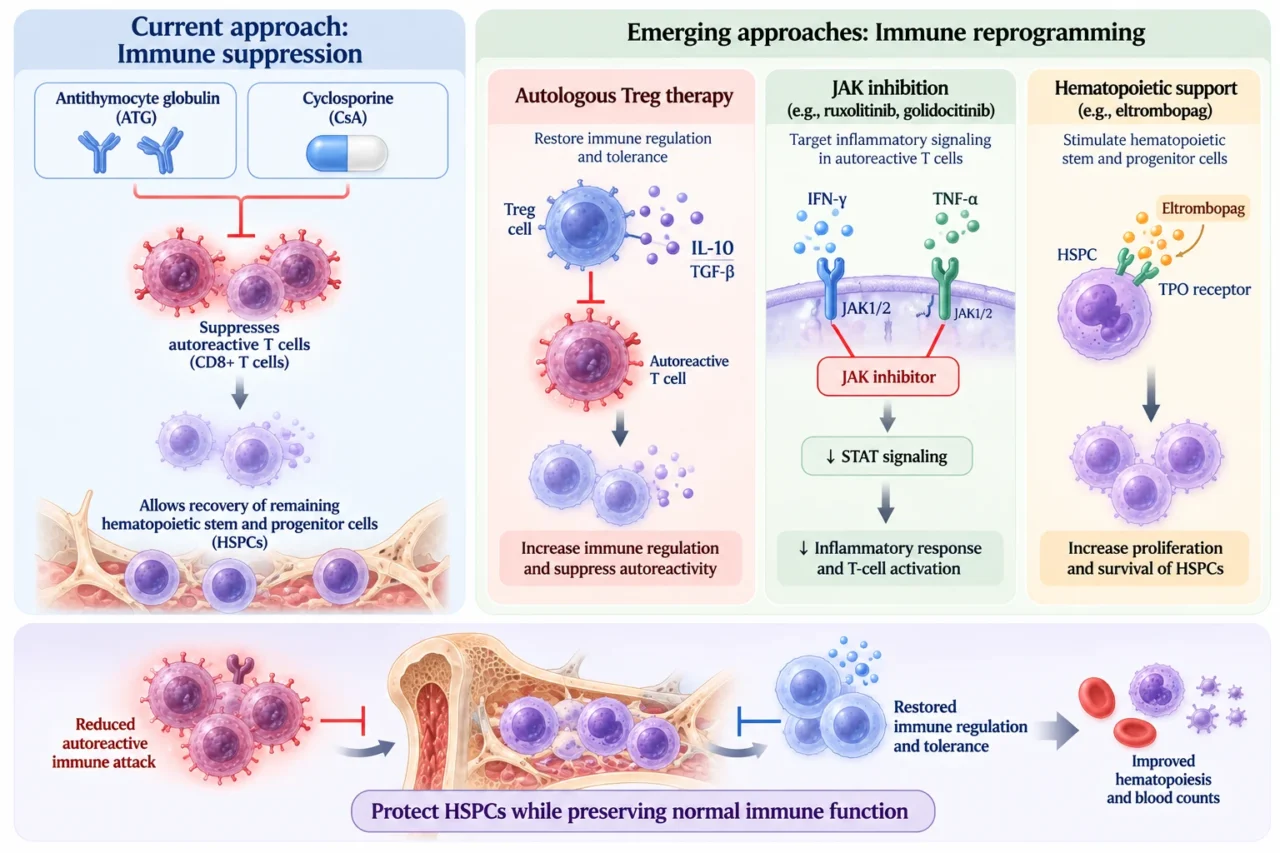
These approaches are at very different stages of development.
Eltrombopag, for example, is already part of established treatment. Treg therapy is not.
The 2026 ASH guidelines currently place established treatments such as hematopoietic cell transplantation and immunosuppressive therapy at the center of management, with eltrombopag added to immunosuppressive therapy in appropriate patients with severe or very severe acquired AA.
Treg therapy and other targeted immune approaches should currently be considered investigational.
Modern Trials to Watch
Several early-stage studies are testing whether immune regulation or inflammatory signaling can be manipulated more selectively in aplastic anemia.
Autologous Treg therapy — Phase I, King’s College London, NCT05386264
The TIARA study is a phase I, open-label study of expanded autologous regulatory T cells in aplastic anemia. Six heavily pre-treated patients received two infusions of expanded Tregs at 5 × 10⁶ cells/kg, two weeks apart. Tregs were successfully expanded from all six patients. Three patients showed hematologic improvement, and infused Tregs remained detectable after treatment. The published study reported no adverse or immune-related events in the six participants.
The study establishes clinical feasibility and provides an early biologic and hematologic signal, but its very small, uncontrolled phase I design means it is not powered to establish efficacy or long-term durability.
Ruxolitinib in relapsed/refractory immune marrow failure — Phase I/II, NHLBI, NCT05998408
A clinical trial is evaluating the JAK1/2 inhibitor ruxolitinib in adults with immune bone marrow failure, including severe aplastic anemia, single-lineage cytopenias/T-LGL and hypoplastic MDS after previous therapy. The study is being conducted through the NHLBI and is listed as active, not recruiting, with a planned enrollment of 13 participants.
The study is designed to evaluate safety and hematologic response, with additional assessment of response durability and disease evolution. It remains an early-phase investigation and does not establish ruxolitinib as standard therapy for aplastic anemia.
Golidocitinib plus intensive immunosuppression — Phase Ib/II, China, NCT07297550
A clinical trial is investigating golidocitinib, a JAK1 inhibitor, in severe aplastic anemia. The study includes a dose-escalation phase in patients with severe AA who have failed intensive immunosuppressive therapy, followed by a phase II cohort evaluating golidocitinib combined with intensive immunosuppression in newly diagnosed patients who are unable to undergo transplantation. The study is intended to examine safety and hematologic response.
Together, the ruxolitinib and golidocitinib studies test the broader hypothesis that blocking selected inflammatory signaling may modify immune-mediated marrow failure without relying solely on broad immune suppression.
Omidubicel: an important cell-therapy development
Beyond small molecules and Tregs, cell-therapy platforms are also entering the treatment landscape. In December 2025, the FDA approved omidubicel-onlv (Omisirge), a nicotinamide-modified allogeneic hematopoietic progenitor cell therapy derived from cord blood, for adults and pediatric patients aged 6 years and older with severe aplastic anemia following reduced-intensity conditioning.
Importantly, omidubicel is not an immune-reprogramming therapy in the same sense as Treg therapy or JAK inhibition. It is a hematopoietic cell product used in the transplant setting. Its approval nevertheless demonstrates the expanding role of engineered and expanded cellular products in the treatment of severe bone marrow failure.
Could treatment become more personalized?
Aplastic anemia is not biologically identical in every patient.
The degree of immune activation, residual hematopoiesis, somatic mutations and clonal architecture can differ. That makes the idea of a single immune-directed treatment for every patient unlikely.
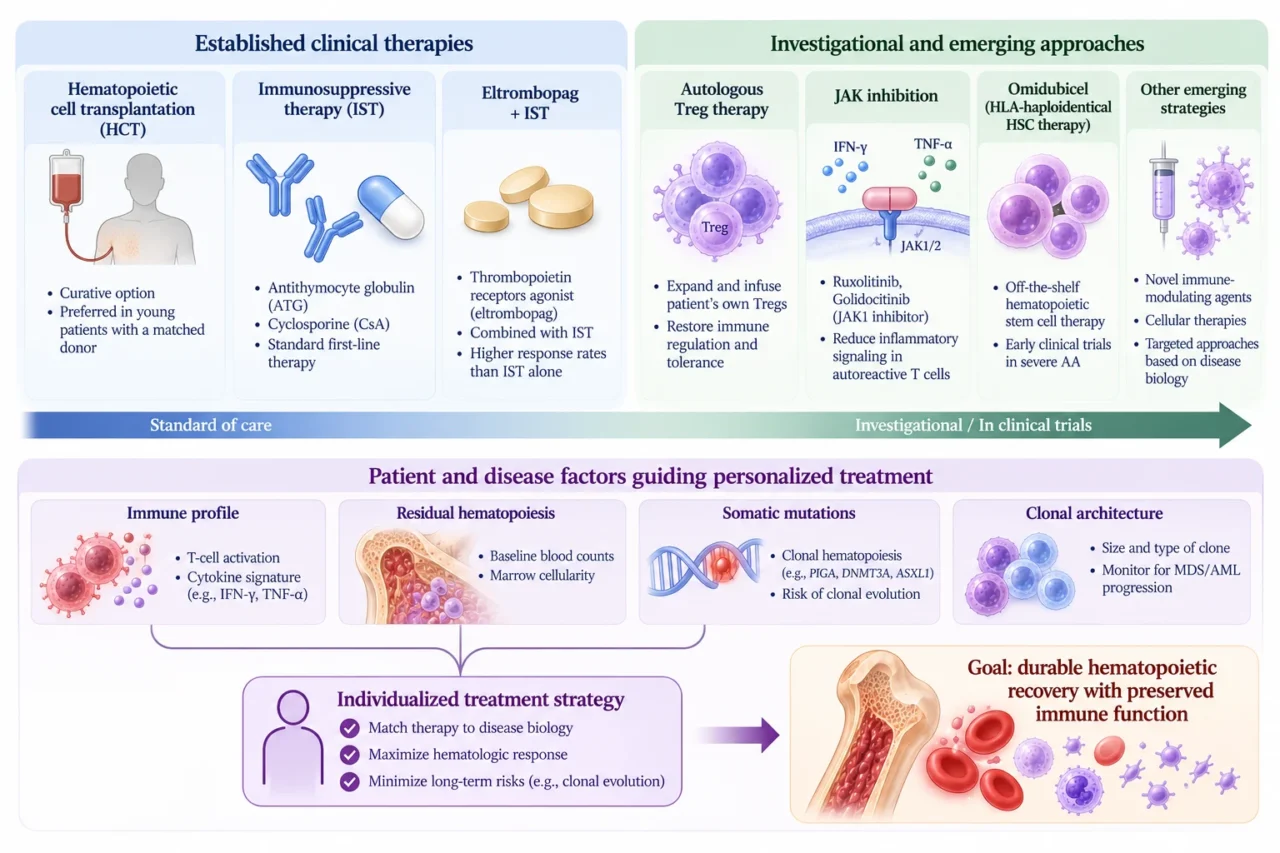
New technologies may eventually help identify these differences.
The 2026 Treg study, for example, used mass cytometry, single-cell sequencing and cytokine profiling to characterize patients before and after treatment.
This kind of information could eventually help answer a practical question:
Which patients are most likely to benefit from a particular type of immune intervention?
We are not there yet.
But the direction is clear: treatment research is moving beyond simply asking whether the immune system is active and toward asking which immune pathways are active and whether they can be targeted selectively.
The next step is not stronger immunosuppression
For now, immune reprogramming remains a research concept.
The clinical standard is still based on established approaches, selected according to patient and disease characteristics. The 2026 ASH guidelines emphasize individualized treatment decisions, the use of eltrombopag with immunosuppressive therapy in appropriate severe/very severe AA, and consideration of hematopoietic cell transplantation as appropriate, including after failure of initial immunosuppressive therapy.
The Treg trial does not change that.
What it does provide is an interesting proof of concept: it may be possible to manipulate a patient’s own regulatory immune cells and use them as a therapeutic product.
The next studies will need to determine whether that approach can produce durable responses, which patients benefit, and whether it can improve outcomes beyond current treatment.
The larger goal is straightforward:
not to shut down the immune system, but to stop the immune response that is damaging the bone marrow.
Take-Home Message
Acquired aplastic anemia is not only a disorder of hematopoiesis. It is also a disorder of immune regulation.
Current treatments work largely by suppressing the immune attack and supporting hematopoietic recovery.
New research is asking whether the immune response itself can be modified.
The first phase I trial of autologous Tregs provides early clinical evidence that this approach is feasible, but the data are still limited to six patients.
For now, immune reprogramming belongs in clinical research rather than routine practice.
The question for the next generation of therapies is whether we can make the immune response more selective-sparing normal immunity while protecting the bone marrow.
FAQ
1. Why does the immune system attack the bone marrow in acquired aplastic anemia?
The exact trigger is not fully understood. In immune-mediated AA, autoreactive T cells can target HSPCs, while inflammatory cytokines such as IFN-γ and TNF-α contribute to impaired hematopoiesis.
2. What is the role of Tregs in aplastic anemia?
Tregs help control immune responses. Abnormalities in their number or function have been described in AA, providing a rationale for investigating Treg-based therapy.
3. Has Treg therapy actually been tested in patients?
Yes. A 2026 phase I trial treated six patients with autologous expanded Tregs. Three experienced hematologic responses, and the study reported no adverse or immune-related events in the six participants.
4. Does this mean Treg therapy is ready for clinical use?
No. The study was a small, uncontrolled phase I trial. Larger studies are needed to establish efficacy and durability.
5. Why is IFN-γ important in AA?
IFN-γ can interfere with HSPC maintenance and inflammatory signaling. Experimental work also suggests that it may contribute to selective survival of HLA-lacking HSPCs.
6. Is JAK inhibition currently a standard treatment for AA?
No. JAK-STAT signaling is being investigated as a potential therapeutic target, but targeted inhibition remains investigational.
7. Where does eltrombopag fit into this picture?
Eltrombopag is a thrombopoietin receptor agonist used to stimulate hematopoiesis. The 2026 ASH guidelines suggest adding it to immunosuppressive therapy for appropriate adults and children with severe or very severe acquired AA.
8. Why do PNH clones occur in aplastic anemia?
PIGA-mutant cells can have a relative advantage under immune pressure because they may be less susceptible to immune-mediated destruction.
9. Does clonal hematopoiesis mean the patient will develop leukemia?
No. Clonal hematopoiesis is common in AA, but individual clones have different clinical significance. Longitudinal data show that particular cytogenetic and molecular patterns are associated with different forms of clonal evolution.
10. What is the main goal of immune reprogramming?
The goal would be selective immune modulation: reducing the immune response responsible for marrow damage while preserving immune functions needed to protect against infection and malignancy.
Written by Anahit Ghazaryan.
Stay updated with Hemostasis Today.
-
Sep 28, 2026, 13:20Elif Susan Elcin։ PRP for Skin Rejuvenation – Is It Worth the Hype?
-
Sep 28, 2026, 13:07Alexandru Stieber: Looking Beyond MDS in VEXAS Syndrome
-
Sep 28, 2026, 12:53Shifa Maharani: Research Innovation and Recognition at JSMID 8th
-
Sep 28, 2026, 12:40Najmul Hasan Forhad: Platelets – The Unsung Heroes of Hemostasis
-
Sep 28, 2026, 12:29Turki Alqahtani: From Routine Testing to Specialized Hematology Diagnostics
-
Sep 28, 2026, 11:26Andra Tocarciuc: Immune TTP in 2026 – Moving Toward Plasma Exchange–Free Care
-
Sep 28, 2026, 11:13Nathan Pennell: 3 Questions That Matter for the Next Multiple Myeloma Treatment
-
Sep 28, 2026, 11:00Oren Rom: Connecting Amino Acid and Lipid Metabolism in MASH
-
Sep 28, 2026, 10:38Dawn Rotellini: Advocating for Women and Girls With Bleeding Disorders