


Umair Ahmad/LinkedIn
Aug 4, 2026, 02:14
Umair Ahmad: Aspirin for Relief Protection and Prevention
Umair Ahmad, Pharmacist (Intern) at Waseem Pharmacy and Patient Counselling Centre, shared a post on LinkedIn:
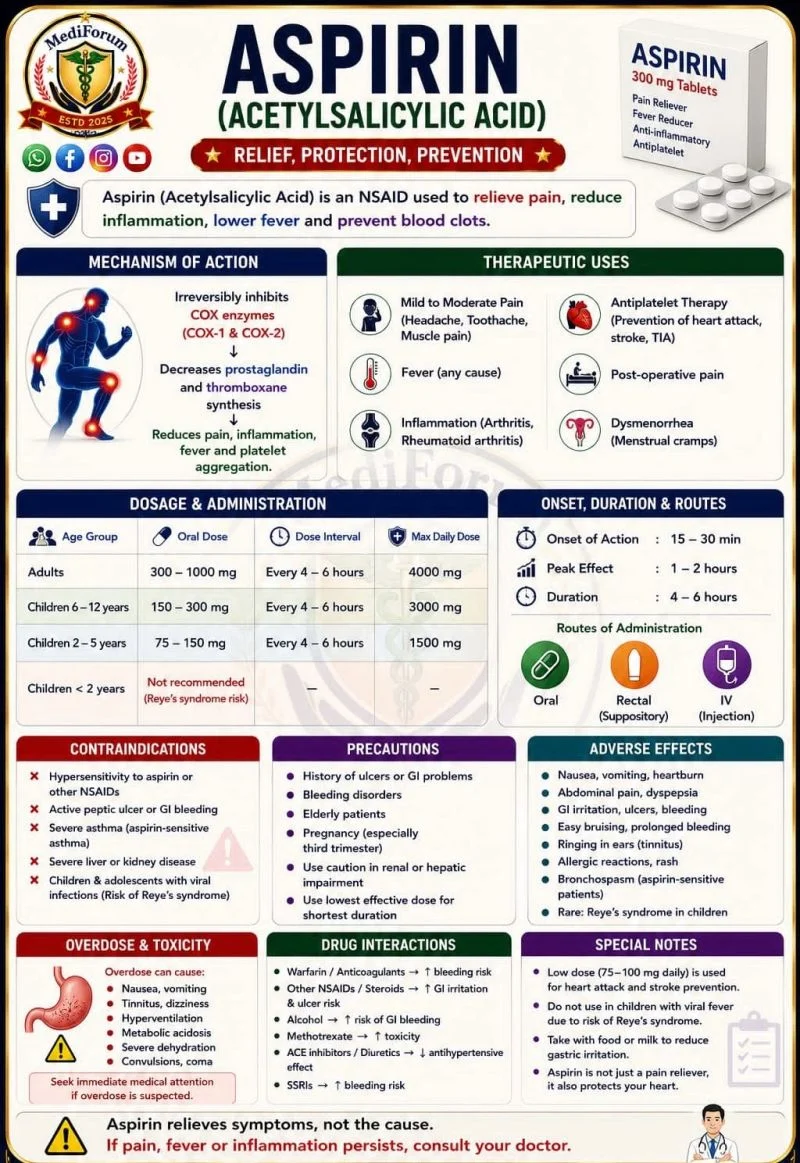
“Aspirin (Acetylsalicylic Acid)
Aspirin is a widely used non-steroidal anti-inflammatory drug (NSAID).
It has four main actions:
- Analgesic – relieves pain
- Antipyretic – reduces fever
- Anti-inflammatory – decreases inflammation
- Antiplatelet – prevents blood clot formation
Mechanism of action:
Aspirin irreversibly inhibits cyclooxygenase (COX-1 and COX-2) enzymes, reducing the production of prostaglandins (responsible for pain, fever, and inflammation) and thromboxane A₂ (which promotes platelet aggregation). This antiplatelet effect lasts for the life of the platelet (about 7–10 days).
Uses:
- Mild to moderate pain (headache, toothache, muscle pain)
- Fever
- Inflammatory diseases such as rheumatoid arthritis
- Prevention and treatment of heart attack
- Prevention of ischemic stroke and transient ischemic attack (TIA)
- Prevention of blood clots after certain heart procedures
Common doses:
- Pain or Fever: 325–650 mg every 4–6 hours as needed.
- Antiplatelet (heart protection): Low-dose aspirin 75–100 mg once daily (commonly 81 mg or 75 mg), only when prescribed by a healthcare professional.
Side effects:
- Stomach irritation
- Nausea or indigestion
- Gastric ulcer
- Gastrointestinal bleeding
- Easy bruising or prolonged bleeding
- Ringing in the ears (tinnitus), especially with high doses
Contraindications:
Do not use aspirin in:
- Active stomach ulcer or gastrointestinal bleeding
- Aspirin allergy
- Bleeding disorders (e.g., hemophilia)
- Severe liver or kidney disease
- Children or teenagers with viral illnesses (risk of Reye syndrome)
- Late pregnancy unless specifically prescribed
Important drug interactions
- Other NSAIDs (e.g., ibuprofen)
- Anticoagulants (e.g., warfarin)
- Corticosteroids
- Alcohol (increases bleeding risk)”
Stay updated with Hemostasis Today.
-
Sep 17, 2026, 02:36Wolfgang Miesbach: Effectiveness of Avatrombopag in ITP Treatment
-
Sep 17, 2026, 02:34Aleksandar Sič: The Endothelium and Cardiovascular Toxicity in Blood Cancers
-
Sep 16, 2026, 15:45Matthew Hazell: A Brilliant Explanation of Phenotype vs Genotype Using a LEGO House
-
Sep 16, 2026, 15:23Ahmad Al-Ramahi: Presenting the Military Pharmacists Blood Training Course at the FIP World Congress
-
Sep 16, 2026, 15:21HIT Reimagined: Can 12-Lipoxygenase Inhibition Stop Immune Thrombosis?
-
Sep 16, 2026, 14:42Ruchi Punamia: Beyond the Blood Bank and The Clinical Impact of Apheresis
-
Sep 16, 2026, 14:06Kalyan Roy: Celebrating Apheresis, Advancing Care, Saving Lives
-
Sep 16, 2026, 13:38Andrew Zapfel: Advancing Sickle Cell Disease Care and Research
-
Sep 16, 2026, 13:30Thirunavukkarasu Angappan: Why Plasma-Derived Factor VIII Still Matters for Inhibitor Patients