


Caitlin Raymond: Practicing at the Edge of ABO – Navigating Rare A Subgroups
Caitlin Raymond, Assistant Professor of Pathology and Transfusion Medicine at the University of Wisconsin-Madison, shared on LinkedIn:
”I just published a new post on Blood, Bytes, and Beyond: “Practicing at the Edge of ABO: Navigating Rare A Subgroups.”
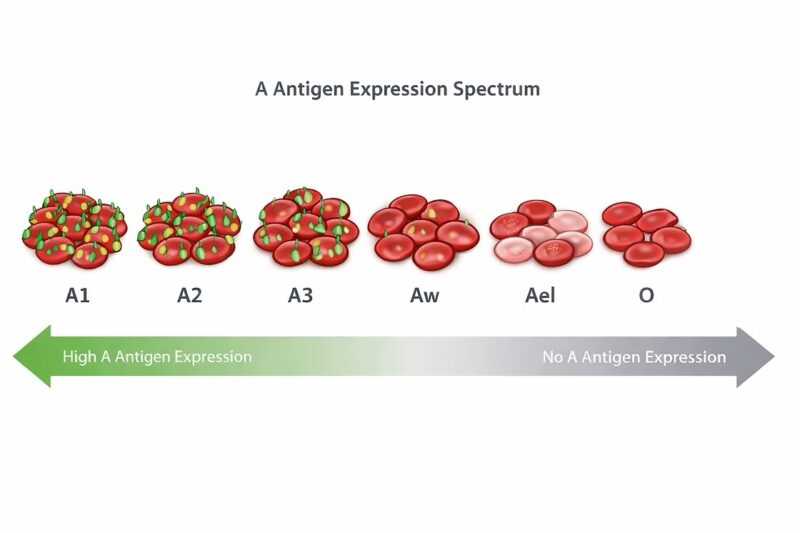
In transfusion medicine, we talk a lot about “weak A” phenotypes — but biologically and clinically, they’re not all the same.
A3, Aw, and Ael arise through different mechanisms, carry different degrees of antigen expression, and sit in very different evidence spaces when it comes to transfusion risk.
This piece grew out of a real on-service case, where the literature didn’t quite tell us what to do, and judgment mattered as much as data.
It’s a reflection on how we make conservative decisions when incidence data are sparse, case reports loom large, and the downside of being wrong is asymmetric.
If you work in transfusion medicine, blood banking, or laboratory medicine more broadly — or if you’re interested in how clinicians navigate uncertainty at the bedside — I’d love for you to read it.”
Read the full post here.
Stay updated with Hemostasis Today.
-
Sep 23, 2026, 13:58The New B12 Diagnostic Algorithm: From Serum Cobalamin to Functional Deficiency
-
Sep 23, 2026, 13:56Noha Soror: Preparing for Hematology and Medical Oncology Board Certification
-
Sep 23, 2026, 13:46Ugochi Ogu: What Can Platelet Proteomics Reveal about Pain and Neurocognitive Vulnerability in Sickle Cell Disease?
-
Sep 23, 2026, 13:42Melissa Hollo: Connecting Obesity and Anemia for Earlier Maternal Risk Intervention
-
Sep 23, 2026, 13:16Beverley Hunt: Advances in Haemostatic Management of Postpartum Haemorrhage
-
Sep 23, 2026, 13:13Ioanna Mela: Recruiting a Research Associate on DNA nanotechnology
-
Sep 23, 2026, 13:04Ben Samelson-Jones: Do Gene Variants Drive PK Differences in FIX-Fusion and N9-GP Therapies?
-
Sep 23, 2026, 12:57Shelly Reed: Advocating for HTCs and CDC Funding with the Hemophilia Federation of America
-
Sep 23, 2026, 12:51Domenico Girelli: How Verona Hospital Transformed ED Anemia Care with Patient Blood Management