

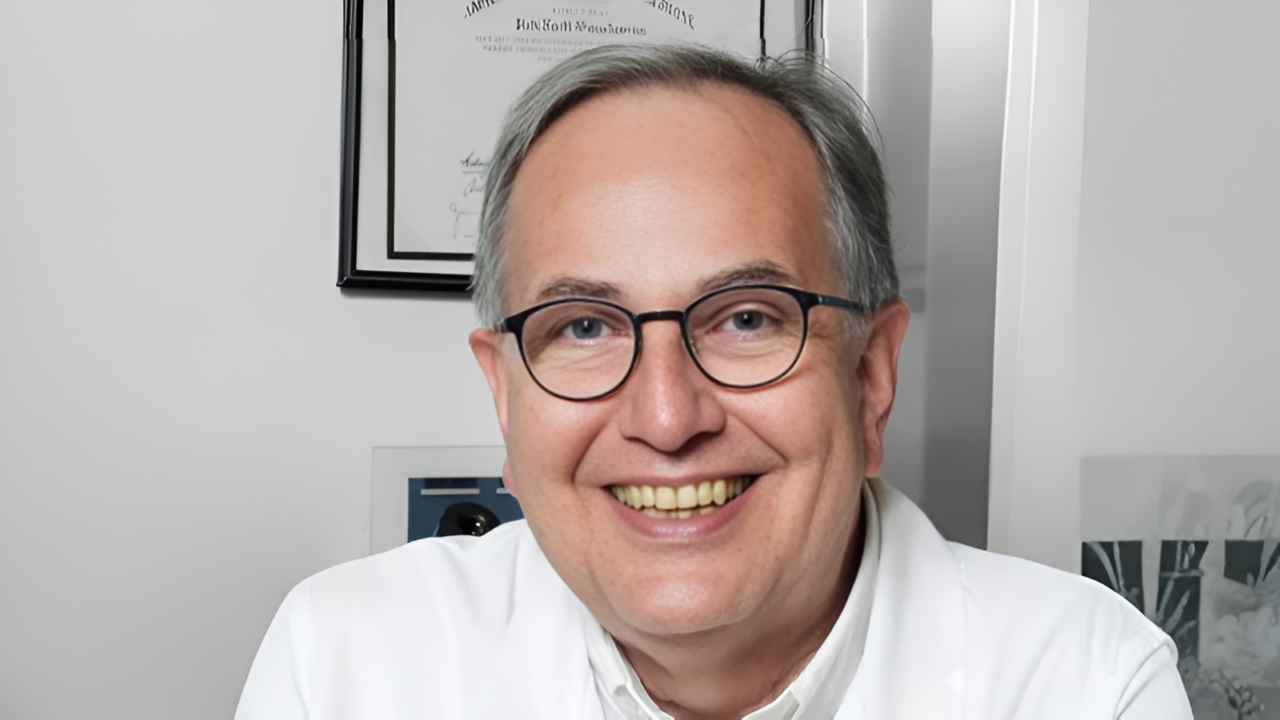
Pall T. Onundarson: Risks of Switching Warfarin to DOACs in Frail Elderly Patients with NVAF
Pall T. Onundarson, Professor Emeritus at Landspitali University Hospital, shared a post on LinkedIn about a recent article by So-Ryoung Lee et al, published in European Heart Journal:
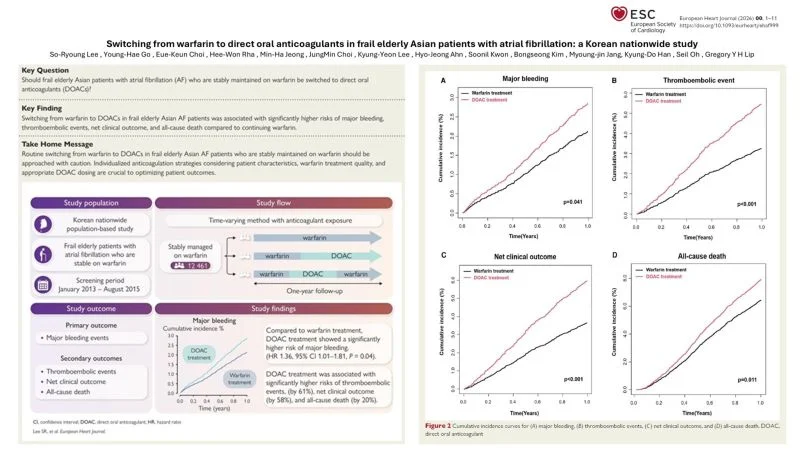
”A nationwide population-based observational study from South Korea, published in the European Heart Journal (February 27, 2026), examined frail elderly patients with nonvalvular atrial fibrillation (NVAF) who were switched from stable warfarin therapy to a DOAC. The primary outcome was major bleeding; secondary outcomes included total thromboembolism, all-cause death, and net clinical outcome (NCO).
Consistent with findings from the RCT of Joosten and colleagues in Circulation (2024), the Korean study found that switching frail, warfarin-experienced patients to DOACs was associated with higher risks of major bleeding, thromboembolism, NCO, and all-cause mortality.
Although observational, these data add to growing evidence that warfarin – and likely other VKAs – may retain an important role in selected subgroups, particularly patients who are on long-term stable therapy. In the pivotal DOAC trials for NVAF, superiority was largely demonstrated in anticoagulation-naïve patients, whereas differences were less pronounced in long-term warfarin users (Ruff et al, The Lancet 2014). In many trials and observational studies, the largest divergence in outcomes occurs early, often within the first 90 days, when warfarin-treated patients experience higher event rates.
This raises an important question: does early excess risk reflect challenges in achieving stable anticoagulation during warfarin initiation?
If so, should DOACs primarily be used during the initiation phase of oral anticoagulation, with selected patients transitioned to warfarin/VKA after stabilization, e.g. after 90 days?
These findings also prompt a broader reflection: if improved warfarin/VKA management could reduce early instability and adverse events, is there not a professional obligation to pursue such optimization? While pharmaceutical incentives naturally favor newer agents, improved management of a generic drug may still serve the interests of certain patient groups, healthcare payors, and diagnostic manufacturers. And patients should come first.”
Title: Switching from warfarin to direct oral anticoagulants in frail elderly Asian patients with atrial fibrillation: a Korean nationwide study
Authors: So-Ryoung Lee, Young-Hae Go, Eue-Keun Choi, Hee-Won Rha, Min-Ha Jeong, JungMin Choi, Kyung-Yeon Lee, Hyo-Jeong Ahn, Soonil Kwon, Bongseong Kim, Myoung-jin Jang, Kyung-Do Han, Seil Oh, Gregory Y H Lip
Read the Full Article on European Heart Journal.
Stay updated on all scientific advances with Hemostasis Today.
-
Sep 9, 2026, 15:10Pablo Corral: Is the Lp(a) Hypothesis Wrong?
-
Sep 9, 2026, 14:54Agnes Kisakye: Expanding Point-of-Care Ultrasound and Surgical Interventions for Hemophilia in Uganda
-
Sep 9, 2026, 14:52Jan Sloves: Addressing Diagnostic and Treatment Variability in Pelvic-Origin Varicose Veins
-
Sep 9, 2026, 14:48The French Care Pathway for Gene Therapy in Haemophilia B – CRH French Reference Center for Hemophilia Lyon
-
Sep 9, 2026, 14:43David McIntosh: The Ethics of Plasma Donation
-
Sep 9, 2026, 14:42Thirunavukkarasu Angappan: Factor VIII and IX Didn’t Get Viral-Safety Rules Until the 1980s
-
Sep 9, 2026, 14:30Alejandro González Veliz: 2026 ESC Guidelines Expand Cardiac Rehabilitation Beyond Post-Event Recovery
-
Sep 9, 2026, 13:59Natalie Arnold: Biomarkers and the Hidden Burden of CHD
-
Sep 9, 2026, 13:11Ron DePinho: A Negative Trial Does Not Repudiate Inflammation as a Cardiovascular Target