

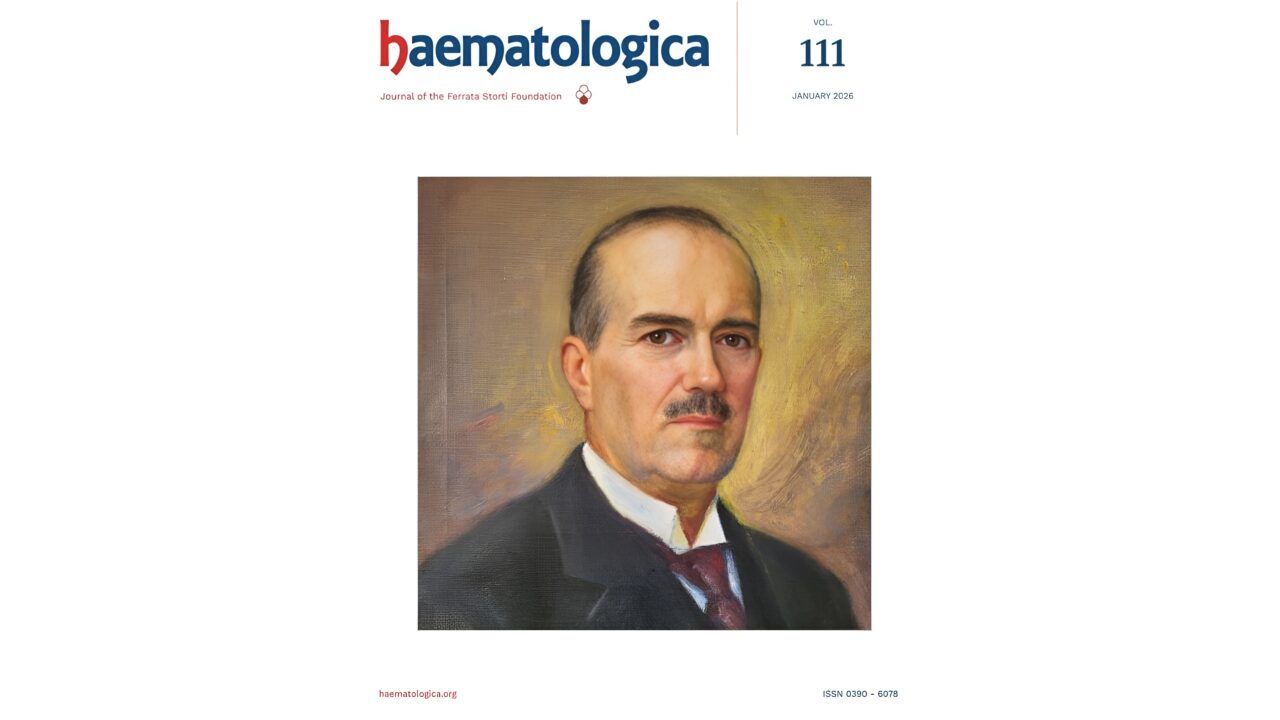
Haematologica Journal Presents Review series on von Willebrand Disease
Haematologica Journal shared on LinkedIn:
”Review series on von Willebrand disease: classification and epidemiology of a highly heterogeneous inherited bleeding disorder.”
Von Willebrand disease (VWD), first described in 1926 by Erik von Willebrand, is now recognized as the most common inherited bleeding disorder.
It results from reduced levels or impaired function of von Willebrand factor and shows marked clinical and laboratory heterogeneity.
Diagnosis is based on bleeding history, low circulating VWF levels, and autosomal inheritance, with classification into quantitative and qualitative subtypes.
While population studies estimate a prevalence of about 1%, clinically diagnosed cases are less frequent, though recent genetic data suggest pathogenic VWF variants may be more widespread.
Read the full article here.
Article: Von Willebrand disease: classification and epidemiology
Authors: Giancarlo Castaman, Augusto Bramante Federici

Stay updated with Hemostasis Today.
-
Oct 16, 2026, 10:07Habib Bennaceur: Building a Stronger Care Pathway for Sickle Cell Disease in India
-
Oct 16, 2026, 09:59Tareq Abadl: A Simple Guide to Blood Collection Tubes
-
Oct 16, 2026, 09:50Mona Alfaraj: Distinguishing HCL from SMZL in Bone Marrow
-
Oct 16, 2026, 09:44New International Consensus on Covert Brain Infarction – International Journal of Stroke
-
Oct 16, 2026, 06:17Neha Rastogi Panda: Precision Diagnosis and Organ Preservation in Splenic Abscess
-
Oct 16, 2026, 05:53Alejandro González Veliz: Looking Beyond Coronary Anatomy to Understand Ischemia
-
Oct 16, 2026, 04:16Asmaa M. Gouda: Advancing Blood Bank Leadership at Alexandria University Hospitals
-
Oct 16, 2026, 03:52Saja Al-Zamili: Minimally Invasive Hematoma Evacuation in Intracerebral Hemorrhage
-
Oct 16, 2026, 03:13Bhumika Satija: Beyond the Diploma A Growing Passion for Blood Banking and Transfusion Medicine