

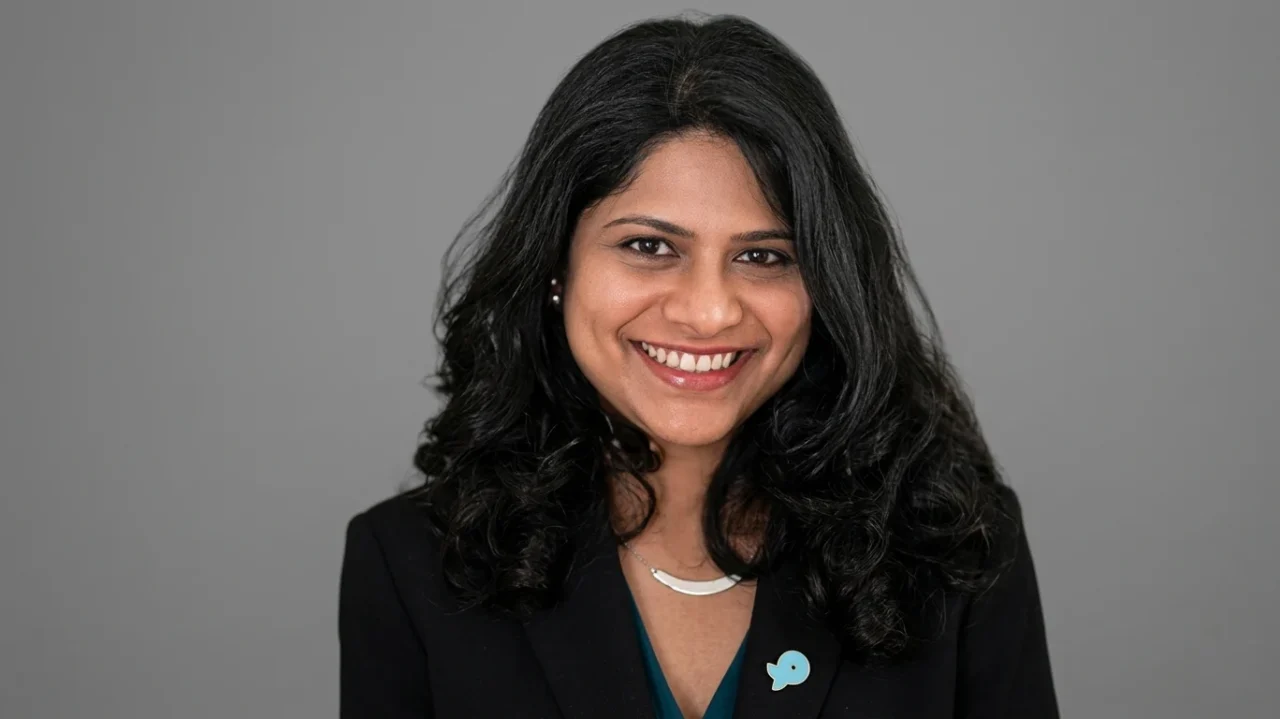
Mamtha Balla: Mastering the Lab and Clinical Connection in Hemostasis and Thrombosis
Mamtha Balla, Transplant Oncology-ID fellow at MD Anderson Cancer Center and Hematology Oncology Fellow at The University of Toledo, shared a post on X:
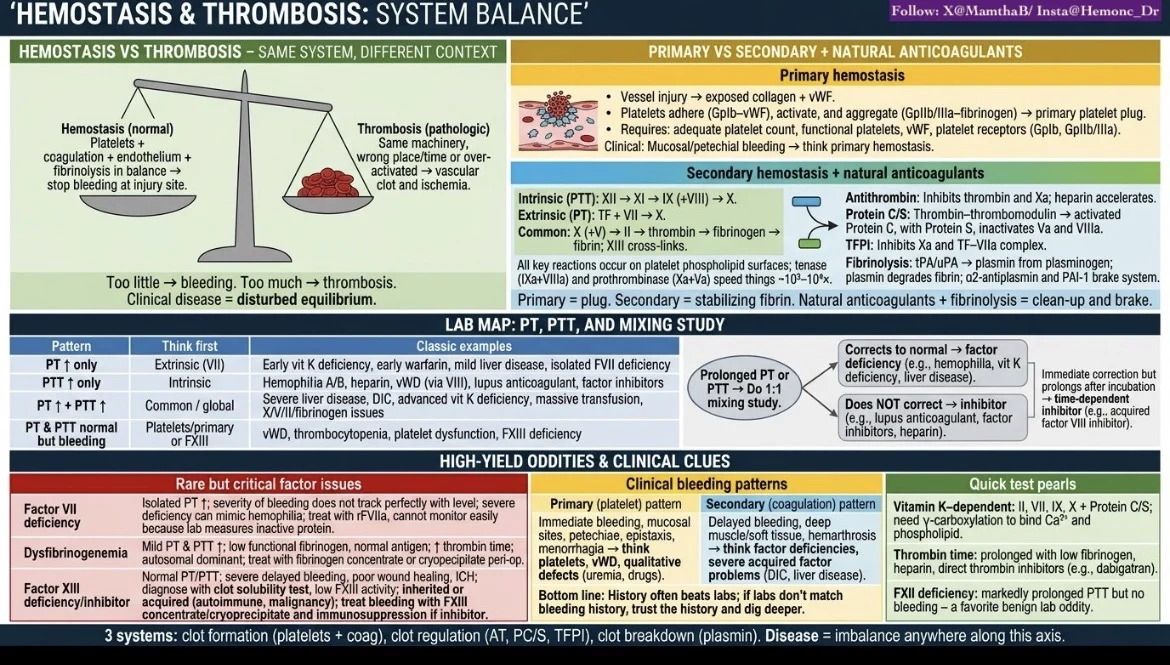
“Hemostasis vs Thrombosis: Pathology Summary
DOAC Targets
- Api-Xa-ban / Rivaro-Xa-ban: The name literally tells you the target.
Contains ‘Xa’ means Targets Factor Xa. - Da-bi-gatran:
Contains ‘bi’ means Think ‘2’ (Factor II is Thrombin).
Dabigatran is a Direct Thrombin Inhibitor.
PT has 2 (less) letters; VII the only factor. It’s short and fast-Extrinsic
PTT has 3(many)letters: So many factors are involved-Intrinsic
Big Picture: Clotting is a Balance
- Hemostasis is Normal clotting to stop bleeding
- Thrombosis is Pathologic clots in vessels
The body maintains a tight equilibrium between forces:
- Pro-clotting: Intact vessels, platelets, and the coagulation cascade.
- Anti-clotting: Natural anticoagulants (Protein C, S, Antithrombin) and fibrinolysis (clot breakdown).
The Clotting Process in 3 Steps
Step 1: Primary Hemostasis (Platelet Plug)
Injury exposes collagen. von Willebrand Factor (vWF) binds it. Platelets adhere, activate, and aggregate to form a temporary plug.
Needs: Adequate functional platelets, vWF. Receptors: GpIb, GpIIb/IIIa.
Step 2: Secondary Hemostasis (Coagulation Cascade)
Goal: Generate thrombin that forms a stable fibrin clot.
Key Pathways (Labs):
- Intrinsic Pathway (PTT): Factors XII progressing to XI, then IX, then VIII.
- Extrinsic Pathway (PT): Tissue Factor (TF) with Factor VII.
- Common Pathway: Connects both to activate Thrombin that forms Fibrin.
Key Concepts: Reactions happen on platelet membranes to increase speed.
Thrombin acts as a feedback amplifier. Vitamin K is essential to activate Factors II, VII, IX, X, enabling membrane binding.
Step 3: Fibrinolysis (Clot Breakdown )
Plasminogen is converted to Plasmin, which breaks down the fibrin clot. Too much fibrinolysis leads to delayed bleeding.
Clinical Connections: Bleeding disorders occur from low platelets (petechiae), low vWF (mucosal bleeding), or factor deficiencies (deep bleeding).
Thrombosis occurs from low anticoagulants or increased tissue factor.
Lab Testing Summary
- PT (Prothrombin Time): Measures the Extrinsic Pathway (Factor VII). INR-guided.
- PTT (Partial Thromboplastin Time): Measures the Intrinsic Pathway (Factors XII, XI, IX, VIII). Heparin-guided.
Prolonged PT/PTT: Decision Guide
- PT Normal, PTT Normal: Bleeding still occurring? Think: vWD, Platelet problem, or Factor XIII deficiency (missed by standard labs).
- Prolonged PT ONLY: Common causes: Warfarin, early Vitamin K deficiency, liver disease. Targets Factor VII (extrinsic), which has the shortest half-life and drops first.
- Prolonged PTT ONLY: Common causes: Heparin, Hemophilia A/B, vWD, Lupus Anticoagulant (prolongs PTT in lab, causes CLOTTING clinically).
- BOTH Prolonged: Indicates a common pathway issue or systemic disorder. Common causes: Liver disease, DIC, advanced Vitamin K deficiency, or deficiencies in X, V, II, fibrinogen.
Diagnostic Approach: Unexplained prolongation? Start with a Mixing Study.
Corrects (Normalizes): Factor Deficiency (fixes the missing piece).
Fails (Remains prolonged): Inhibitor Present (something is blocking clotting).
Deep Dive into Key Concepts and Diagnoses
Natural Anticoagulant Systems
Keep clotting in check to prevent thrombosis:
Antithrombin: Inhibits thrombin and Xa; potentiated by heparin.
Protein C/S: Thrombin-activated; inhibits Factors Va, VIIIa. (Needs S as a cofactor).
Clinical: Factor V Leiden mutation prevents APC from cleaving Va, leading to a gain of function and increased risk of thrombosis.
Protein C/S deficiency causes venous thrombosis.
Fibrinolytic System
Plasmin breaks down the clot. Deficiencies in inhibitors lead to excessive breakdown and bleeding.
Thrombin Time (TT)
Measures the conversion of fibrinogen to fibrin. Prolonged by low fibrinogen, heparin, and direct thrombin inhibitors.
The ‘Don’t Miss’ Diagnoses
Dysfibrinogenemia
- Normal fibrinogen antigen but low functional fibrinogen leading to bleeding OR thrombosis. Autosomal Dominant.
- Tests functional lower than antigen. Prolonged TT. Treat with fibrinogen concentrate or cryoprecipitate.
Factor XIII Deficiency or Acquired Inhibitor
Normal PT and PTT! The standard tests MISS it entirely. Causes severe, delayed bleeding and poor wound healing.
Test Result: Normal labs, but severe bleeding, get a Clot Solubility test. The unstable clot dissolves in 5M urea or acid.
Acquired inhibitors: New-onset bleeding in older patients requires immunosuppression. High mortality from treatment infection, not bleeding.
Key One-Liners
Factor VII drops first on Warfarin. Normal labs don’t indicate always normal hemostasis.
History is more important than labs for bleeding approach. When PT and PTT are both prolonged, trust history and consider systemic issues or the common pathway.
Mixing study always first. Acquired inhibitors are seen in older patients with new bleeding.
Master Summary
Hemostasis is a balance between platelets, coagulation, endothelium, and fibrinolysis.
PT assesses factor VII (extrinsic). PTT assesses factor VIII, IX (intrinsic).
Missing study separates deficiency vs inhibitor.
Factor XIII deficiency is a normal-lab bleeder missed without solubility test.”
Stay updates with Hemostasis Today.
-
Sep 30, 2026, 01:52Javed Anees: DADA2 – When a Young Stroke Is More Than a Stroke
-
Sep 30, 2026, 01:51How a Venous Thrombus Becomes Revascularized – ISTH
-
Sep 29, 2026, 22:45Victor Agunyego: Paracetamol – The Most Common Drug We Underestimate
-
Sep 29, 2026, 22:42Nova Sinclair: Advancing the Future of Hematology – Meet Our 2027 Organizing Committee
-
Sep 29, 2026, 22:41Lorenz Räber: Intracoronary Imaging in PCI – Why, When, How, and Which Modality?
-
Sep 29, 2026, 22:31Selma Turkovic: Pleased to Deliver the Opening Presentation at Kingston Hospital
-
Sep 29, 2026, 22:31Miguel Teran: Ultrasound and Simulation in Arterial Blood Sampling
-
Sep 29, 2026, 22:28Mohammad Refaei: Navigating Your Career in Hematology From Training to Practice
-
Sep 29, 2026, 22:27Matteo Foschi: 10 Clinical Pearls for Antithrombotic Therapy in Secondary Stroke Prevention