


Nasrin Haghani on The Milli-Spinners: Breakthrough Technology Transforming Stroke Clot Removal
Nasrin Haghani, Surgical Lead Technician at Nuvia Dental Implant Center, shared on LinkedIn:
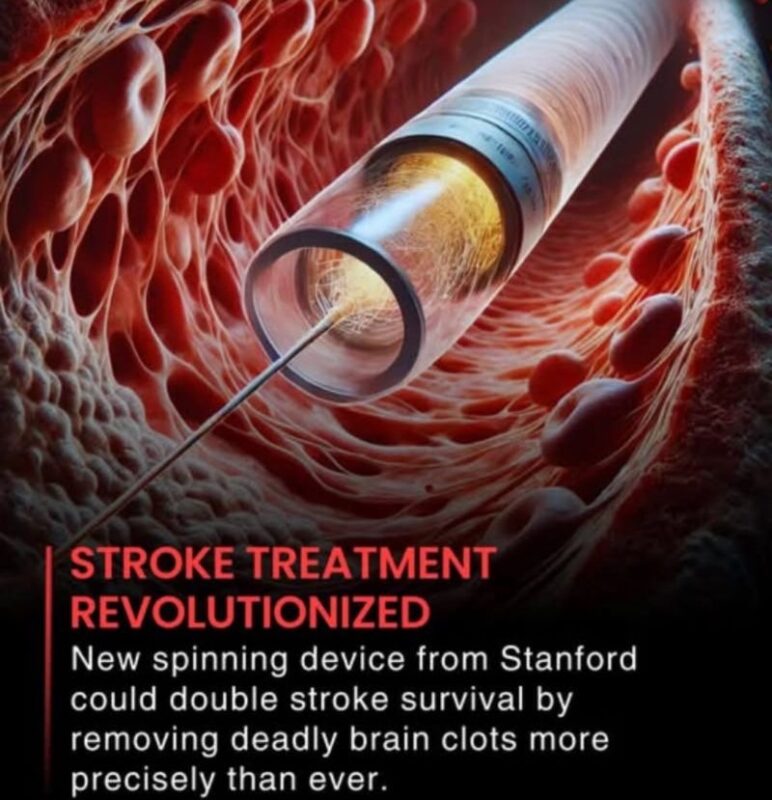
”Stanford researchers have created a groundbreaking tool called the “milli-spinner” that could save countless lives by transforming stroke treatment.
This tiny device spins and compresses blood clots blocking brain arteries, allowing doctors to remove them far more effectively than current methods.
Traditional thrombectomy uses a catheter to suck up or snare clots but often leaves dangerous fragments behind or breaks clots into smaller pieces that can cause further blockages.
The milli-spinner works smarter by carefully cutting and compressing clots up to 95 percent before vacuuming them out.
This dramatically reduces leftover fragments and improves the chances of fully restoring blood flow on the first attempt.
For the toughest clots, success rates soared from just 11 percent with standard tools to a remarkable 90 percent using the milli-spinner.
This breakthrough could be a game-changer for stroke patients, potentially reducing brain damage and long-term disability.
Researchers believe this technology may also be adapted for other types of vascular blockages or even non-medical uses in the future.
For now, it offers new hope to millions at risk of devastating strokes by helping doctors safely reopen clogged arteries before permanent harm occurs.”
Stay updated with Hemostasis Today.
-
Oct 20, 2026, 03:13Sumyea Kabir: Pre-Analytical Quality in Phlebotomy – Preventing In Vitro Hemolysis
-
Oct 20, 2026, 02:37M. Sekip Altunkan: Can Anticoagulation Be Safely Stopped After AF Ablation?
-
Oct 20, 2026, 02:26Ahmed Ammar: Managing VT Recurrence Post-Ablation
-
Oct 20, 2026, 01:43Oliver Weingärtner: Deprescribing of Lipid Lowering Drug after MI is Associated with Cardiovascular Events
-
Oct 19, 2026, 19:44Where You Live Should not Determine Whether You Receive Care – World Federation of Hemophilia
-
Oct 19, 2026, 19:42Belen Bianco: Prevention, Early Suspicion and an Interdisciplinary Approach Save Lives
-
Oct 19, 2026, 19:40Christina Chrysohoou: Catheter-Based LAAC vs OAC for Stroke Prevention in Atrial Fibrillation
-
Oct 19, 2026, 19:38Matthew Flick: A Two-Day Research Meeting on Fibrinogen, Hemostasis and Thrombosis
-
Oct 19, 2026, 19:37Hayat Saeed: Excited to Share Our Publication on the FGL1–Hepcidin Axis in Iron Homeostasis and Disease