


Louise Bannon: Did You Know That Arterial Thrombosis Is One of The Top Global Killers?
Louise Bannon, Director of Membership, Marketing and External Relations at ISTH, reposted from WHO on LinkedIn:
”Did you know that arterial thrombosis, which can cause heart attack and stroke, is one of the top global killers?
High blood pressure (hypertension) is the leading risk factor for these events.
Venous thrombosis, deep vein thrombosis (DVT) and pulmonary embolism (PE), can also be life-threatening, especially after surgery, periods of immobility, cancer or hormonal therapy.
With 1.4 billion people living with hypertension worldwide (World Health Organization), understanding thrombosis, how it happens, its risk factors and how to prevent it, has never been more important.
Learn the signs. Know your risk. Take action to protect your health.”
World Health Organization (WHO) shared on LinkedIn:
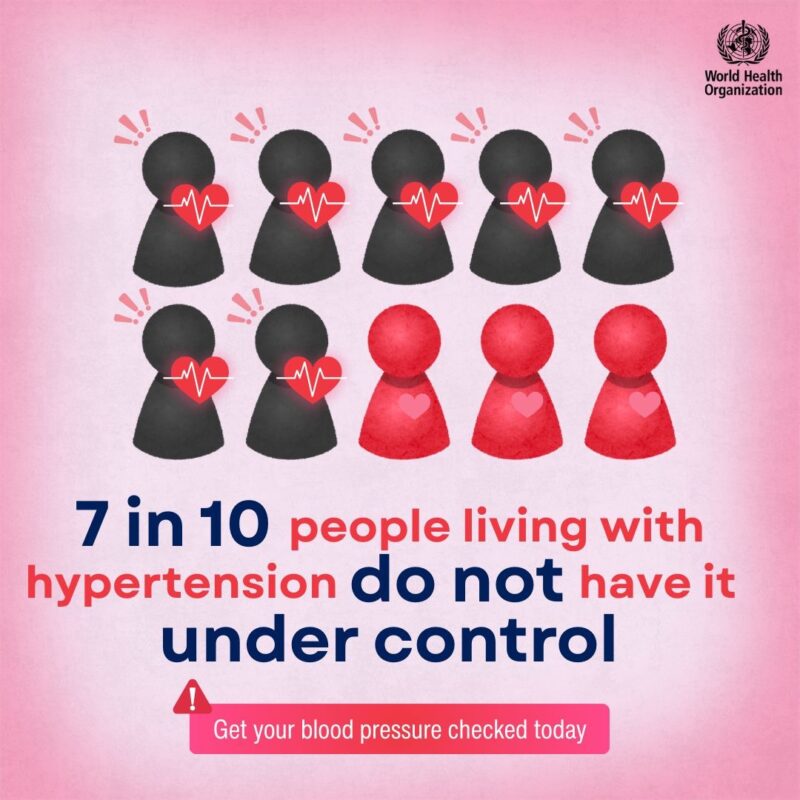
”New WHO report finds 1.4 billion people live with hypertension.
Hypertension is the number one risk factor for:
- Heart attack
- Stroke
and can lead to:
- Chronic kidney disease
- Dementia
Get your blood pressure checked today! Learn more here.”
Stay updated on all advances in the field of thrombosis with Hemostasis Today.
-
Oct 6, 2026, 07:44Carolina Moreira Ponce: Thrombosis Month – Why Prevention Starts With Risk Assessment
-
Oct 6, 2026, 07:03Laila Ahmed: Stroke Imaging – A Practical Radiology Approach
-
Oct 6, 2026, 05:52David Esposito: Can Standard Ultrasound Detect May Thurner Syndrome?
-
Oct 6, 2026, 04:33Hessam Kakavand: Rethinking Thrombotic Risk in Modern Cancer Therapy
-
Oct 6, 2026, 04:07Moussa Zein Aldine: Acute Coronary Syndrome Every Minute Matters
-
Oct 6, 2026, 03:13Patrick Taylor: Glow Stack Trend What the Evidence Really Shows
-
Oct 6, 2026, 02:59Preventing Hospital Associated Venous Thromboembolism – Thrombosis Canada
-
Oct 6, 2026, 02:42Treatment of Iron Deficiency With and Without Anemia – American Society of Hematology
-
Oct 6, 2026, 02:36Mouna Sassi: When Clinical and Laboratory Perspectives Meet in Thrombosis Care