


Sheharyar Raza: Examining Guideline Discordance in Evidence-Based Apheresis Recommendations
Sheharyar Raza, Transfusion Medicine Specialist and Data Scientist at University Health Network, shared a post on LinkedIn about a recent article he and his colleagues co-authored, adding:
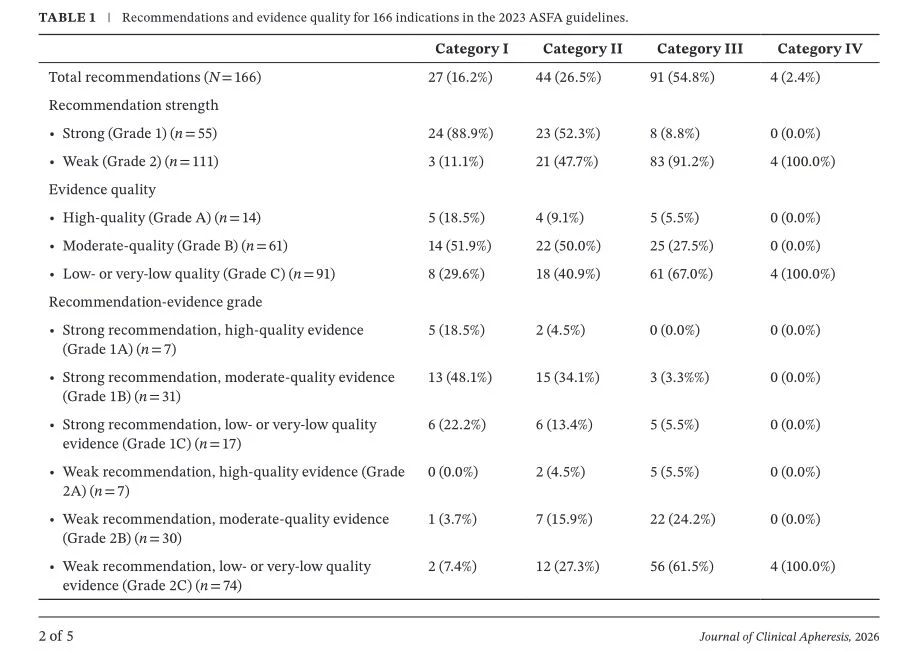
“In evidence based medicine, ‘discordance’ is when recommendations don’t align with evidence, either in strength or direction
Co-authors Jeremy Jacobs, et al examined discordance in the American Society for Apheresis guidelines, widely used to justify which patients should get exchange transfusions. The thrust of our argument is that although some discordance is expected in clinical areas dealing with clinical areas where it is harder to perform large studies (e.g. rare diseases), each instance should be transparently acknowledged and justified to highlight knowledge gaps and uncertainty.”
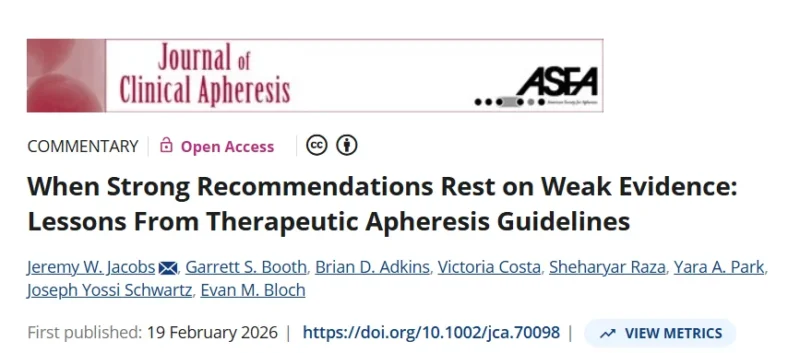
Title: When Strong Recommendations Rest on Weak Evidence: Lessons From Therapeutic Apheresis Guidelines
Authors: Jeremy W. Jacobs, Garrett S. Booth, Brian D. Adkins, Victoria Costa, Sheharyar Raza, Yara A. Park, Joseph Yossi Schwartz, Evan M. Bloch
Read the Full Article on Journal of Clinical Apheresis
More posts featuring Sheharyar Raza on Hemostasis Today.
-
Oct 9, 2026, 11:06Nobles Green: How siRNA Therapy Helps the Body Form Stronger Clots
-
Oct 9, 2026, 10:53Switching From Emicizumab to Denecimig in Hemophilia A – Rare Disease Advisor
-
Oct 9, 2026, 10:40What New U.S. Data Reveal About GT – Glanzmann’s Research Foundation
-
Oct 9, 2026, 10:32Anjali Pandey: The Morphologic Clues to MDS With del(5q)
-
Oct 9, 2026, 10:13Reza Shojaei: 5 Leadership Responsibilities for a Sustainable Plasma Ecosystem
-
Oct 9, 2026, 08:38Johannes Gratz: Perioperative Care in Factor VII Deficiency – Treating the Patient, Not the Number
-
Oct 9, 2026, 08:28Ghanim Fajish: Vascular Cells May Retain a Prothrombotic Memory of Oxidative Stress
-
Oct 9, 2026, 07:43Mehmet Cilingiroglu: The First Diagnosis of Coronary Thrombosis in a Living Patient
-
Oct 9, 2026, 07:21Federico Ravaioli: 40 kPa Spleen Stiffness May Help Avoid Endoscopy in Chronic PVT