

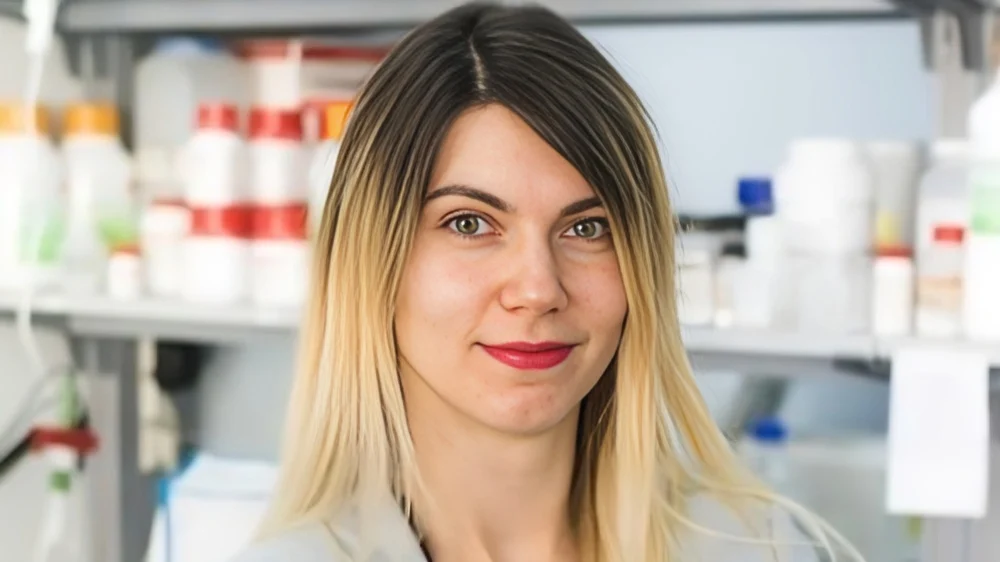
Anna Supernat: Does Leukocyte-Associated RNA Retention Affect Platelet-Based Cancer Classification?
Anna Supernat, Head of Computational Center, Group Leader at tle Laboratory of Translational Oncology at Group Leader at tle Laboratory of Translational Oncology, shared a post on LinkedIn about a recent article she and her colleagues co-authored, published in Molecular Oncology, adding:
“How much does leukocyte-associated RNA retention really matter in platelet-based cancer diagnostics?
This is one of the important methodological questions we set out to address in our latest publication in Molecular Oncology.
In this study, we conducted a comprehensive and rigorous assessment of whether leukocyte-associated RNA retention affects platelet transcriptomic profiles and, most importantly, the performance of machine learning-based cancer classification.
By combining large-scale transcriptomic data (2,351 human RNA samples) with single-cell and single-platelet RNA sequencing, we investigated this potential confounding factor in considerable detail.
Our key finding?
Although leukocyte-associated RNA retention can influence transcriptomic signals, its impact on the final cancer classification was remarkably small. Adding the leukocyte-associated RNA retention score changed the AUC only from 0.9247 to 0.9249.
These findings are important for the field of liquid biopsy and tumor-educated platelets.
They suggest that leukocyte-associated RNA retention should not automatically be considered a critical limitation or a reason to routinely exclude samples.
Instead, its relevance should be evaluated in the context of the specific research question and diagnostic application.
We hope this work contributes to a more evidence-based understanding of platelet RNA profiling and supports further development of robust, minimally invasive cancer diagnostics.”
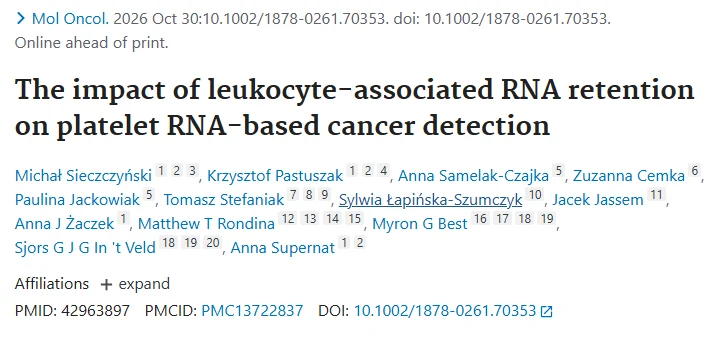
Title: The impact of leukocyte-associated RNA retention on platelet RNA-based cancer detection
Authors: Michał Sieczczyński, Krzysztof Pastuszak, Anna Samelak-Czajka, Zuzanna Cemka, Paulina Jackowiak, Tomasz Stefaniak, Sylwia Łapińska-Szumczyk, Jacek Jassem, Anna J. Żaczek, Matthew T. Rondina, Myron G. Best, Sjors G. J. G. In ‘t Veld, Anna Supernat
Stay updated on all scientific advances with Hemostasis Today.
-
Nov 2, 2026, 22:12Annie Bauzon: How the Body Produces Millions of Blood Cells Every Day
-
Nov 2, 2026, 22:07Aabha Divya: Late Biatrial Thrombosis 31 Years After Heart Transplantation
-
Nov 2, 2026, 22:01Sakditad Saowapa: Anticoagulant Pharmacology and the Pursuit of Effective Therapy With Less Bleeding
-
Nov 2, 2026, 21:55Lucio D’Anna: Can Inflammatory Biomarkers Identify Residual Risk in Atrial Fibrillation?
-
Nov 2, 2026, 21:54Dawood Findakly: VTE Prophylaxis during Pregnancy
-
Nov 2, 2026, 21:52N. Mariana S. Vasquez: Five Rules That Help Identify the Cause of Hemolytic Anemia
-
Nov 2, 2026, 21:52Rob Maloney: Working Together to Strengthen Bleeding Disorders Care in the Dominican Republic
-
Nov 2, 2026, 18:08Jonathan Penm: Antithrombotic Stewardship Optimizes VTE Prophylaxis in ICU Patients
-
Nov 2, 2026, 14:48Heghine Khachatryan: Vitamin B12 Replacement Choosing the Right Route for Each Patient