

ASH25: Wolfgang Miesbach on Why No Single Haemophilia Therapy Is the “Winner”
Wolfgang Miesbach, Professor of Medicine at Frankfurt University Hospital, shared on LinkedIn:
The “Paradox of Choice” is very real in Haemophilia right now.
I just caught Dr. Mark Reding’s insightful presentation at ASH25, and it really highlighted that having more options doesn’t actually make the decision easier. In fact, it makes it much harder.
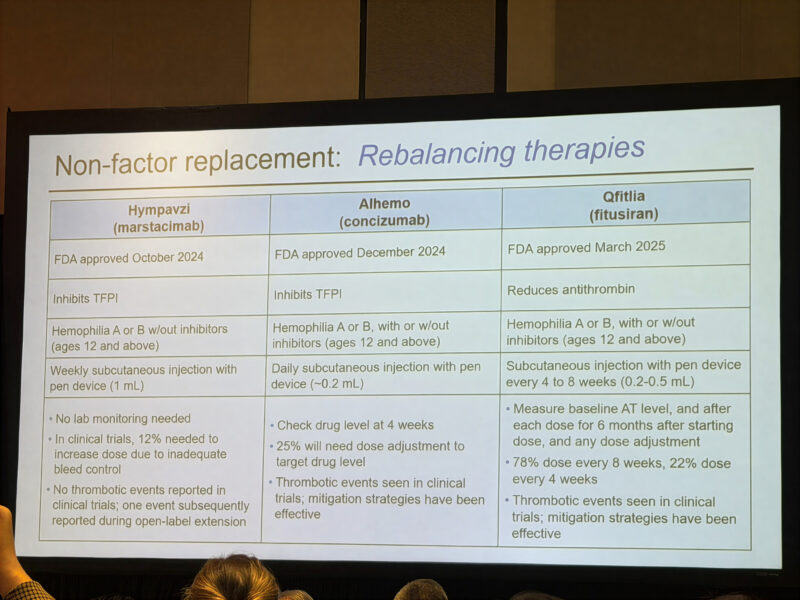
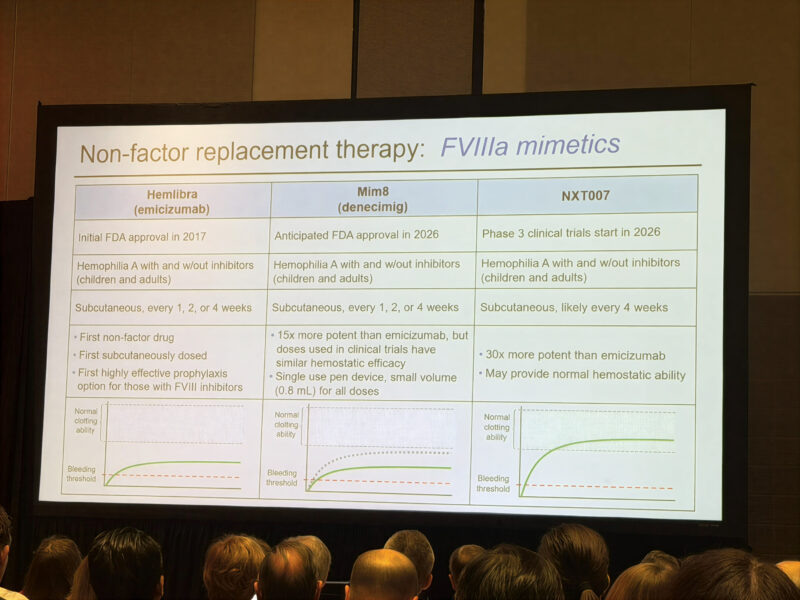
We’re looking at a massive toolkit now—extending half-life, bypassing (like the upcoming Mim8 or NXT007), rebalancing (Hympavzi, Alhemo, Qfitlia), or gene therapy (Roctavian, Hemgenix).
But Dr. Reding made a crucial point: the ‘menu’ isn’t actually open to everyone. You can’t just pick the one with the best marketing. The choice is heavily gated by biology (Type A vs B), age (Rebalancers ≥12y, gene Tx ≥18y), inhibitor Status, distribution and reimbursement issues.
But once you get past those gates, how do you actually choose? Dr. Reding laid out specific factors to break the tie:
– Venous Access is the First Filter: Before debating mechanism, look at the veins. For infants or adults with joint damage, a SubQ option isn’t just a preference – it’s a necessity.
– Risk Aversion is Personal: Some patients want the newest ‘zero bleed’ potency; others prioritize 20 years of safety data. As Dr. Reding noted, both are valid perspectives.
– Activity Level: Bleed risk isn’t static. A high-impact athlete needs a completely different protection profile than someone with a sedentary job.
The tricky part? There is no ‘winner.’
Because we have zero head-to-head data, we can’t say one is medically better than the other. We’re just trading attributes.
The solution? Realizing that the ‘best’ choice isn’t permanent.
What works for young children likely won’t be the right fit for an active adult. The goal isn’t to find the perfect drug for life, but the right fit for right now.
Shared decision-making has never been more important – because we aren’t just prescribing a drug anymore, we’re matching a mechanism to a lifestyle.
Stay updated with Hemostasis Today.
-
Sep 16, 2026, 10:30Danny Gaskin: Transfusion Practitioners at the Heart of Maternity and Anti-D Care
-
Sep 16, 2026, 10:15Massimiliano Camilli: Mechanistic Insights Into Cardiovascular Risk Across Androgen Deprivation Therapies
-
Sep 16, 2026, 09:57Nathan Connell: A Regional Approach to Advancing Contemporary Hemophilia A Care
-
Sep 16, 2026, 09:20Mengistu Abate Belay: Bridging the Gap in Anemia Prevention During Pregnancy
-
Sep 16, 2026, 09:09Younes Kalakhy: When Normal Coagulation Tests Miss von Willebrand Disease
-
Sep 16, 2026, 09:00Test Your Knowledge of Warm Autoimmune Hemolytic Anemia – ASH Education
-
Sep 16, 2026, 08:28Jean Nakhle: Uncovering How Excess Cysteine Drives Cell Death
-
Sep 16, 2026, 08:20Heghine Khachatryan: Arterial and Venous Thrombosis May Require Different Approaches in Neonates
-
Sep 16, 2026, 07:57Tammuella Chrisentery-Singleton: Standing on the Shoulders of Giants in Hemophilia Care