


Nicolas Gendron: Rapid and Reliable Diagnosis Using CLIA vs ELISA in 113 Suspected Patients
Nicolas Gendron, Research Fellow, Hematologist at Boston Children’s Hospital, shared a post on LinkedIn:
“New online publication in 𝑩𝒍𝒐𝒐𝒅 𝑽𝑻𝑯 Blood Journals Portfolio
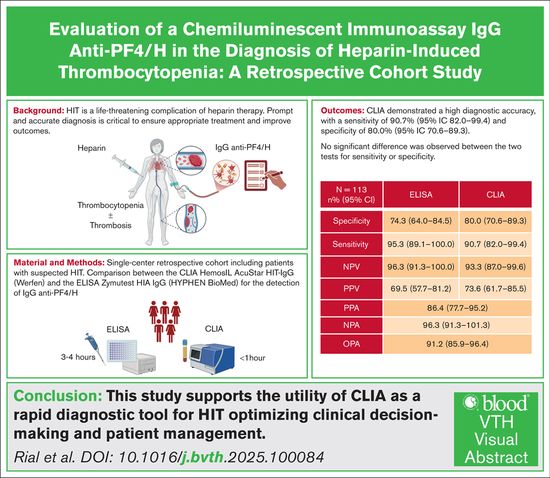
Heparin-induced thrombocytopenia (HIT) is a serious complication of heparin therapy. Rapid and reliable diagnosis is essential to adapt management and improve patient prognosis.
At HEGP, we compared the diagnostic performance for detecting anti-PF4/H antibodies using the HemosIL AcuStar HIT-IgG test (CLIA, Werfen) with our reference test Zymutest HIA IgG (ELISA, HYPHEN BioMed), in 113 patients suspected of HIT (4Ts score >3), using the result of the serotonin release assay (SRA) as the functional platelet test reference.
Excellent sensitivity and specificity of both tests
- Very few discordant cases among patients with confirmed HIT
- Overall agreement between the two techniques: 91.2%
- The CLIA proved reliable, rapid, and efficient
These results support the use of CLIA as a rapid and relevant diagnostic tool in the HIT diagnostic strategy.”
Stay updated on the latest scientific advances in the field of platelet disorders with Hemostasis Today.
-
Oct 10, 2026, 10:32Randall Schaefer: When Your Prehospital Agency Reports Blood Product Wastage Rates, What is it Really Reporting?
-
Oct 10, 2026, 10:26Simone Strasser: ROTEM-Guided Transfusion Cuts Blood Product Use in Patients with Cirrhosis
-
Oct 10, 2026, 10:18Jérôme S.: WHO Launches Global Roadmap to Combat Hypertensive Disorders of Pregnancy
-
Oct 10, 2026, 10:07Maha Othman: Look Forward to an Amazing ISTH 2027 in Vancouver!
-
Oct 10, 2026, 10:02Rucha Patil: National Convening Highlights Opportunities for Equitable Hemophilia Care Across India
-
Oct 10, 2026, 09:52Yuria Ito: Should Ferritin Testing Become a Routine Part of Prenatal Care in Japan?
-
Oct 10, 2026, 09:48Ahmed Alotaibi: Can We “Remove” the ABO Problem from Group O Platelets?
-
Oct 10, 2026, 09:31Help Shape the New ASH Iron Deficiency Guidelines – American Society of Hematology
-
Oct 10, 2026, 09:05Wolfgang Miesbach: Moving from Bleed Control to Comprehensive Joint Health