


Farhad Moradpour: Health Equity and Public Health – What Drives Anemia Disparities in Ethnic Minority Populations?
Farhad Moradpour, Epidemiologist at Kurdistan University of Medical Sciences, shared a post on LinkedIn about a recent article he and his colleagues co-authored, published in BMC Public Health, adding:
“I am pleased to share recentely published paper in BMC public health.
Health Equity and Public Health: What Drives Anemia Disparities in Ethnic Minority Populations?
A 2025 study published in BMC Public Health sheds light on how socioeconomic factors and gender directly influence the prevalence of anemia among the Kurdish population in Iran.
Analyzing cohort data from 3,869 adults aged 35–70, researchers uncovered key insights about health equity:
Key Takeaways:
- Overall Prevalence: Anemia stands at 4.4% overall, but disproportionately impacts vulnerable groups.
- Gender Gap: Women are nearly 3x more likely to suffer from anemia than men (6.11% vs. 2.24%).
- Education and Wealth: Illiterate individuals faced an anemia rate of 5.50% vs. 1.61% for university-educated adults. The poorest group had double the rate of the wealthiest.
- Root Causes: Decomposition analysis shows that education and gender contribute over 50% each to the overall socioeconomic inequality surrounding anemia.
The Bottom Line: Medical interventions alone aren’t enough.
Closing the health gap requires targeted public health policy—focusing on female health literacy, nutritional support, and expanding access to healthcare in lower-income communities.”
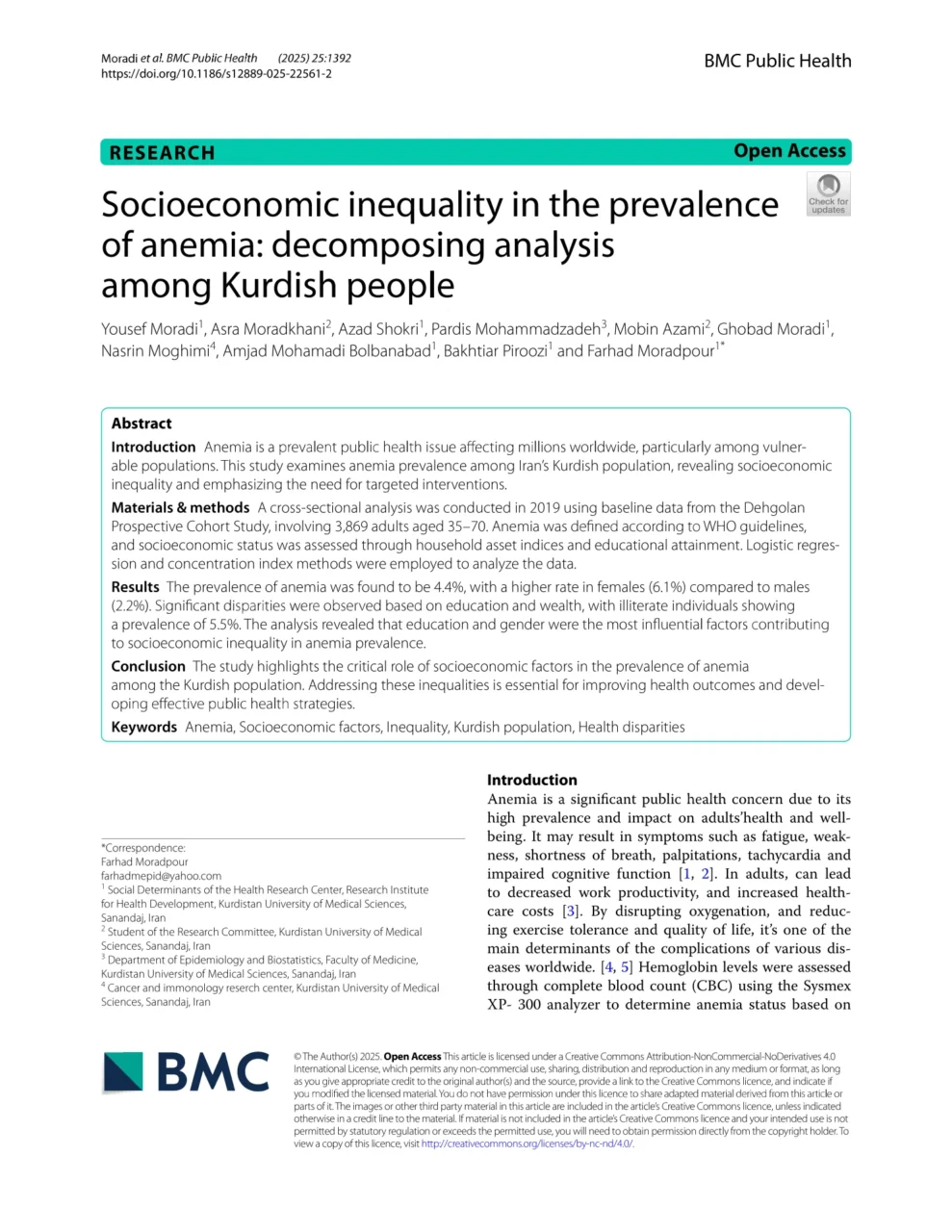
Title: Socioeconomic inequality in the prevalence of anemia: decomposing analysis among Kurdish people
Authors: Yousef Moradi, Asra Moradkhani, Azad Shokri, Pardis Mohammadzadeh, Mobin Azami, Ghobad Moradi, Nasrin Moghimi, Amjad Mohamadi Bolbanabad, Bakhtiar Piroozi, Farhad Moradpour
Stay updated on all scientific advances with Hemostasis Today.
-
Nov 8, 2026, 17:57Dhiren Patel: PLD1-Derived Phospholipids Regulate NAD Kinase and ROS Production in Neutrophils
-
Nov 8, 2026, 17:48Andra T.: What Causes Antiphospholipid Syndrome? – Four Steps, not One Cause
-
Nov 8, 2026, 17:38Nasrin Samadi: Can a Normal Clotting Test Be Misleading?
-
Nov 8, 2026, 17:36Paschalis Evangelidis: The Multifactorial Nature of Cardiovascular Risk in People With Hemophilia
-
Nov 8, 2026, 17:32Evangelos Panagiotopoulos: Apixaban Reduces Stroke and Major Bleeding Risk in Secondary Stroke Prevention
-
Nov 8, 2026, 17:27Danny Gaskin: Applications Open for the BBTS Specialist Certificate in Clinical Transfusion Practice
-
Nov 8, 2026, 16:54James P. Crowley: DOAC Testing Under 50 ng/mL Safely Expedites Urgent Hip Fracture Surgery
-
Nov 8, 2026, 16:21Alessandra Bosch: Women and Girls With Bleeding Disorders and the DACH Registries at HHS 2026
-
Nov 8, 2026, 15:0310 Posts Not to Miss This Week