


Heghine Khachatryan: Pregnancy, Thrombosis, and Aspirin – Who Really Needs Prophylaxis?
Heghine Khachatryan, Editor-in-Chief of Hemostasis Today, Head of Hemophilia and Thrombosis Center at Yeolyan Hematology and Oncology Center, shared Thrombosis Haemostasis‘s post on LinkedIn, adding:
“Pregnancy, Thrombosis, and Aspirin: Who Really Needs Prophylaxis?
The use of low-dose aspirin and anticoagulant thromboprophylaxis during pregnancy remains one of the most debated areas of obstetric hemostasis.
Clinical decisions should be based on a comprehensive assessment of maternal thrombotic risk, previous pregnancy outcomes, the presence of antiphospholipid syndrome, inherited thrombophilia, and other acquired risk factors.
Not every thrombophilia requires treatment, and not every pregnancy loss warrants anticoagulation.
Equally important, aspirin and low-molecular-weight heparin serve different purposes and should be prescribed according to clear clinical indications.
As our understanding of pregnancy-associated thrombosis continues to evolve, individualized, evidence-based care remains essential for achieving the best maternal and fetal outcomes.”
Thrombosis Haemostasis shared a post on LinkedIn about a recent article by Elvira Grandone et al., published in Thrombosis Haemostasis:
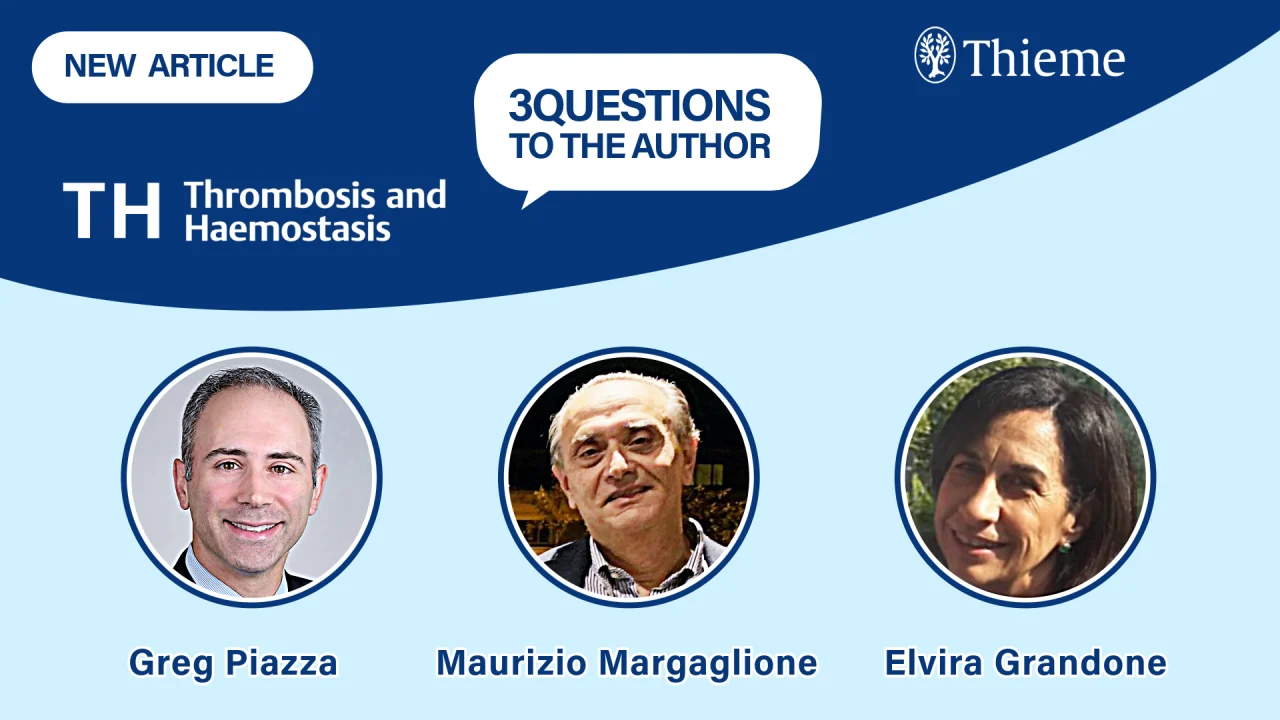
“TH: Why did you (and your colleagues) write this paper? What was its main purpose?
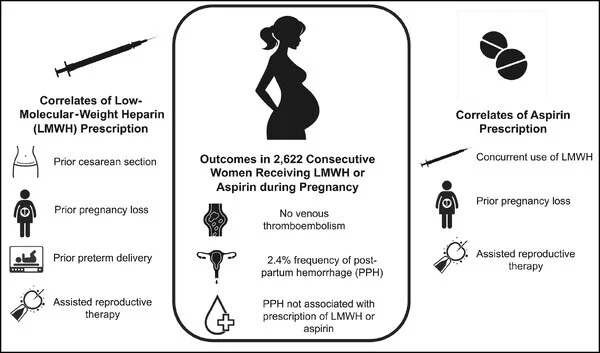
Elvira Grandone , Maurizo Margaglione and Greg Piazza: We undertook this project to identify predictors of antithrombotic drug prescription during pregnancy in a general obstetric population. The motivation arose from our real-world observation that an increasing number of pregnant women are being routinely prescribed these medications, often without a well-defined evidence base. Our aim was to clarify which clinical factors actually drive prescribing practices.
What are the main conclusions?
E.G, M.G, G.P : The study shows that antithrombotic therapy is frequently prescribed during pregnancy. Among the 1,898 women with available data, 157 (8.3%) received low-dose aspirin (100 mg/day), and 746 (39.3%) received low-molecular-weight heparin (LMWH)—mainly at prophylactic doses—of whom only 49 (2.6%) were treated during pregnancy, with the remainder receiving LMWH postpartum. Antithrombotic use was largely driven by maternal characteristics such as assisted conception, prior preterm birth, pregnancy loss, and cesarean delivery, which were the strongest predictors of prescription. Postpartum LMWH use was primarily associated with cesarean delivery.
What are the paper’s implications?- to the public?-to medical professionals?
E.G, M.G, G.P : To the public; Women who are pregnant or planning pregnancy should be better informed about the appropriate indications for antithrombotic drugs, so they can understand when these treatments may offer real benefit. To medical professionals; The study emphasizes the need for cautious, evidence-based use of LMWH and aspirin during pregnancy, given the uncertain benefits and the lack of clear association with adverse maternal or fetal outcomes.”
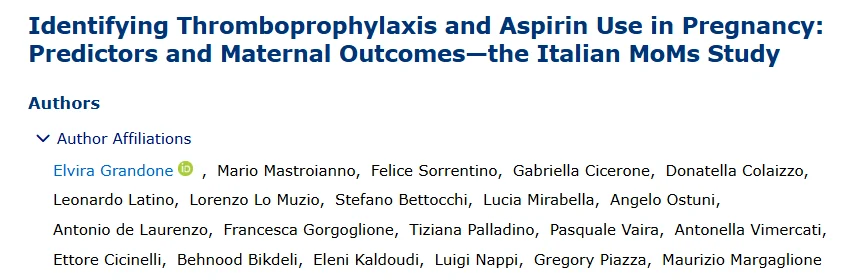
Title: Identifying Thromboprophylaxis and Aspirin Use in Pregnancy: Predictors and Maternal Outcomes – the Italian MoMs Study
Authors: Elvira Grandone, Mario Mastroianno, Felice Sorrentino, Gabriella Cicerone, Donatella Colaizzo, Leonardo Latino, Lorenzo Lo Muzio, Stefano Bettocchi, Lucia Mirabella, Angelo Ostuni, Antonio de Laurenzo, Francesca Gorgoglione, Tiziana Palladino, Pasquale Vaira, Antonella Vimercati, Ettore Cicinelli, Behnood Bikdeli, Eleni Kaldoudi, Luigi Nappi, Gregory Piazza, Maurizio Margaglione
Stay updated on all scientific advances with Hemostasis Today.
-
Sep 23, 2026, 04:34David Akande: When Sickle Cell Crises Have No Clear Trigger
-
Sep 23, 2026, 04:13Jean Connors: Safety of Heparin Re-Exposure in Patients with Remote HIT
-
Sep 23, 2026, 04:09Beth Psaila: Applications Now Open for the Gordon Research Conference on Megakaryocytes and Platelets
-
Sep 23, 2026, 03:27Abbie Newton: How Better Data Can Reduce Platelet Wastage
-
Sep 23, 2026, 03:01Suvro Sankha Datta: Rapid Blood Group Genotyping Using Gold Oligo Nanonet Assembly
-
Sep 23, 2026, 02:55Asghar Muhammad: Exploring New Ways to Expand Blood Transfusion Compatibility
-
Sep 23, 2026, 02:49Bianca Rocca: Personalized Cardiovascular Pharmacotherapy in the September 2026 EHJ Issue
-
Sep 23, 2026, 02:35Udaya RajBhandari: A Hidden Risk of Repeated Transfusions in β Thalassemia
-
Sep 23, 2026, 00:08Janar Sathananthan: The Importance of Durable Drug Delivery in DCB Therapy