


Emilia Arturo: Give Your Hematology Paper a Second Chance
Emilia (Emily) Arturo, Senior Managing Editor of Blood and Blood Global Hematology, shared a post by Blood Journals Portfolio on LinkedIn:
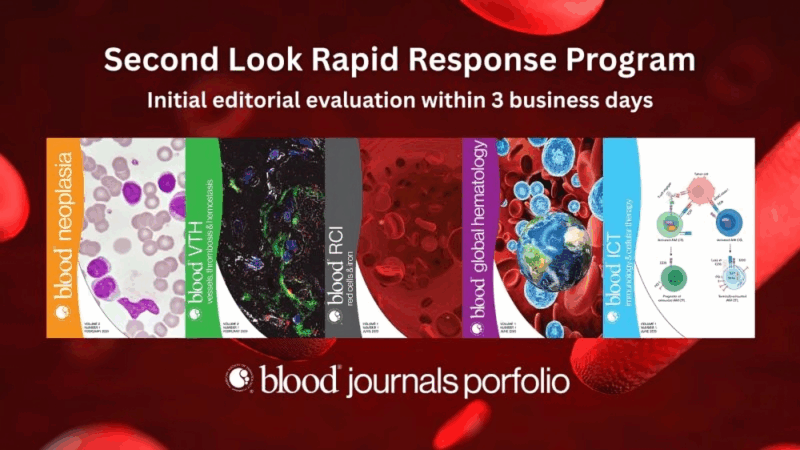
”Have a paper already reviewed and rejected at another reputable hematology, immunology, oroncology journal? Consider submitting the paper and its reviews for a Second Look Rapid Response from one of these Blood Journals.”
Quoting Blood Journals Portfolio’s post:
”Submitting to a top medical journal can be a long process and not getting published can feel like a setback. However, it doesn’t have to be the end of your manuscript’s journey.
The five specialized journals in the Blood Journals portfolio, Blood ICT, Blood RCI, Blood VTH, Blood Neoplasia, and Blood Global Hematology are offering authors a rapid second look. If you have research within the scope of one of these journals, you could get published soon with the backing of the renowned Blood brand. It’s simple:
- Update and submit a manuscript previously submitted to another reputable journal (with reviewer feedback)
- Receive an initial editorial assessment within just 3 business days
- Just 8 weeks from submission to publishing of first edition
Your work deserves to be seen. Learn more here.”
Stay updated with Hemostasis Today.
-
Sep 29, 2026, 16:21Yitshak Kreiss: From Treating Patients to Defining the Standard of Knowledge
-
Sep 29, 2026, 16:18Edward Lee Carter: Why Periprocedural DOAC Guidance Needs a Common Output Standard
-
Sep 29, 2026, 16:07Yasmine Laraba: Deep Vein Thrombosis Causes, Signs and Management
-
Sep 29, 2026, 16:01Stephen Cornelissen: How Joining the Stem Cell Registry Can Save Patients with Blood Cancers
-
Sep 29, 2026, 15:45Alan Nurden: Could Mast Cell aIIb Integrin Play a Key Role in Septic Thrombus Stability?
-
Sep 29, 2026, 15:43Priyadarshani Sharma: Advocacy and Patient Rights Transform Indian Haemoglobinopathies Care
-
Sep 29, 2026, 15:21Kanchan K Banerjee: Rusfertide Earns NCCN Category 1 Recommendation for Polycythemia Vera
-
Sep 29, 2026, 15:06Faizan Khan։ The Worldwide Burden of Venous Thromboembolism
-
Sep 29, 2026, 14:59Global Von Willebrand Disease Diversity Webinar Now Available on EHC YouTube – EHC