

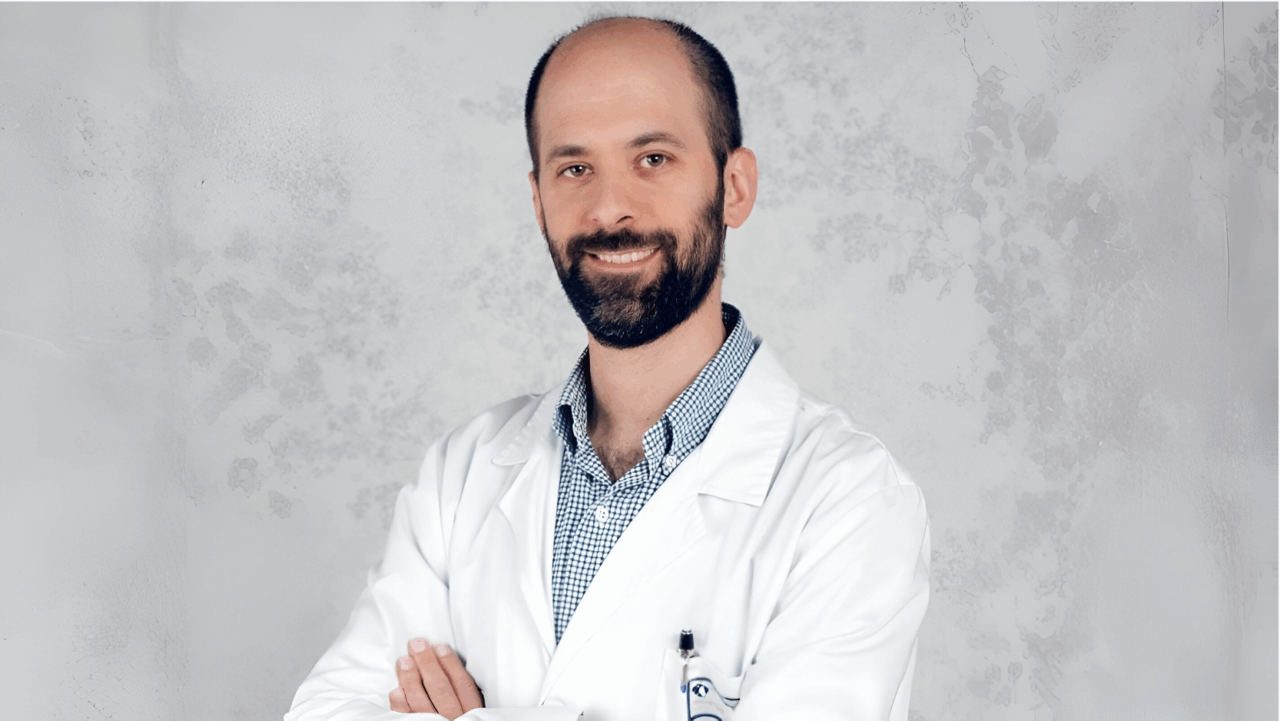
Jorge Monge: Time to Implement Universal Fetal Genotyping for RhD-Negative Pregnant Women
Jorge Monge, Head of Immunohematology and Blood Typing at Basque Center for Transfusion and Human Tissues (Osakidetza), shared on LinkedIn:
”This past Wednesday, I participated in the ‘The TransFuse Day’ sponsored by Werfen and with Eduardo Muniz Diaz as scientific director of the event.
Speakers included Eugenia Antolin, Nuria Nogues Galvez, and Íñigo Romón, in addition to Eduardo himself.
The main conclusion of the event:
‘The evidence and accumulated experience make it very difficult to justify not implementing universal screening programs for RhD-negative pregnant women using fetal genotyping in maternal plasma.’
Highlights in this regard:
- We are unnecessarily using drugs of human origin (critical SoHo) in up to 40% of RhD-negative pregnant women. Furthermore, these blood products are not even produced in Europe and do not meet the standards that we do require for others such as albumin or polyvalent gamma globulin.
- Screening must meet the same traceability requirements as a transfusion. Therefore, it must be carried out in a SoHO entity.
- The program must be organized in the most centralized way possible (SoHO establishment): great technical complexity and, above all, a very high level of knowledge is required to correctly interpret up to 4% of ‘false positives.’
- All the professionals in attendance shared the difficulty of conveying this urgent need to management and, above all, political authorities.
The only successful model at the national level was shared by Nuria Nogues Galvez, who took 13 years to universalize her wonderful In-House method.
(Congratulations to Blood and Tissue Bank and Catalan Health Service!)
And for all these reasons, we are doing our bit by publishing yesterday, together with José Antonio García Erce, our concise opinion on this unforgettable improvement that our National Health System needs.
We hope that the Ministry of Health, Osakidetza, and people like Alberto Martínez Ruiz, Fernando Domínguez Cunchillos, and César Pascual Fernández will reflect today on this issue, which affects some 48,000 women every year in our country and has not been reviewed for decades.
What barriers do you see to implementing this screening in your autonomous community?”
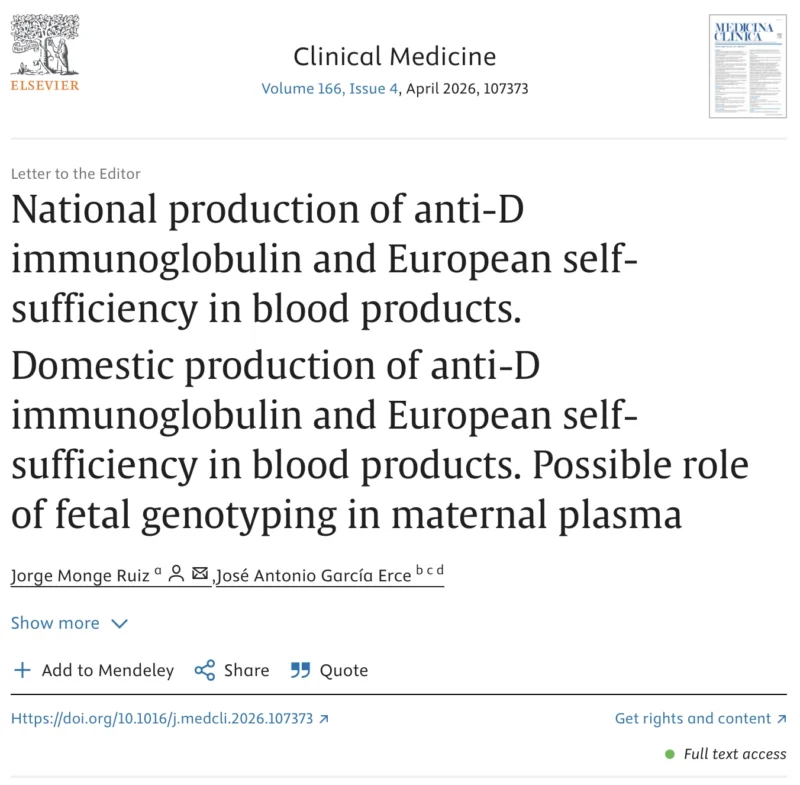
Title: National production of anti-D immunoglobulin and European self-sufficiency in blood products. Domestic production of anti-D immunoglobulin and European self-sufficiency in blood products. Possible role of fetal genotyping in maternal plasma
Authors: Jorge Monge Ruiz, José Antonio García Erce
Read the Full Article on Clinical Medicine
Stay updated on all scientific advances with Hemostasis Today.
-
Oct 19, 2026, 19:44Where You Live Should not Determine Whether You Receive Care – World Federation of Hemophilia
-
Oct 19, 2026, 19:42Belen Bianco: Prevention, Early Suspicion and an Interdisciplinary Approach Save Lives
-
Oct 19, 2026, 19:40Christina Chrysohoou: Catheter-Based LAAC vs OAC for Stroke Prevention in Atrial Fibrillation
-
Oct 19, 2026, 19:38Matthew Flick: A Two-Day Research Meeting on Fibrinogen, Hemostasis and Thrombosis
-
Oct 19, 2026, 19:37Hayat Saeed: Excited to Share Our Publication on the FGL1–Hepcidin Axis in Iron Homeostasis and Disease
-
Oct 19, 2026, 19:08IPAW 2026 Comes to a Close, but the Work Continues – PPTA
-
Oct 19, 2026, 17:44Paul Riley: Moderating a Webinar on Anticoagulation Monitoring
-
Oct 19, 2026, 16:36Christopher Pittman: Blood Clot Prevention Cannot End at Hospital Discharge
-
Oct 19, 2026, 16:13Javier M. Floren: When Immune Cells Move With Their Environment