

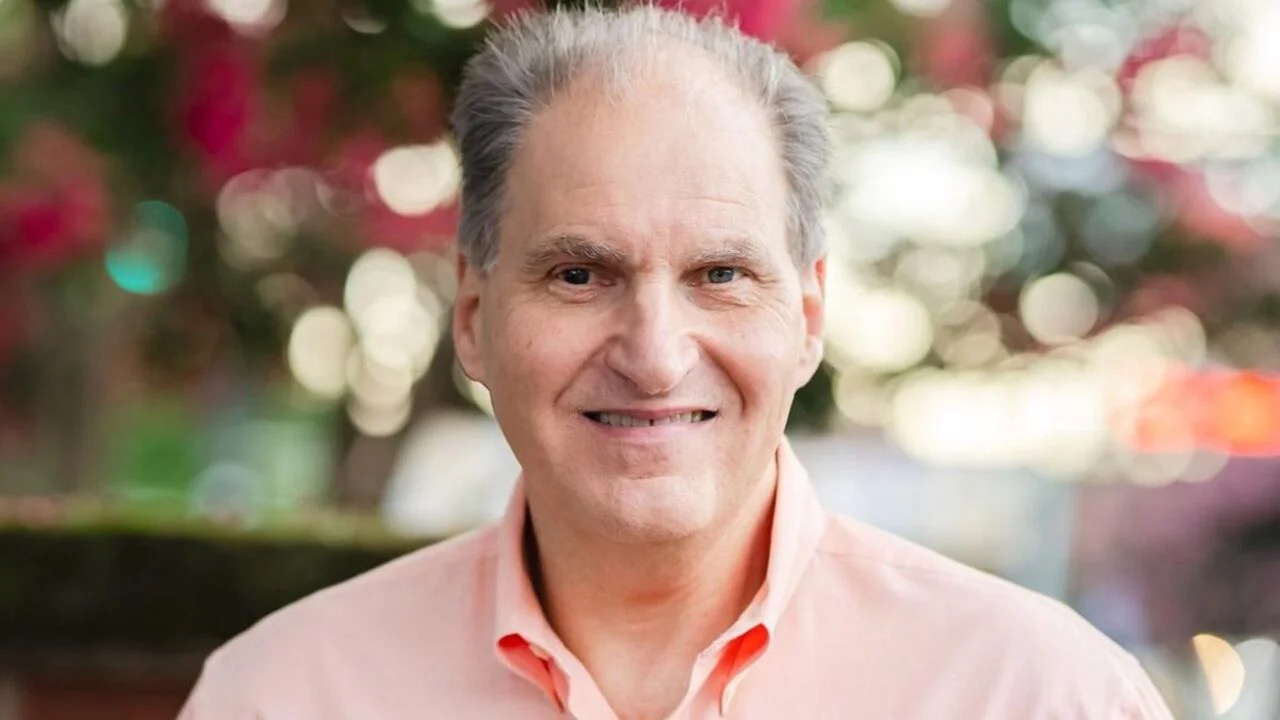
Leonard Valentino: Why Clear Communication Matters in the Era of Gene Editing
Leonard Valentino, Former President and CEO of NBDF, President of WFH USA, recenlty shared a post on LinkedIn about a recent article he and his colleagues co-authored, published in Nature, adding:
”Bridging the Language Gap in Gene Editing: Why a Shared Lexicon Matters for Rare Diseases
Advances in gene editing are transforming what’s possible for people living with rare and inherited disorders.
But as the science accelerates, one barrier continues to slow progress: communication.
To address this barrier , I’m pleased to share our recent article in Gene Therapy highlighting a crucial need—a clear, shared lexicon tha helps physicians, researchers, and patients speak the same language when discussing gene editing technologies.
Why this matters
- For physicians: A standardized vocabulary improves clinical communication, supports informed consent, and strengthens multidisciplinary collaboration.
- For patients and families: Understanding terms like CRISPR, vector, editing efficiency, or off‑target effects empowers them to participate confidently in decisions about emerging therapies.
- For the field: A unified lexicon accelerates research translation, reduces misunderstandings, and builds trust in novel treatments.
The opportunity ahead
Gene editing is no longer theoretical—it’s entering clinical trials and, increasingly, clinical practice.
As we move toward more personalized interventions, shared understanding becomes as important as scientific innovation itself.
Creating a gene editing lexicon isn’t just about terminology.
It’s about equity, access, and ensuring that every patient—especially those navigating rare diseases—can fully engage in conversations about their care.
A call to action
Whether you’re a clinician, researcher, advocate, or patient:
- Let’s champion clear, accessible language.
- Let’s build tools that make complex science understandable.
- And let’s ensure that breakthroughs in gene editing translate into breakthroughs in communication.
Because when everyone speaks the same language, everyone moves forward together.”
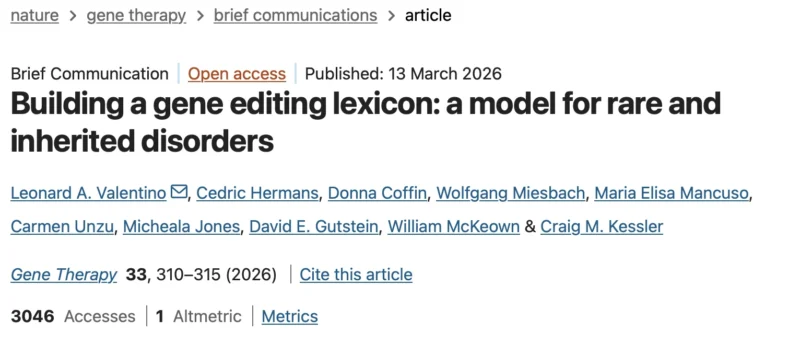
Title: Building a gene editing lexicon: a model for rare and inherited disorders
Authors: Leonard A. Valentino, Cedric Hermans, Donna Coffin, Wolfgang Miesbach, Maria Elisa Mancuso, Carmen Unzu, Micheala Jones, David E. Gutstein, William McKeown, Craig M. Kessler
Stay updated on all scientific advances with Hemostasis Today.
-
Oct 18, 2026, 17:11Owen McCarty: Understanding Prekallikrein and Its Role in Inflammation and Thrombosis
-
Oct 18, 2026, 17:04Emna Gouider Belhadjali: Don’t Miss GPAS 2026 on Bleeding Disorders
-
Oct 18, 2026, 16:53Mehran Ghasemzadeh: Microparticle-Associated Mitochondrial DNA in Stored Platelet Products
-
Oct 18, 2026, 16:38Edward Lee Carter: A 15-Minute Blood Test for Brain Hemorrhage?
-
Oct 18, 2026, 16:29Patrick Taylor: Oral vs Transdermal Estrogen and Cardiovascular Risk in Menopausal Women
-
Oct 18, 2026, 16:19Artangela Henry: A Meaningful Week at the SCDAA National Convention
-
Oct 18, 2026, 16:04Emília Araújo։ New Insights Into the Genetics of Hemophilia B Leyden
-
Oct 18, 2026, 15:43André Marcel Harris: Award-Winning Research on Texas Sickle Cell Data Collection
-
Oct 18, 2026, 15:21Eleonora Gambineri: First Results of the IEI-Haem Consortium at ESID 2026