

Mostafa Elshazly: Managing Anticoagulant-Related Bleeding in Clinical Practice
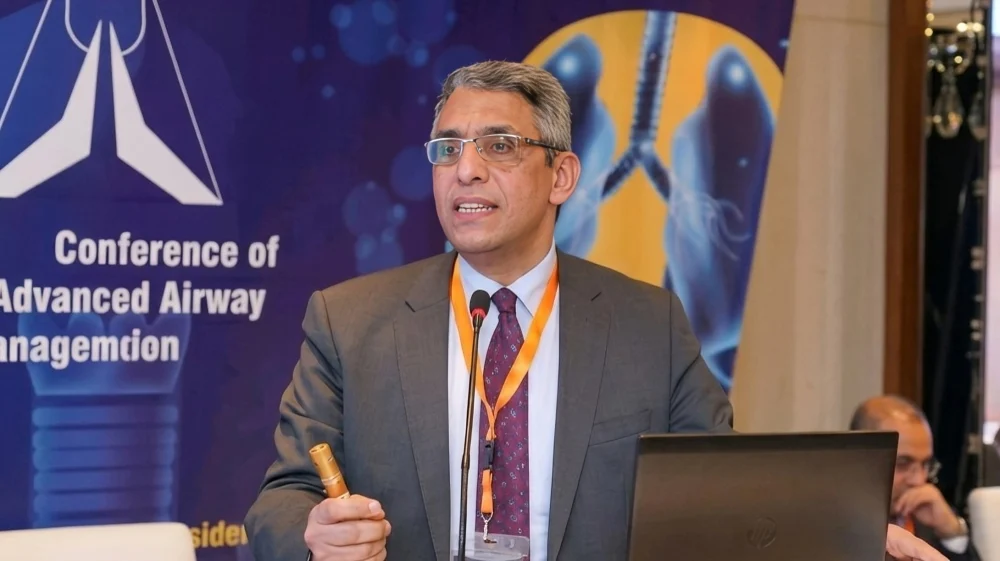
Mostafa Elshazly, Presidant of Arabic Association for Non Invasive Ventiltion at International Association Of Non-Invasive Ventilation and Professor at Kasr AlAiny School of Medicine, Cairo University, shared a post on LinkedIn about a recent article by Mattia Galli et al., published in The European Heart Journal – Acute Cardiovascular Care, adding:
”Managing bleeds on anticoagulant therapy: a practical guide for clinicians
Galli et al. present a contemporary practical review of bleeding in patients receiving
OACs), particularly (DOACs), (VKAs), and combined antiplatelet therapy.
- The central message is that bleeding must be managed as a competing-risk problem: uncontrolled haemorrhage is dangerous, but unnecessary or prolonged anticoagulant interruption increases stroke, embolism, myocardial infarction, and mortality.
- The review is clinically useful because it links prevention, severity assessment, resuscitation, reversal, definitive source control, and planned anticoagulant resumption rather than treating these as separate decisions.
Practical pathway for haemoptysis or airway bleeding.
Immediately:
- Assess airway, breathing, circulation, oxygenation, mental status, bleeding volume/rate, and haemodynamic stability.
- If there is respiratory distress, inability to clear blood, hypoxaemia, shock, or ongoing large-volume haemoptysis, treat it as life-threatening: call critical-care, bronchoscopy, interventional-radiology, and thoracic-surgery teams; protect the airway early, provide oxygen or ventilation, position the suspected bleeding lung dependent when known, obtain large-bore IV access, stop OAC/antiplatelets, and send CBC, type and crossmatch, renal/hepatic function, PT/INR, aPTT, and—when available—drug-specific assays. Do not wait for haemoglobin to fall before escalating.
- Within the first hours: Pursue CT angiography and/or urgent bronchoscopy according to stability and local expertise, with bronchial-artery embolization or surgery when needed.
- In major or critical-site bleeding, use agent-specific reversal: idarucizumab for dabigatran, vitamin K plus 4-factor PCC for VKA, and andexanet or 4-factor PCC for factor-Xa inhibitors according to institutional policy.
- Nebulized/topical tranexamic acid may be an adjunct, not a substitute for airway protection and definitive haemostasis.
After haemostasis:
- Reassess the original indication and thrombotic risk daily.
- Restart anticoagulation as soon as bleeding is controlled and the source is secure—especially with a mechanical valve, recent VTE, recent stroke/TIA, or very high embolic risk.
- Delay when bleeding remains uncontrolled or involves a critical site, using multidisciplinary review. Recheck dose appropriateness, renal function, interacting drugs, and the need for aspirin or DAPT.
What not to do:
- Do not routinely reverse trivial blood-streaking or self-limited epistaxis;
- Do not empirically underdose a DOAC;
- Do not assume normal PT/aPTT excludes apixaban effect;
- Do not use routine heparin bridging;
- Do not give rFVIIa except as exceptional rescue therapy; and
- Do not leave anticoagulation stopped indefinitely without a documented reassessment plan.”
Title: Managing bleeds on anticoagulant therapy: a practical guide for clinicians
Authors: Mattia Galli, Beatrice Simeone, Jurrien ten Berg, Davide Capodanno, Marco Valgimigli, Sebastiano Sciarretta, Ernesto Greco, Adnan Kastrati, Gilles Montalescot, C Michael Gibson, Diana A Gorog, Roxana Mehran, Dominick J Angiolillo.
Stay updated on all scientific advances with Hemostasis Today.
-
Oct 4, 2026, 13:13Overcoming FVIII Inhibitors With Efanesoctocog Alfa – JTH
-
Oct 4, 2026, 13:04World Federation of Hemophilia Invites Global Community to GPAS 2026
-
Oct 4, 2026, 12:57Tooth Extraction in Patients with Haemophilia – RPTH Journal
-
Oct 4, 2026, 12:36Maia Meier: Advancing Hemophilia Care in Nepal – Project Elevate Her Visits Civil Service Hospital
-
Oct 4, 2026, 12:30Shailaja Kota Amplifies World Inherited Blood Disorders Month and Global Action Network’s Call to Action
-
Oct 4, 2026, 12:21Davide Pallucci: How Altered Platelet Metabolism Can Drive Changes in their Reactivity in Human and Mouse MASLD
-
Oct 4, 2026, 11:02Stimuli-Induced Remodeling of the Platelet Lipidome in Pulmonary Embolism – ESC
-
Oct 4, 2026, 10:45Join the Bleeding Disorders Advocacy Network! – HFA
-
Oct 4, 2026, 06:12David McIntosh: 900 Plasma Donations One Patient One Lifeline