

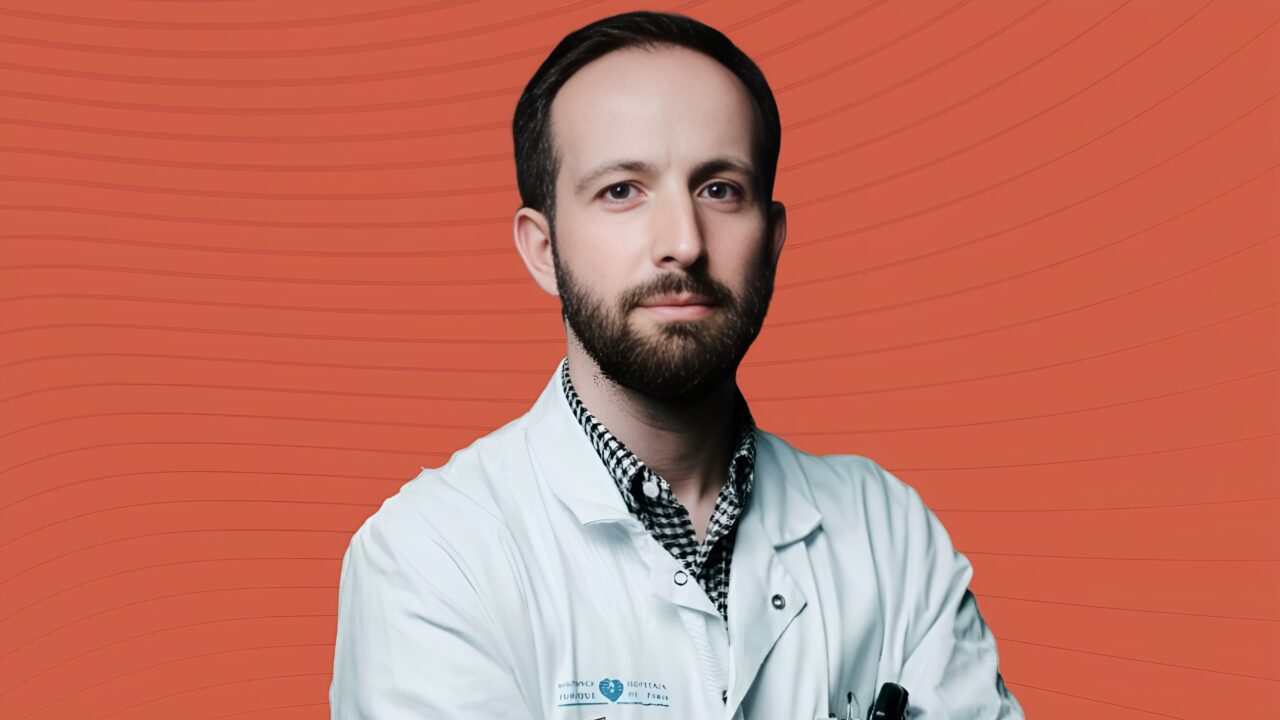
Nicolas Gendron on Sustainability in Anticoagulation and DOACs
Nicolas Gendron, Research Fellow, Hematologist at Boston Children’s Hospital, shared on LinkedIn:
”Anticoagulation and sustainability. What is the carbon impact of DOACs?
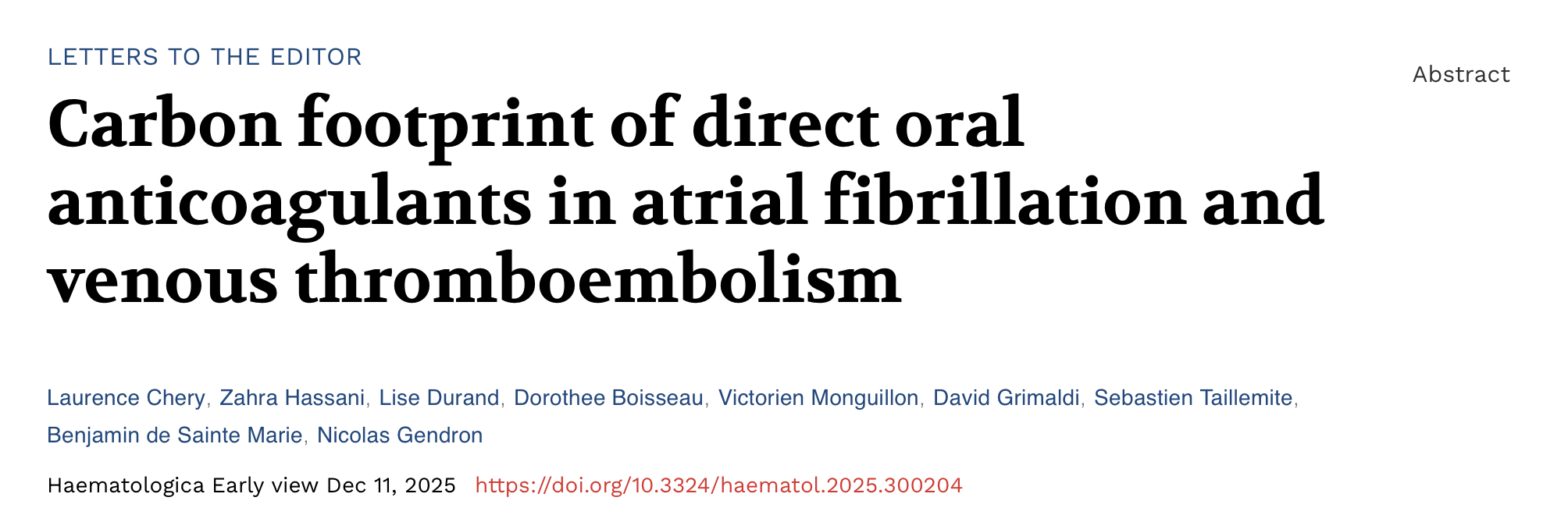
Our study, published in Haematologica Journal, compares for the first time the carbon footprint of the three DOACs used in France (dabigatran, apixaban, rivaroxaban) using two life cycle analysis databases, Ecovamed and MCF.
The main findings:
- DOACs do not have the same carbon footprint, despite similar efficacy and safety.
- Dabigatran has a much higher carbon impact than anti-Xa drugs (apixaban and rivaroxaban), with a footprint that is 3 to 36 times higher depending on the indications and databases.
- Most of dabigatran’s impact comes from its active ingredient, which is very energy-intensive to produce.
- Conversely, for apixaban and rivaroxaban, nearly 70% of the carbon impact is linked to corporate activities (RandD, distribution, administration, etc.).
- Lower doses, used for prolonged treatments, significantly reduce emissions.
DOACs are among the most widely prescribed drugs in the world.
At a time when the healthcare system needs to reduce its environmental footprint, these results show that, given equivalent efficacy and safety, the choice of treatment can have a major environmental impact.
Our study advocates for integrating environmental criteria into treatment decisions whenever possible, without ever compromising the quality of care.
Proud of this collective work.
Well done Laurence Chery, Zahra Hassani, Lise Durand, Dorothee Boisseau, Victorien Monguillon, David Grimaldi, Sebastien Taillemite, and Benjamin de Sainte Marie.
Thank you to Ecovamed for providing access to their high-quality data.
Thank you to SESAME.
Let’s continue to move towards cutting-edge, low-carbon medicine.”
Read the full article here.
Article: Carbon footprint of direct oral anticoagulants in atrial fibrillation and venous thromboembolism
Authors: Laurence Chery, Zahra Hassani, Lise Durand, Dorothee Boisseau, Victorien Monguillon, David Grimaldi, Sebastien Taillemite, Benjamin de Sainte Marie, Nicolas Gendron

Stay updated on all scientific advances with Hemostasis Today.
-
Sep 21, 2026, 12:15Kholoud Al Busaidi: Cold Agglutination and Its Impact on CBC and Blood Grouping Results
-
Sep 21, 2026, 11:03Shaurav Bhattacharyya: Honoring the 2026 Lasker Award Winners
-
Sep 21, 2026, 10:41Jamshid Ullah: Recognizing Blood Disorders Through Laboratory Findings
-
Sep 21, 2026, 10:18Mana Alshehri: A New Step Toward Hemophilia B Gene Therapy in Adolescents
-
Sep 21, 2026, 09:52Afreenish Tasadaq: Contributing to Awareness about Bleeding Disorders
-
Sep 21, 2026, 08:49Andrea Bridges: When Support Becomes a Commitment to Give Back
-
Sep 21, 2026, 08:21Managing Thrombotic Risk in Pregnancy
-
Sep 21, 2026, 04:06Allison Lewin: How Gender Shapes the Way We Receive Medical Care
-
Sep 21, 2026, 03:49Jessica Lee: Walking Together for a Stronger Bleeding Disorders Community