

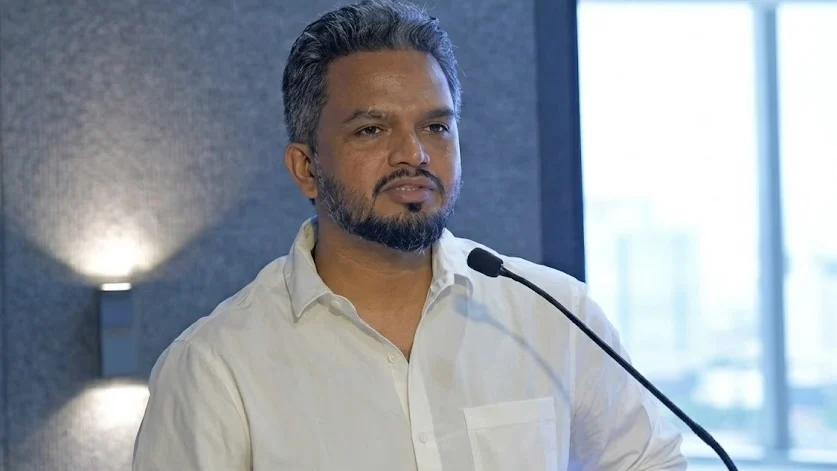
Praveen Kumar Tirlangi: A New Mechanism of Bleeding in Kyasanur Forest Disease
Praveen Kumar Tirlangi, Associate Professor at Kasturba Medical College, shared a post on LinkedIn about a recent article he and his colleagues co-authored, published in Transactions of the Royal Society of Tropical Medicine and Hygiene, adding:
“Abnormal laboratory values can sometimes indicate more than just a laboratory anomaly; they may uncover new disease mechanisms.
Kyasanur Forest Disease (KFD) is a viral hemorrhagic fever known for its bleeding complications.
In patients who experience bleeding, we frequently observe an isolated prolongation of aPTT with a normal PT, yet the underlying mechanism has remained elusive.
In our recently published case series in Transactions of the Royal Society of Tropical Medicine and Hygiene, we delved deeper into this phenomenon.
The breakthrough: We discovered that these patients had developed Factor IX deficiency, leading to an acquired hemophilia B phenotype.
This finding could have significant therapeutic implications.
When a KFD patient presents with bleeding and an isolated prolonged aPTT, the instinct is often to initiate empiric blood component therapy. However, if the root cause is Factor IX deficiency, utilizing Fresh Frozen Plasma (FFP) or Factor IX concentrate, when available, may be a more appropriate replacement strategy than cryoprecipitate, which contains minimal Factor IX.
While the impact of targeted Factor IX replacement on clinical outcomes requires further investigation, identifying the mechanism is a crucial first step toward precision management.
This serves as a reminder that questioning unexpected laboratory results can reveal new dimensions of disease biology.
Proud to share this work from our team.”
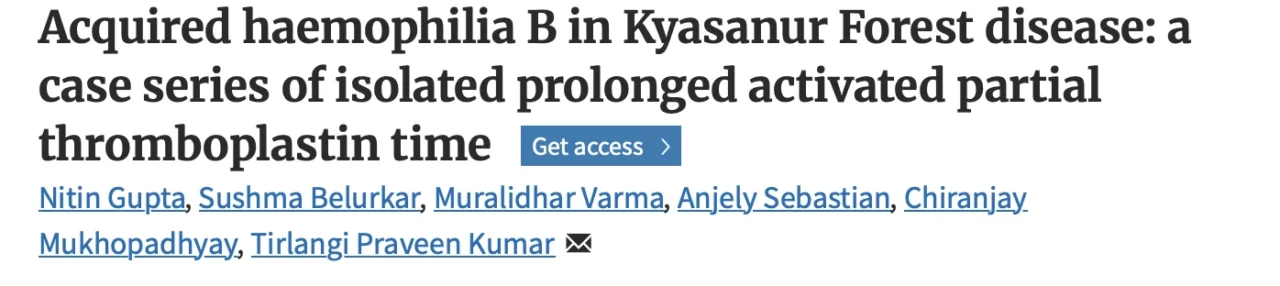
Title: Acquired haemophilia B in Kyasanur Forest disease: a case series of isolated prolonged activated partial thromboplastin time
Authors: Nitin Gupta, Sushma Belurkar, Muralidhar Varma, Anjely Sebastian, Chiranjay Mukhopadhyay, Tirlangi Praveen Kumar
Stay updated on all scientific advances Hemostasis Today.
-
Oct 10, 2026, 17:58Archo Farzana Batool: Exploring Medical Writing Through an Article on Iron Deficiency Anemia
-
Oct 10, 2026, 17:53Assessing Frailty in Adults With Hemophilia – JTH
-
Oct 10, 2026, 17:52Fatma Sadeghi: Reducing Maternal Health Inequalities Through Nursing Advocacy
-
Oct 10, 2026, 17:50Grzegorz Hensler: How Apheresis Transformed Blood Cell Separation and Collection
-
Oct 10, 2026, 17:47Hemant K Sharma: Japan’s Universal Artificial Blood Research – A Potential Breakthrough in Transfusion Medicine
-
Oct 10, 2026, 17:40John Strouse: Learning About Bleeding Disorders and Sickle Cell Disease at FWGBD
-
Oct 10, 2026, 17:34Mae Caime: Speaking at the Annual Women’s Retreat for the Hemophilia Community in Florida
-
Oct 10, 2026, 17:30Chokri Ben Lamine: PNH beyond the Textbook Triad
-
Oct 10, 2026, 17:29Ruah Alyamany: Thrombosis and Anticoagulation in Hematological Malignancies at SOHO KSA 2026