


Professor Erwin Loh: Brain Iron Levels May Signal Alzheimer’s Risk Years Before Symptoms Appear
Professor Erwin Loh, President of Royal Australasian College of Medical Administrators, posted on LinkedIn:
”Brain iron levels may signal Alzheimer’s risk years before symptoms appear
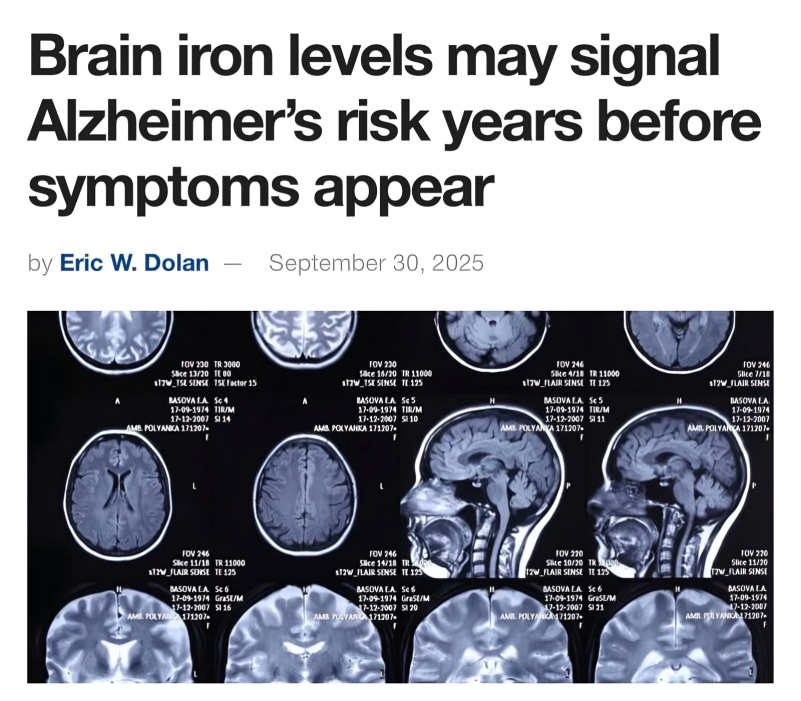
A new brain imaging study provides evidence that high levels of iron in certain parts of the brain may signal an increased risk of developing cognitive problems years before symptoms appear.
The study, published in Radiology, found that greater iron accumulation in two brain regions was linked with later development of mild cognitive impairment, a condition that often precedes Alzheimer’s disease.
These findings suggest that brain iron could play a role in the early stages of neurodegeneration and might eventually serve as a tool for identifying people at higher risk for memory decline.
Source in comments.”
Title: Susceptibility MRI Helps Predict Mild Cognitive Impairment Onset and Cognitive Decline in Cognitively Unimpaired Older Adults
Authors: Lin Chen, Anja Soldan, Andreia Faria, Marilyn Albert, Peter C. M. van Zijl, Xu Li
Stay updated with Hemostasis Today.
-
Oct 5, 2026, 11:33Abeeha Faisal: Beyond the Textbooks – A Day With Children Living With Thalassemia
-
Oct 5, 2026, 11:26Jan Zlamal: Honoured with the Fritz Schiff Young Investigator Award by the DGTI
-
Oct 5, 2026, 11:21Umar Mansuri: Can Micronutrient Powders Help Reduce Childhood Anemia?
-
Oct 5, 2026, 11:03Vitalina Dzutseva: Could mRNA Encoded TCEs Transform B Cell Depletion?
-
Oct 5, 2026, 10:50Ligia Carolina Facin: Investigating a Novel Therapeutic Strategy for ATTR-CM
-
Oct 5, 2026, 10:45Mohammed Ayaz Ali։ HIT – When an Anticoagulant Causes Thrombosis
-
Oct 5, 2026, 10:24Vishnu Priya Pulipati: The Endocrinologist’s Role in Lp(a) and Cardiovascular Risk Reduction
-
Oct 5, 2026, 09:59William McKeown – A Busy Week with the European Haemophilia Consortium
-
Oct 5, 2026, 09:46Megan Buchholz – Celebrating Apheresis Awareness Day 2026 at St. Michael’s Hospital