

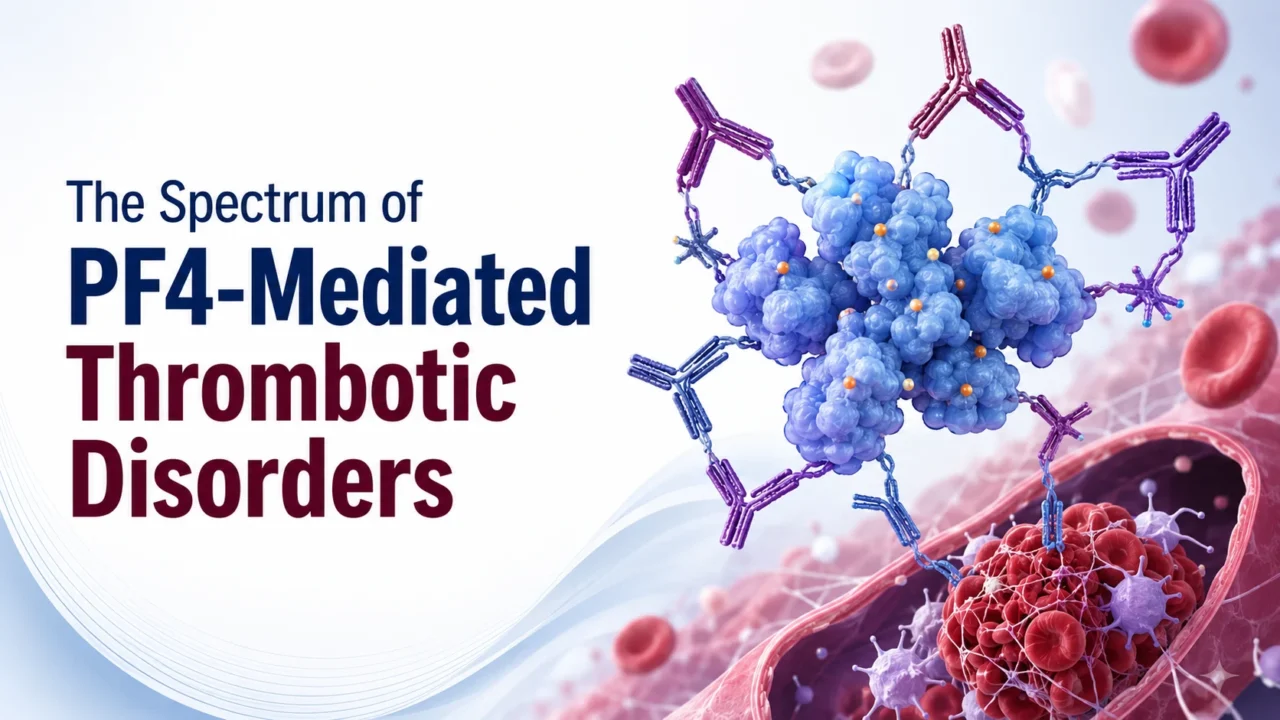
Sabrina H.: The Spectrum of PF4-Mediated Thrombotic Disorders
Sabrina H., Independent Marketing Consultant, shared a post on LinkedIn about a recent article by Theodore E. Warkentin and Andreas Greinacher, published in The New England Journal of Medicine, adding:
“Platelet-activating anti-platelet factor 4 (PF4) disorders are a group of serious immune-mediated conditions in which antibodies bind to PF4 and activate platelets, leading to thrombocytopenia and a high risk of thrombosis.
A comprehensive review published in The New England Journal of Medicine describes several forms of these disorders, including classic heparin-induced thrombocytopenia (HIT), autoimmune HIT, spontaneous HIT following triggers such as surgery or infection without heparin exposure, vaccine-induced immune thrombotic thrombocytopenia (VITT), and VITT-like monoclonal gammopathy (MGTS), a chronic condition associated with abnormal blood-protein clones.
Mechanistically, PF4-antibody immune complexes interact with Fc receptors on platelets, triggering rapid platelet activation and clot formation while consuming circulating platelets.
Treatment depends on the specific condition and clinical setting but generally involves immediately stopping heparin or another triggering factor when applicable, using non-heparin anticoagulants to prevent new thrombosis, and administering high-dose intravenous immune globulin (IVIG) in selected severe cases. Targeted therapies, including Bruton’s tyrosine kinase inhibitors, may also have potential applications in chronic forms.
Together, these disorders illustrate how different immune triggers can converge on a common PF4-mediated pathway, resulting in both thrombocytopenia and potentially life-threatening thrombosis.
Better understanding of their immunologic mechanisms may help improve diagnosis, risk assessment, and targeted treatment.”
Title: Platelet-Activating Anti–Platelet Factor 4 Disorders
Authors: Theodore E. Warkentin, Andreas Greinacher

Stay updated on all scientific advances with Hemostasis Today.
-
Sep 29, 2026, 11:21Richard Davis: Rapid Rescue in Massive Pulmonary Embolism
-
Sep 29, 2026, 11:14Nissan Brown: Every Step Counts for the Hemophilia Community
-
Sep 29, 2026, 11:03Zain Khalpey: SINGLE AF Adds New Evidence to the Anticoagulation Debate
-
Sep 29, 2026, 10:54How Does Haemophilia Affect Motor Development in Infants? – EAHAD
-
Sep 29, 2026, 10:49Alison Davey: The Vital Role of Community Support in Bleeding Disorders
-
Sep 29, 2026, 10:36Abdul Muqtadir Abbasi: 5 Questions to Ask When the CBC Is Abnormal
-
Sep 29, 2026, 10:28Manu Morales Sánchez: DOACs in Intermediate Risk Atrial Fibrillation
-
Sep 29, 2026, 09:59William Sauer: Ablation in Patients With LAAO Devices
-
Sep 29, 2026, 03:53Nahrwan Masaoodi: Iron Deficiency Can Exist Without Anemia