


Shannon Farmer: A Patient’s Blood Should Be Managed Like Any Other Organ
Shannon Farmer, Honorary Research Fellow in Haematology at Royal Perth Hospital, shared an insightful post on LinkedIn:
“It is now understood that the blood with its hematological, respiratory, immunological, and hemostatic components, in concert with the cardiovascular system with its intricate macrovascular and microvascular circulatory networks lined with versatile endothelial cells, constitutes the largest integrated organ system in the body.
A patient’s blood should be managed like any other organ or organ system with the aim of improving blood health and global health outcomes. This perspective will not only deepen our scientific knowledge but also improve our clinical practices, enhancing patient clinical care and public health outcomes. This aligns with the WHO’s urgent call to implement PBM to achieve optimal global blood health.”
Read full article here.
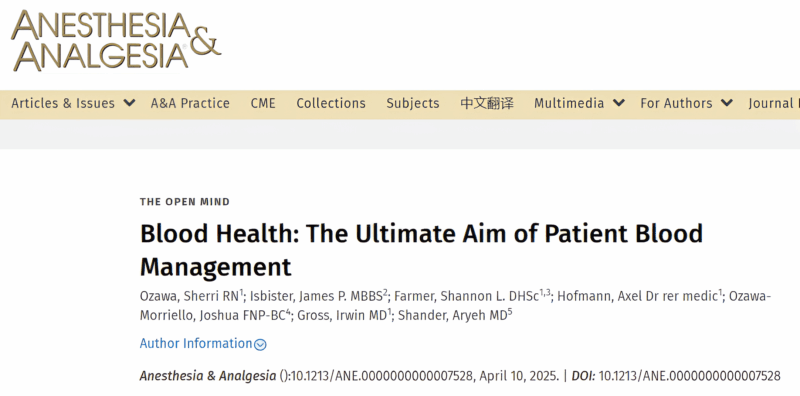
Article: Blood Health: The Ultimate Aim of Patient Blood Management
Authors: Ozawa Sherri, Isbister James, Farmer Shannon, Hofmann Axel, Ozawa-Morriello Joshua, Gross Irwin, Shander Aryeh.
Stay informed on all aspects of science in Hematology with Hemostasis Today.
-
Sep 24, 2026, 18:43Hugh Nguyen: Honored to Accept the Friend of Singapore Red Cross Award
-
Sep 24, 2026, 18:42Titilope Fasipe: Proud to Support American Society of Hematology’s SCD Initiative
-
Sep 24, 2026, 18:34Ifeanyichukwu Ifechidere: Why Coagulation Samples Can Be “Too Valuable to Throw Away”?
-
Sep 24, 2026, 18:33Aswin K. Mohan: When a Superpower Hears the Call for Blood
-
Sep 24, 2026, 18:31Mercy Lung’aho: Anemia Is Not Only An Iron Problem
-
Sep 24, 2026, 18:29Nick Hanson: Before a Dementia Diagnosis Check Vitamin B12
-
Sep 24, 2026, 18:28Rachel McBryan: Nearly One in Five Older Canadians Has Low Vitamin B12
-
Sep 24, 2026, 18:27Kemal Karaagac: Early DOAC Initiation After Acute Ischaemic Stroke in Atrial Fibrillation
-
Sep 24, 2026, 18:26Mohammed A. AlOmar: What Characterizes Young Stroke in the UAE?