


Stroke and VTE: The Tromsø and Trøndelag Studies
Journal of Thrombosis and Haemostasis (JTH) shared on LinkedIn:
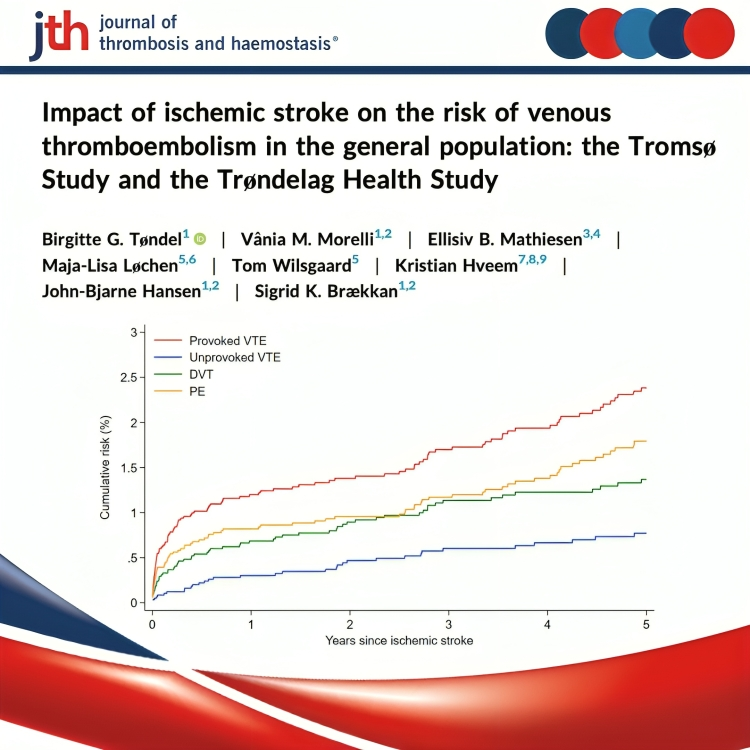
“Impact of ischemic stroke on the risk of venous thromboembolism in the general population: the Tromsø Study and the Trøndelag Health Study
This population-based study analyzed over 107,000 participants and found ischemic stroke significantly increased the risk of venous thromboembolism (VTE), especially provoked VTE, within the first three months after stroke. The risk was marginally higher in women than men and remained stable over recent decades, emphasizing the importance of recognizing and managing VTE risk in stroke survivors.”
Read this paper.
Title: Impact of ischemic stroke on the risk of venous thromboembolism in the general population: the Tromsø Study and the Trøndelag Health Study
Authors: Birgitte G. Tøndel, Vânia M. Morelli, Ellisiv B. Mathiesen, Maja-Lisa Løchen, Tom Wilsgaard, Kristian Hveem, John-Bjarne Hansen, Sigrid K. Brækkan
Stay updated on all science in the field of anticoagulation with Hemostasis Today.
-
Oct 20, 2026, 05:33Giulia Di Paolo: Connecting Plasma Donation to the Patients Who Depend on It
-
Oct 20, 2026, 05:20James Knowles: Exploring Plasma Manufacturing and Strengthening Industry Collaboration
-
Oct 20, 2026, 05:11Giuseppe Lippi։ Understanding Liver Test Abnormalities After AAV Gene Therapy
-
Oct 20, 2026, 05:02Sanam Loghavi: Test Your Hematology Knowledge at ASH 2026!
-
Oct 20, 2026, 04:13Ifeanyichukwu Ifechidere: DOACs Are Not the Answer to Every Anticoagulation Question
-
Oct 20, 2026, 04:04Sadia Kamal: Honored to Receive the Outstanding Abstract Award at the 20th Midwest Platelet Conference
-
Oct 20, 2026, 04:03Yu-Hsuan Chen: One Antibody, Two Diseases from FcRn Biology to Clinical Translation
-
Oct 20, 2026, 03:49Domenico Simone Castiello: Rethinking Prolonged DAPT in Multivessel PCI – Insights from the DAPT-MVD Trial
-
Oct 20, 2026, 03:37Rucha Patil: Scaling POC Diagnostics for Haemophilia A and VWD Across India