

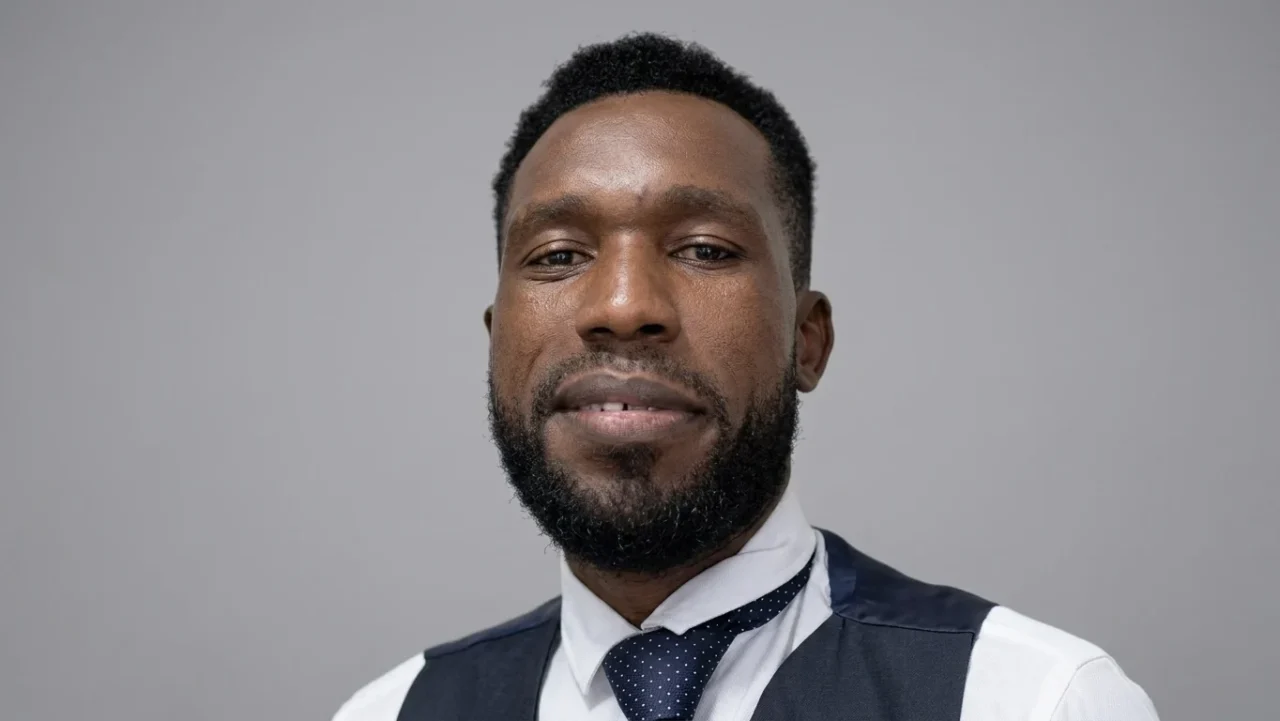
Wolde Hailu Demissie: Moving Beyond the 4.5-Hour Window in Wake-Up Stroke
Wolde Hailu Demissie, Internist at RDDMH, shared on LinkedIn about a recent article by Mehari Gebreyohanns et al, published in Frontiers, adding:
”Wake-up stroke is a stroke with unknown onset time.
Often excluded from tPA treatment due to the absence of a standardized approach.
Interestingly 25% of acute ischemic strokes are wake-up strokes.
Due to the uncertain onset of symptoms, only about 8–27% of patients experiencing wake-up strokes receive thrombolytic therapy as 4.5hr not include those patient .
The bottom line is: MRI can be crucial in estimating the ischemic core and penumbra, guiding decisions on thrombolytic therapy for these patients .
30% of patients with wake-up stroke with negative fluid attenuated inversion recovery (FLAIR) and a visible acute ischemic lesion on diffusion weighted imaging (DWI) findings on MRI, or simply MRI mismatch, may be candidates for thrombolytic therapy.
Both tPA and EVT in these patients improve functional outcomes without increasing the risk of death.
In general MRI revolutionized stroke management with early papers on New England Journal of Medicine to support the the same concept.
Negative FLAIR with visible DWI is what you look for the stroke management not only 4.5 hr!
And above MRI finding may perisist up to 9hr so imaging with this hr for wake up stroke from last time he/she went to bed is paramount important to 4.5 hours.”
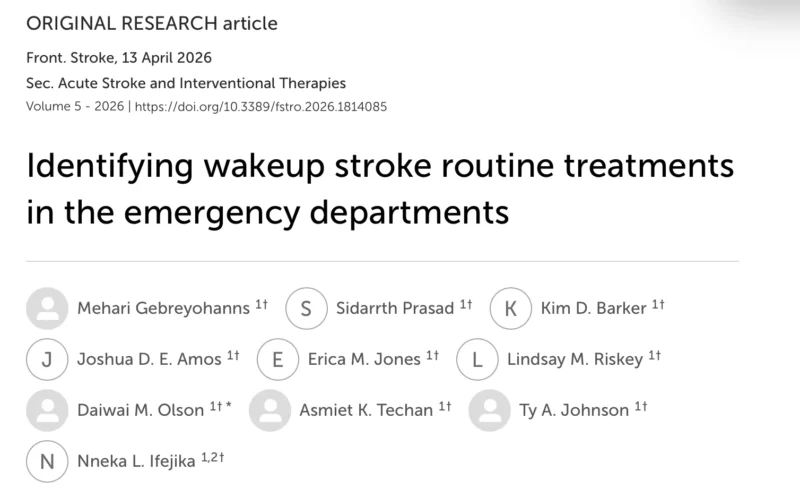
Title: Identifying wakeup stroke routine treatments in the emergency departments
Authors: Mehari Gebreyohanns, Sidarrth Prasad, Kim D. Barker, Joshua D. E. Amos, Erica M. Jones, Lindsay M. Riskey, Daiwai M. Olson, Asmiet K. Techan, Ty A. Johnson, Nneka L. Ifejika
Stay updated on all scientific advances with Hemostasis Today.
-
Sep 21, 2026, 13:21In His Last UNGA, António Guterres Delivers a Urgent Call for Global Unity
-
Sep 21, 2026, 13:14Fatih Mehmet Gul: Are We Moving Faster Than Our Ability to Ask ‘Should We?’
-
Sep 21, 2026, 13:08Sangita Reddy: How Does Our Own Healthcare Journey in India Look Through the Same Lens?
-
Sep 21, 2026, 12:53Conan McIlwrath: Strengthening Haemophilia Care Through International Collaboration
-
Sep 21, 2026, 12:41Tinatin Muradashvili: Advancing Hemophilia Care Through Education and Collaboration
-
Sep 21, 2026, 12:15Kholoud Al Busaidi: Cold Agglutination and Its Impact on CBC and Blood Grouping Results
-
Sep 21, 2026, 11:03Shaurav Bhattacharyya: Honoring the 2026 Lasker Award Winners
-
Sep 21, 2026, 10:41Jamshid Ullah: Recognizing Blood Disorders Through Laboratory Findings
-
Sep 21, 2026, 10:18Mana Alshehri: A New Step Toward Hemophilia B Gene Therapy in Adolescents