


Wolfgang Miesbach: Adenoassociated Virus-Based Gene Therapy for Haemophilia
Wolfgang Miesbach, Professor of Medicine at Frankfurt University Hospital, shared on LinkedIn about a recent article he and his colleagues co-authored, adding:
“Gene Therapy for Haemophilia: From Experimental Concept to Clinical Reality. Written by young investigators (haematologists and hepatologists), for young investigators. Delighted to share the new educational review published in the Journal of Thrombosis and Haemostasis (JTH), providing a comprehensive overview of adenoassociated virus (AAV)-based gene therapy for haemophilia:
- Clinical Efficacy Demonstrated:
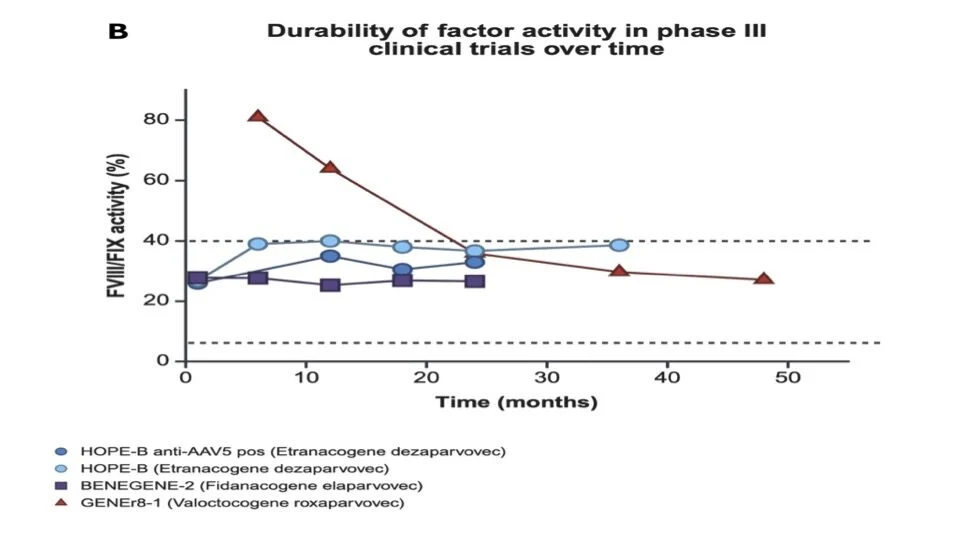
Phase III trials of valoctocogene roxaparvovec (haemophilia A) and etranacogene dezaparvovec (haemophilia B) have shown durable factor expression for up to 5 years, with persons with haemophilia achieving factor levels in the normal or mild haemophilia range and significant reductions in bleeding rates. The FIX-Padua variant has proven particularly transformative, enhancing treatment efficacy 5- to 8-fold.
- Hepatological Considerations:
Approximately 20% to 90% of persons with haemophilia experience transaminase elevation postinfusion, requiring immunosuppressive management and close hepatologic monitoring. This underscores the essential role of hepatologists within the multidisciplinary care team and the importance of comprehensive liver health assessment prior to treatment.
- Future Directions:
Whilst AAV-based therapies represent a remarkable advance, several developments promise to further enhance outcomes: alternative vectors to address neutralising antibody limitations (expanding access for seropositive patients), enhanced factor variants for improved efficacy, and gene editing technologies including CRISPR-Cas9 for precise genetic correction.
- Critical Challenges Remain:
Long-term durability beyond 5 years, immune response management, standardised care pathways, and equitable global access require continued attention and collaborative research efforts.
Congratulations to Pascal Hoffmann, Niccolò Bitto, and Vincenzo La Mura.”
Title: Overview of gene therapy for hemophilia: questions and answers to navigate the innovation
Authors: Pascal Hoffmann, Niccolò Bitto, Vincenzo La Mura, Wolfgang Miesbach
Read the Full Article on Journal of Thrombosis and Haemostasis.
Find more posts featuring Wolfgang Miesbach on Hemostasis Today.
-
Sep 24, 2026, 08:55Andres Gudino: Clot Characterization Through Hounsfield Units in Ischemic Stroke
-
Sep 24, 2026, 06:52Gina Sado: Screening-Detected Atrial Fibrillation Carries High Risk of Heart Failure
-
Sep 24, 2026, 06:33Benjamin Vipler: Optimal Oral Anticoagulation Choice in Atrial Fibrillation and Advanced CKD
-
Sep 24, 2026, 06:08Christopher Salerno: AI-Powered At-Home Anemia Screening Advances Telehealth Access
-
Sep 24, 2026, 05:38Aya Qattan: When a Normal CBC Does Not Mean Normal Iron Status
-
Sep 24, 2026, 05:11Mastering Warm Autoimmune Hemolytic Anemia Diagnosis and Practice – ASH Education
-
Sep 23, 2026, 16:04Monia Ezzalfani: Advancing Patient-Centered Care in Hemophilia A and B
-
Sep 23, 2026, 15:49Bilge Başak: How Activated PRP Modulates Osteoarthritic Chondrocyte Function
-
Sep 23, 2026, 14:50Mbonjo Bitsie Dora: Strengthening Sickle Cell Care Through Education, Awareness and Innovation