

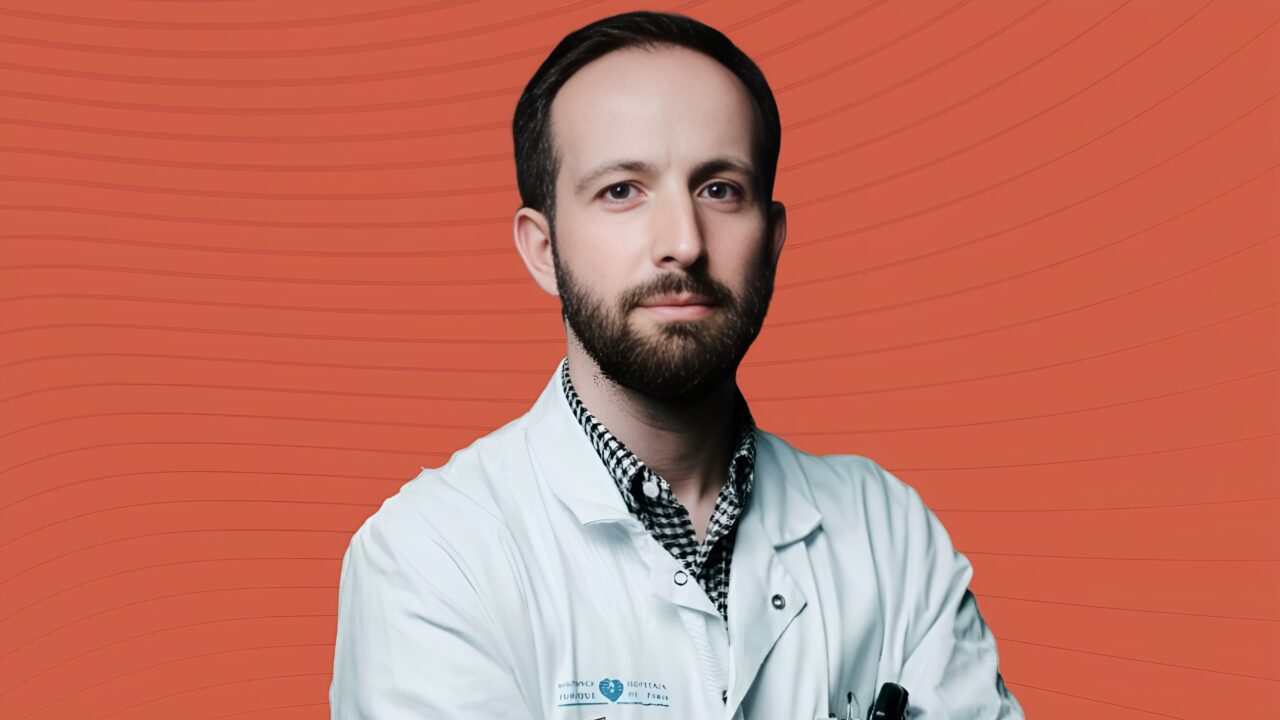
Nicolas Gendron on Sustainability in Anticoagulation and DOACs
Nicolas Gendron, Research Fellow, Hematologist at Boston Children’s Hospital, shared on LinkedIn:
”Anticoagulation and sustainability. What is the carbon impact of DOACs?
Our study, published in Haematologica Journal, compares for the first time the carbon footprint of the three DOACs used in France (dabigatran, apixaban, rivaroxaban) using two life cycle analysis databases, Ecovamed and MCF.
The main findings:
- DOACs do not have the same carbon footprint, despite similar efficacy and safety.
- Dabigatran has a much higher carbon impact than anti-Xa drugs (apixaban and rivaroxaban), with a footprint that is 3 to 36 times higher depending on the indications and databases.
- Most of dabigatran’s impact comes from its active ingredient, which is very energy-intensive to produce.
- Conversely, for apixaban and rivaroxaban, nearly 70% of the carbon impact is linked to corporate activities (RandD, distribution, administration, etc.).
- Lower doses, used for prolonged treatments, significantly reduce emissions.
DOACs are among the most widely prescribed drugs in the world.
At a time when the healthcare system needs to reduce its environmental footprint, these results show that, given equivalent efficacy and safety, the choice of treatment can have a major environmental impact.
Our study advocates for integrating environmental criteria into treatment decisions whenever possible, without ever compromising the quality of care.
Proud of this collective work.
Well done Laurence Chery, Zahra Hassani, Lise Durand, Dorothee Boisseau, Victorien Monguillon, David Grimaldi, Sebastien Taillemite, and Benjamin de Sainte Marie.
Thank you to Ecovamed for providing access to their high-quality data.
Thank you to SESAME.
Let’s continue to move towards cutting-edge, low-carbon medicine.”
Read the full article here.
Article: Carbon footprint of direct oral anticoagulants in atrial fibrillation and venous thromboembolism
Authors: Laurence Chery, Zahra Hassani, Lise Durand, Dorothee Boisseau, Victorien Monguillon, David Grimaldi, Sebastien Taillemite, Benjamin de Sainte Marie, Nicolas Gendron

Stay updated on all scientific advances with Hemostasis Today.
-
Sep 25, 2026, 09:49Haley Coleman: Volunteering to Support Hemophilia Awareness
-
Sep 25, 2026, 08:55Hitarth Mehta: BHMS Students Gain Practical Exposure to Haemophilia Diagnosis
-
Sep 25, 2026, 07:25Varun Capoor: How Therapeutic Apheresis and Transfusion Medicine Can Complement Clinical Management in SCD
-
Sep 25, 2026, 07:14Manshi Kesharwani: SAK-GQDs Modulate Thrombus Burden and Endothelial Function in Deep Vein Thrombosis
-
Sep 25, 2026, 06:20Farjah Hassan Algahtani: How Can We Better Identify Patients at Risk of Blood Clots after Metabolic and Bariatric Surgery?
-
Sep 25, 2026, 05:59Carla Lewis: Kids Conquering Sickle Disease Joins Nemours Children’s Hospital for 2nd Annual Awareness Event
-
Sep 25, 2026, 05:47Omid Seidizadeh: Evolutionary Constraint and Population Variation Across Coagulation Genes
-
Sep 25, 2026, 05:40Gerald Bertrand: Presenting UMi-NGS Non-Invasive Foetal HPA Genotyping at DGTI 2026
-
Sep 25, 2026, 05:33Urge Congress to support the Sickle Cell Disease Comprehensive Care Act – ASH