

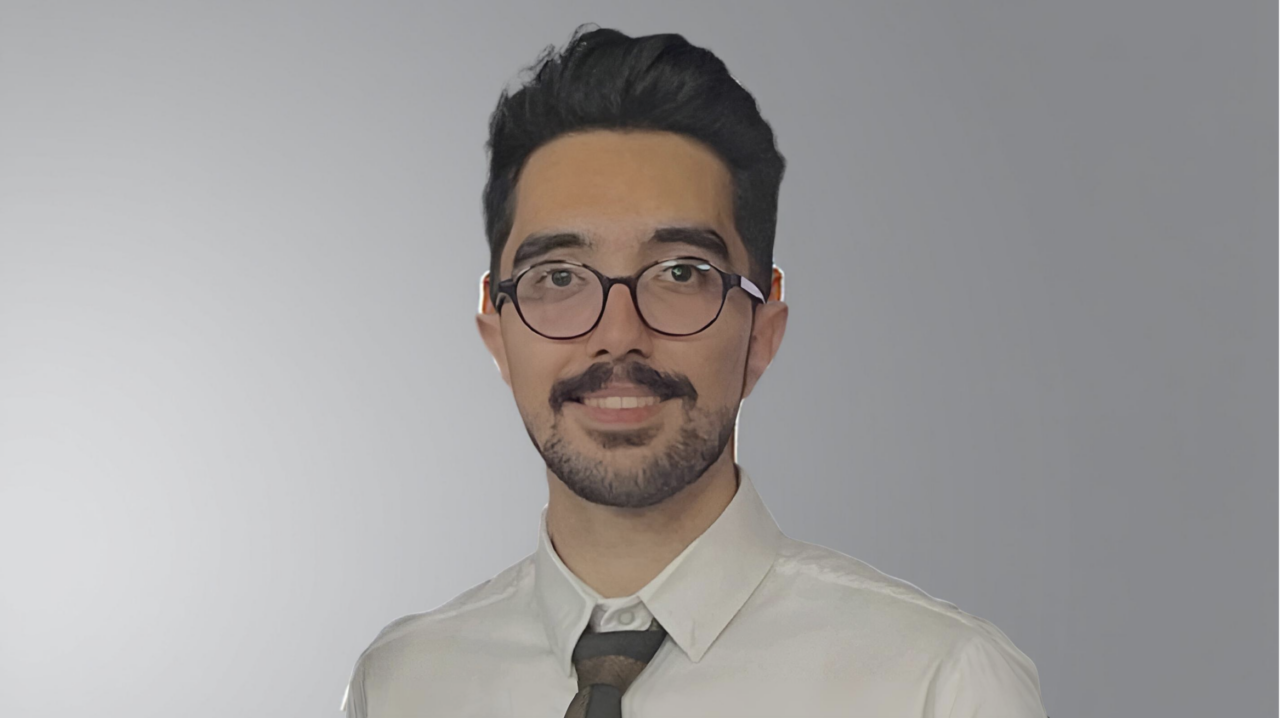
Mohammadreza Babaei: Anticoagulation versus No Anticoagulation after Intracranial Hemorrhage in Patients with Atrial Fibrillation
Amir Ghaffari Jolfayi, Research Assistant at Rajaie Cardiovascular, Medical and Research Institute, quoted Mohammadreza Babaei’s post on LinkedIn:
“Excited to share our latest publication in BMC Cardiovascular Disorders!
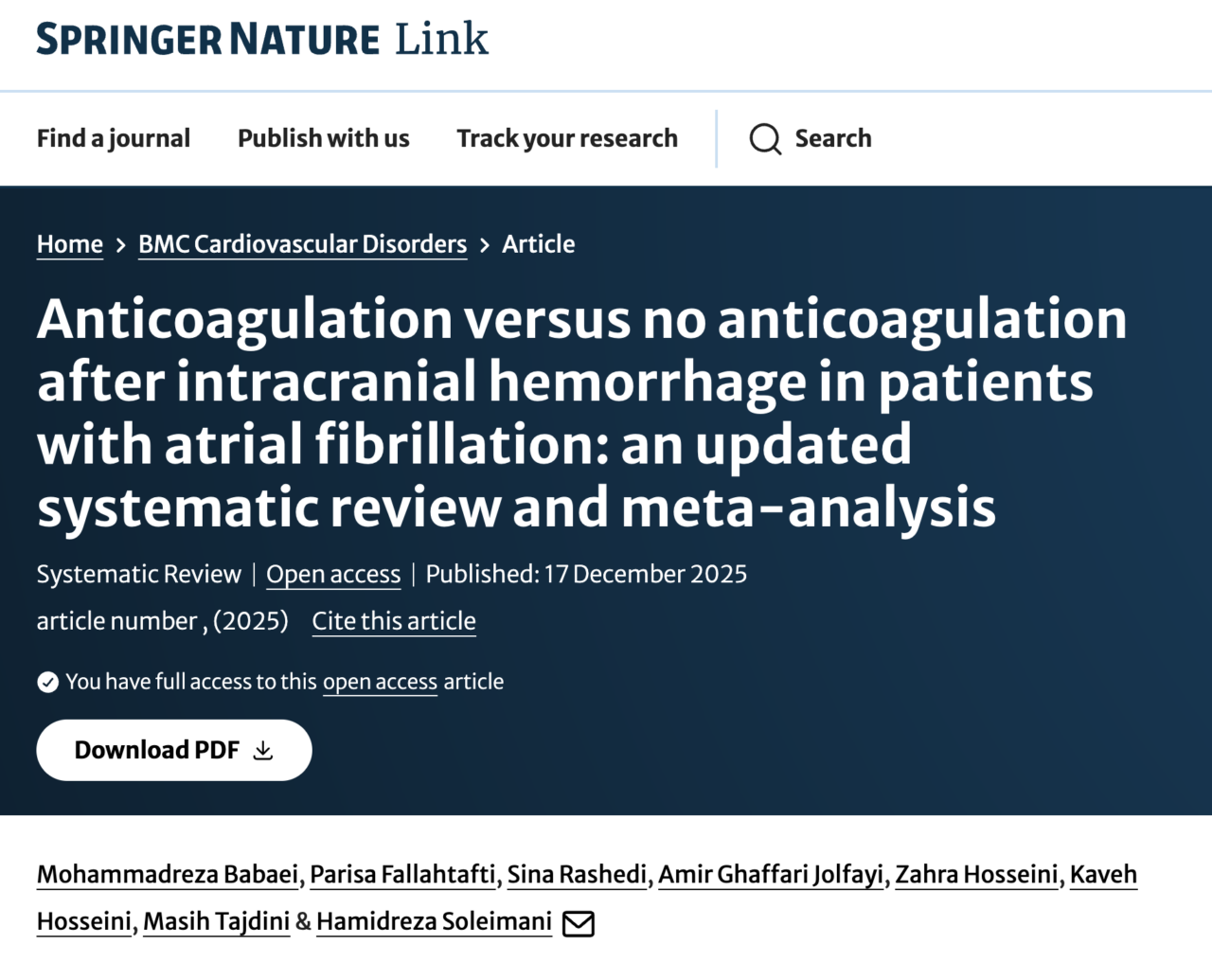
Title: Anticoagulation versus no anticoagulation after intracranial hemorrhage in patients with atrial fibrillation: an updated systematic review and meta-analysis
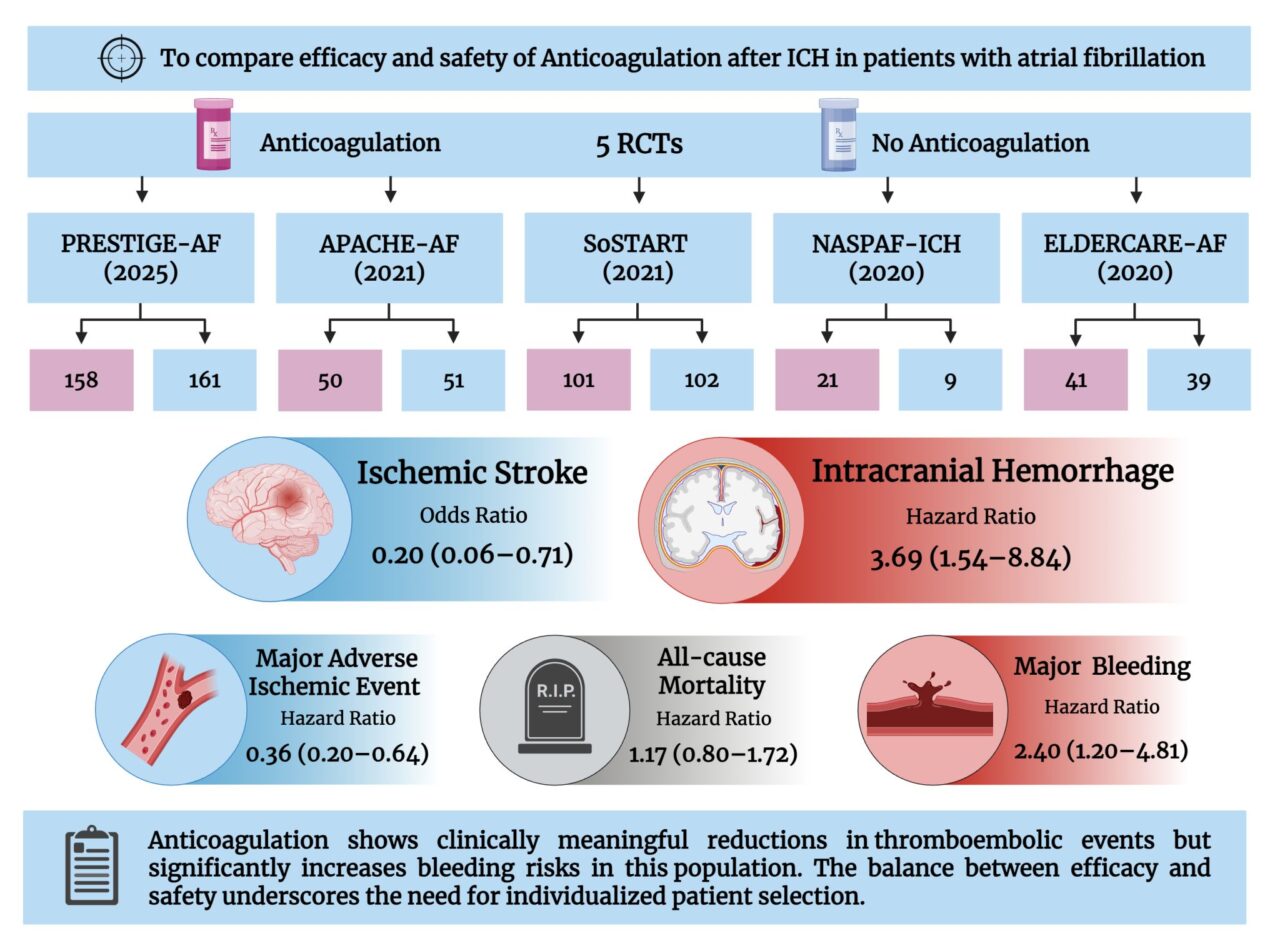
Key findings: This meta-analysis of five randomized controlled trials shows that anticoagulation reduces thromboembolic events in patients with atrial fibrillation after intracranial hemorrhage, but is associated with a notably higher risk of recurrent bleeding. It underscores the need for personalized, patient-specific decision-making to balance these risks and benefits.
Special Thanks to Mohammadreza Babaei and the team!
Read the full article here”
Title: Anticoagulation versus no anticoagulation after intracranial hemorrhage in patients with atrial fibrillation: an updated systematic review and meta-analysis
Authors: Mohammadreza Babaei, Parisa Fallahtafti, Sina Rashedi, Amir Ghaffari Jolfayi, Zahra Hosseini, Kaveh Hosseini, Masih Tajdini, Hamidreza Soleimani
Quoting Mohammadreza Babaei’s post:
“Check out our recently published article in BMC Cardiovascular Disorders, titled:
“Anticoagulation versus no anticoagulation after intracranial hemorrhage in patients with atrial fibrillation: an updated systematic review and meta-analysis”
The results of this meta-analysis of five RCTs suggest that anticoagulation provides clinically meaningful reductions in thromboembolic events, but at the cost of a significantly increased risk of bleeding in this population. These findings indicate the importance of carefully selecting patients on an individual basis when weighing the benefits and risks of therapy.
Many thanks to the team members, Parisa Fallahtafti, Sina Rashedi, and Amir Ghaffari Jolfayi for their dedication, and our professors Hamidreza Soleimani, Zahra Hosseini, Kaveh Hosseini, Masih Tajdini for their support and guidance.”
Discover the latest in Hemostasis Today.
-
Oct 10, 2026, 17:58Archo Farzana Batool: Exploring Medical Writing Through an Article on Iron Deficiency Anemia
-
Oct 10, 2026, 17:53Assessing Frailty in Adults With Hemophilia – JTH
-
Oct 10, 2026, 17:52Fatma Sadeghi: Reducing Maternal Health Inequalities Through Nursing Advocacy
-
Oct 10, 2026, 17:50Grzegorz Hensler: How Apheresis Transformed Blood Cell Separation and Collection
-
Oct 10, 2026, 17:47Hemant K Sharma: Japan’s Universal Artificial Blood Research – A Potential Breakthrough in Transfusion Medicine
-
Oct 10, 2026, 17:40John Strouse: Learning About Bleeding Disorders and Sickle Cell Disease at FWGBD
-
Oct 10, 2026, 17:34Mae Caime: Speaking at the Annual Women’s Retreat for the Hemophilia Community in Florida
-
Oct 10, 2026, 17:30Chokri Ben Lamine: PNH beyond the Textbook Triad
-
Oct 10, 2026, 17:29Ruah Alyamany: Thrombosis and Anticoagulation in Hematological Malignancies at SOHO KSA 2026