

Clinical Trials Shaping Medical Practice in the Coming Years, Published in Nature Medicine
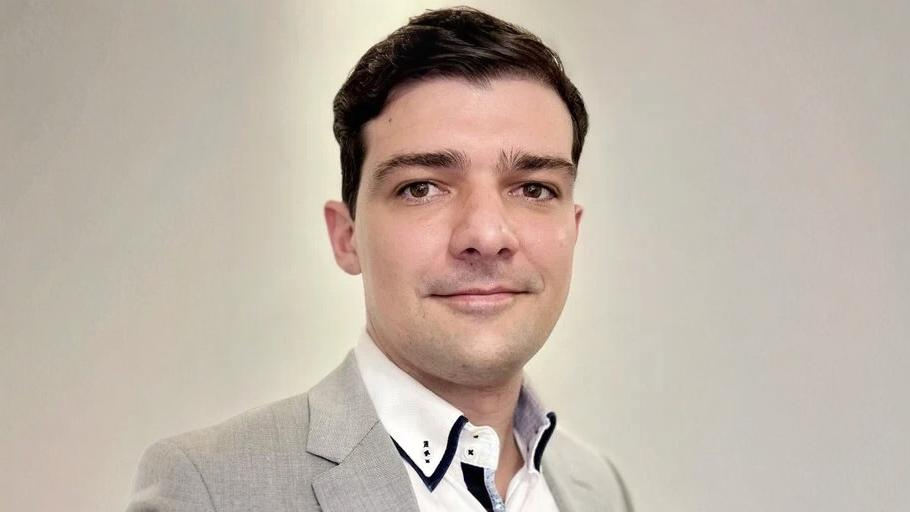
Gustavo Monnerat, Deputy Editor at The Lancet, shared on LinkedIn:
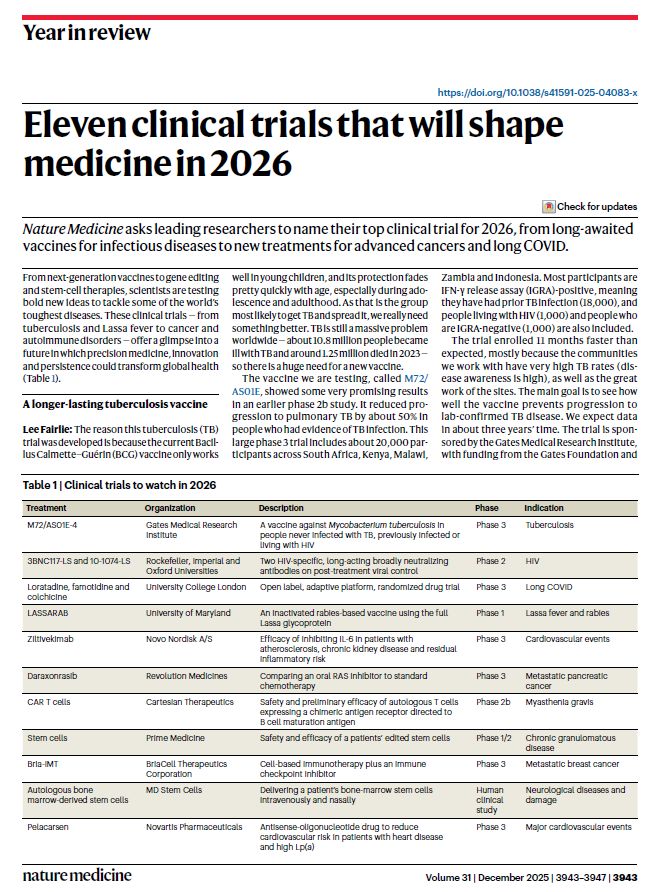
“Nature Medicine recently published clinical trials most likely to shape medical practice in the coming years.
Among all of them, these are the ones I personally found most interesting:
-> A next-generation tuberculosis vaccine (M72/AS01E)
The current BCG vaccine works reasonably well in young children, but its protection fades in adolescents and adults. This large phase 3 trial, enrolling 20,000 participants across Africa and Asia, aims to prevent progression to active pulmonary TB.
-> Targeting inflammation in heart disease (IL-6 inhibition with ziltivekimab)
This trial moves cardiovascular prevention beyond cholesterol lowering. By targeting residual inflammatory risk, it reinforces a crucial idea of an inflammation cause.
Two approaches stood out:
– mRNA CAR-T therapies that temporarily reprogram immune cells without permanent DNA editing
– Prime editing of autologous stem cells, correcting genetic defects using the patient’s own cells, with early signals suggesting functional cures in rare diseases”
Find more posts on Hemostasis Today.
-
Oct 10, 2026, 17:58Archo Farzana Batool: Exploring Medical Writing Through an Article on Iron Deficiency Anemia
-
Oct 10, 2026, 17:53Assessing Frailty in Adults With Hemophilia – JTH
-
Oct 10, 2026, 17:52Fatma Sadeghi: Reducing Maternal Health Inequalities Through Nursing Advocacy
-
Oct 10, 2026, 17:50Grzegorz Hensler: How Apheresis Transformed Blood Cell Separation and Collection
-
Oct 10, 2026, 17:47Hemant K Sharma: Japan’s Universal Artificial Blood Research – A Potential Breakthrough in Transfusion Medicine
-
Oct 10, 2026, 17:40John Strouse: Learning About Bleeding Disorders and Sickle Cell Disease at FWGBD
-
Oct 10, 2026, 17:34Mae Caime: Speaking at the Annual Women’s Retreat for the Hemophilia Community in Florida
-
Oct 10, 2026, 17:30Chokri Ben Lamine: PNH beyond the Textbook Triad
-
Oct 10, 2026, 17:29Ruah Alyamany: Thrombosis and Anticoagulation in Hematological Malignancies at SOHO KSA 2026