


Mitchell Elkind: Highlighting Potential Links Among Periodontal Disease, Stroke, and Cardiovascular Risk
Mitchell Elkind, Chief Science Officer, Brain Health and Stroke, American Heart Association, shared on LinkedIn:
”Highlighting Potential Links Among Periodontal Disease, Stroke, and Cardiovascular Risk
I have long been interested in the relationship between periodontal (gum) disease and atherosclerotic disorders, including stroke.
Recent studies and this new American Heart Association scientific statement underscore the growing evidence that chronic gum inflammation is not just an oral health issue—it may contribute to systemic inflammation, vascular dysfunction, and ultimately, increased risk of stroke and other cardiovascular events.
Gum disease can introduce harmful bacteria into the bloodstream and trigger chronic inflammation throughout the body.
This inflammatory state may accelerate the development of atherosclerosis (the buildup of plaque in arteries), compromise blood vessel function, and increase the risk for both heart attacks and strokes.
People with periodontal disease have higher odds of experiencing stroke, and for those who have already suffered a stroke, gum disease may raise the risk of recurrence.
All this suggests the importance of holistic care for brain health: fully integrated care would address not only traditional cardiovascular risk factors but also oral health as part of prevention of stroke and dementia and maintenance of brain health.
Promoting regular dental screenings and targeted periodontal care–especially for individuals with existing risk factors like diabetes, hypertension, and obesity–may reduce systemic inflammation and improve long-term brain and vascular health.
Certainly more research is needed to prove definitively the full impact of periodontal treatment on stroke outcomes, and then to support changes in clinical care, as appropriate.
But this story suggests that investing in brain health means looking beyond the obvious.
I am hopeful that the new year will provide opportunities to drive collaborative research across dentistry, neurology, and cardiology.
Together, we can empower communities to take simple steps—like maintaining oral hygiene—that may have profound effects on stroke prevention and overall brain health.”
Read the full article here.
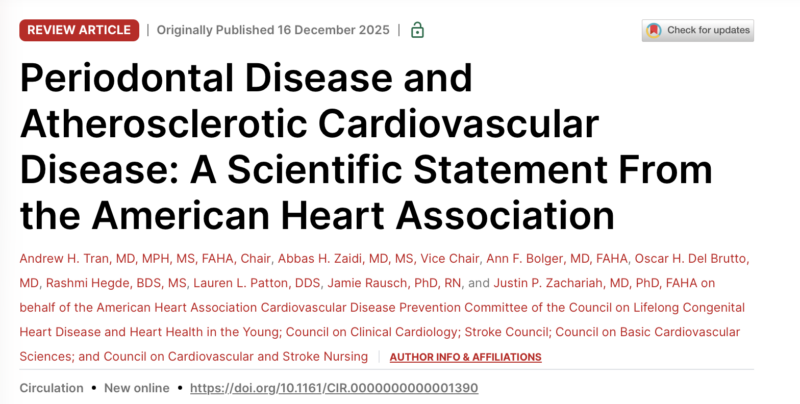
Article: Periodontal Disease and Atherosclerotic Cardiovascular Disease: A Scientific Statement From the American Heart Association
Authors: Andrew Tran, Abbas Zaidi, Ann Bolger, Oscar Del Brutto, Rashmi Hegde, Lauren Patton, Jamie Rausch, Justin Zachariah
Stay updated on all scientific advances with Hemostasis Today.
-
Oct 20, 2026, 05:46Jan T. Kielstein: DNP Poisoning and Hemoadsorption The Limits of Rescue Therapy
-
Oct 20, 2026, 05:33Giulia Di Paolo: Connecting Plasma Donation to the Patients Who Depend on It
-
Oct 20, 2026, 05:20James Knowles: Exploring Plasma Manufacturing and Strengthening Industry Collaboration
-
Oct 20, 2026, 05:11Giuseppe Lippi։ Understanding Liver Test Abnormalities After AAV Gene Therapy
-
Oct 20, 2026, 05:02Sanam Loghavi: Test Your Hematology Knowledge at ASH 2026!
-
Oct 20, 2026, 04:13Ifeanyichukwu Ifechidere: DOACs Are Not the Answer to Every Anticoagulation Question
-
Oct 20, 2026, 04:04Sadia Kamal: Honored to Receive the Outstanding Abstract Award at the 20th Midwest Platelet Conference
-
Oct 20, 2026, 04:03Yu-Hsuan Chen: One Antibody, Two Diseases from FcRn Biology to Clinical Translation
-
Oct 20, 2026, 03:49Domenico Simone Castiello: Rethinking Prolonged DAPT in Multivessel PCI – Insights from the DAPT-MVD Trial