


Transforming FVIII Product Classification: AUC and TTR as Game-Changing Metrics for Next-Generation Hemophilia A Therapy
Wolfgang Miesbach, Professor of Medicine at Frankfurt University Hospital, has recently shared a very informative post on X:
‘‘Novel FVIII Classification: Scientific Framework for Next-Generation Haemophilia Treatment. Two pharmacokinetic metrics that can redefine how we classify Factor VIII products, presented by Professor Cedric Hermans at ISTH SSC FVIII/FIX session.
The Scientific Challenge
Traditional “standard” vs “extended” half-life classifications have proven inadequate for new generation FVIII products. Recent advances have led to improved ability to maintain FVIII levels within normal range.
New Classification Metrics
– Area Under the Curve (AUC) > 40%
Measures total drug exposure over time, providing comprehensive assessment of sustained FVIII activity rather than peak-focused measurements
– Time in Target Range (TTR) > 40%
Evaluates percentage of time patients maintain therapeutically effective FVIII levels, offering crucial insights into sustained haemostatic protection
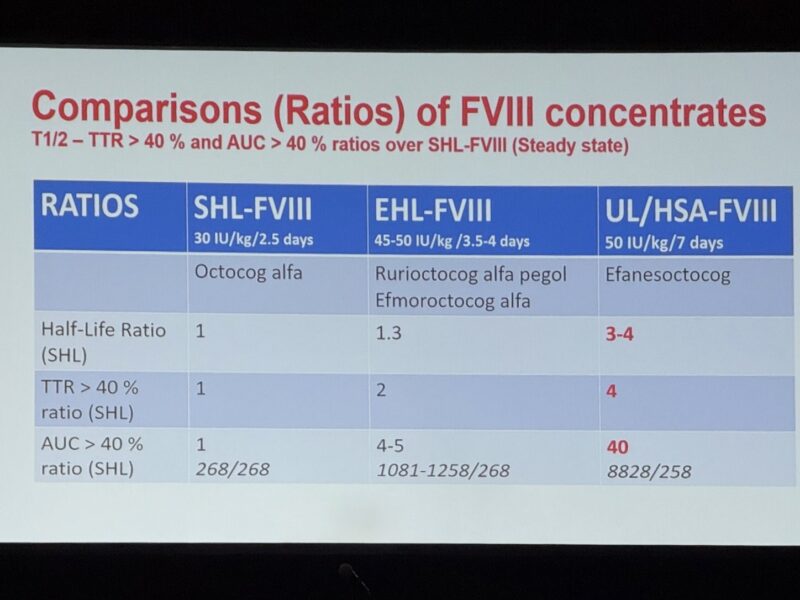
Comparative Performance Data
– Standard Half-Life (SHL-FVIII): Baseline comparators (AUC ratio: 1, TTR ratio: 1)
– Extended Half-Life (EHL-FVIII): 4-5x AUC improvement, 2x TTR enhancement
– Ultra-Long/High Sustained Activity (UL/HSA-FVIII): 40x AUC improvement, 4x TTR boost
Products like efanesoctocog alfa demonstrate remarkable sustained activity, maintaining mean FVIII levels >40 IU/dL for 4 days with geometric mean half-life of 43.3 hours
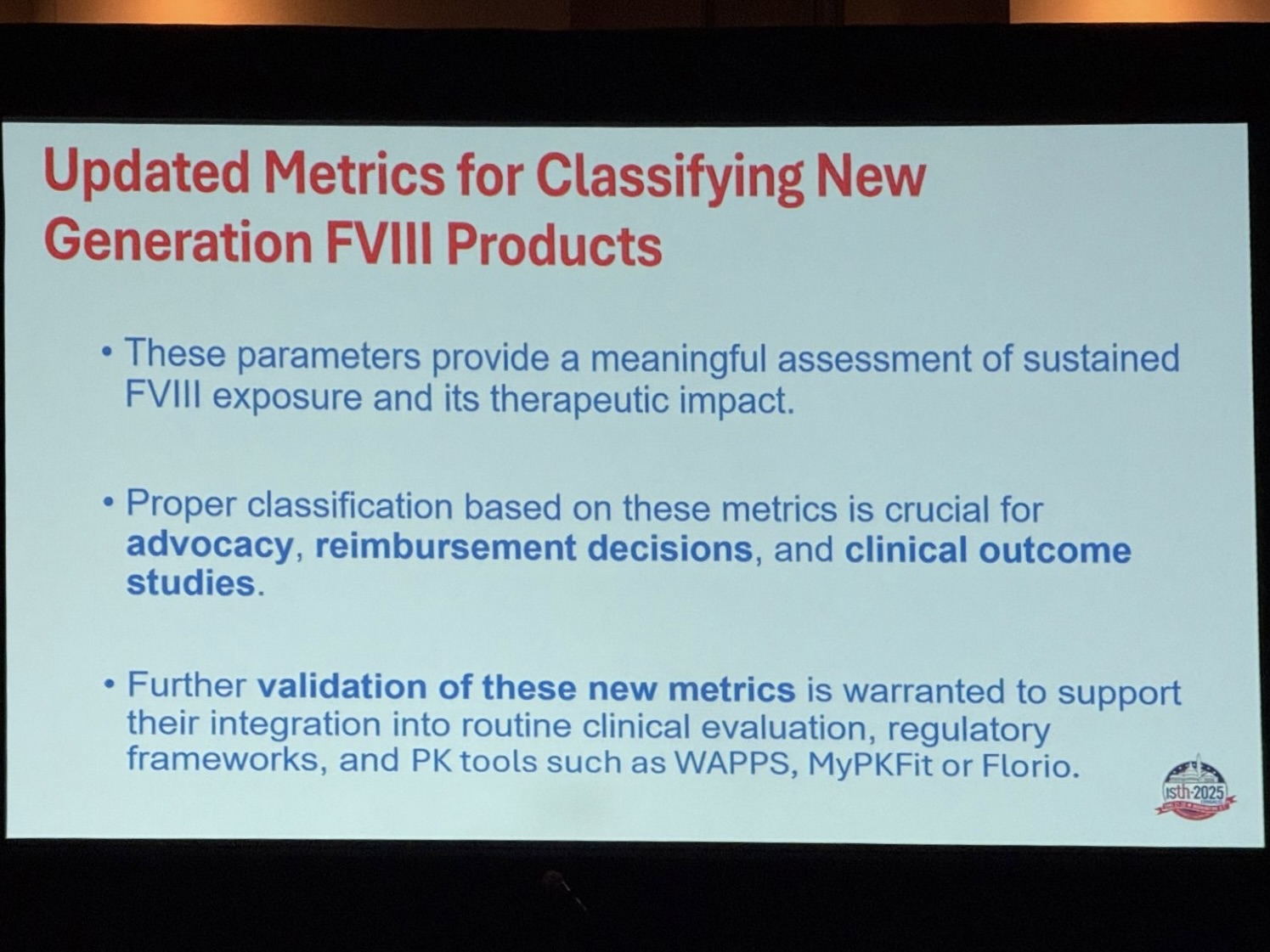
Future Integration
Further validation can be warranted for integration into routine clinical evaluation and PK tools like WAPPS-Hemo, MyPKFit, and Florio. These platforms enable Bayesian forecasting of individual PK profiles for personalized treatment optimization.
As the field evolves toward normal hemostasis as the treatment goal, these metrics provide an important scientific basis for evaluating innovative therapies.”
Stay updated with Hemostasis Today.
-
Oct 9, 2026, 11:06Nobles Green: How siRNA Therapy Helps the Body Form Stronger Clots
-
Oct 9, 2026, 10:53Switching From Emicizumab to Denecimig in Hemophilia A – Rare Disease Advisor
-
Oct 9, 2026, 10:40What New U.S. Data Reveal About GT – Glanzmann’s Research Foundation
-
Oct 9, 2026, 10:32Anjali Pandey: The Morphologic Clues to MDS With del(5q)
-
Oct 9, 2026, 10:13Reza Shojaei: 5 Leadership Responsibilities for a Sustainable Plasma Ecosystem
-
Oct 9, 2026, 08:38Johannes Gratz: Perioperative Care in Factor VII Deficiency – Treating the Patient, Not the Number
-
Oct 9, 2026, 08:28Ghanim Fajish: Vascular Cells May Retain a Prothrombotic Memory of Oxidative Stress
-
Oct 9, 2026, 07:43Mehmet Cilingiroglu: The First Diagnosis of Coronary Thrombosis in a Living Patient
-
Oct 9, 2026, 07:21Federico Ravaioli: 40 kPa Spleen Stiffness May Help Avoid Endoscopy in Chronic PVT