


Maira Dastgir N on Microvascular Dysfunction in Geriatrics
Maira Dastgir N, Global Chief of Transitional Care for Global Population Healthcare Management Forum, shared on LinkedIn:
”In geriatric care, we often focus on macro events like heart attacks or strokes.
However, the root of many geriatric syndromes like dementia, depression, and frailty often lies at the microvascular level.
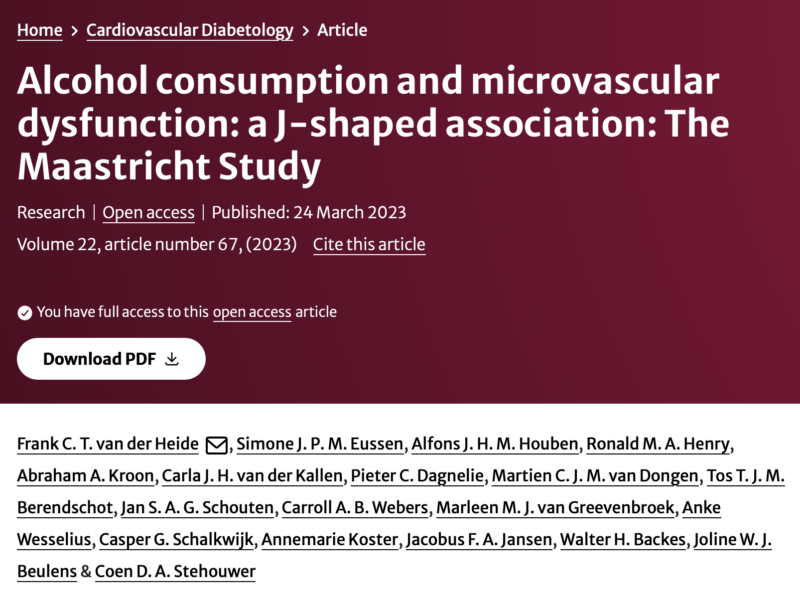
I reviewed an interesting article recently that caught my attention, The Maastricht Study findings on alcohol and Microvascular Dysfunction (MVD).
The researchers found a J-shaped association which meant light-to-moderate consumption was linked to lower MVD compared to abstinence, while high consumption worsened it.
As primary care doctors, we are dedicated to prevention and often view alcohol through a binary lens of “healthy” vs. “unhealthy.”
But for our aging population, the microvasculature is the frontline of defense against cognitive decline and physical frailty. This study suggests that:
1) Dietary interventions are not one-size-fits-all. The way a patient’s body handles alcohol and its impact on small vessels depends heavily on their metabolic profile.
2) The “Micro” is the Key to the “Macro”. By the time a patient presents with geriatric syndromes like depression or dementia, microvascular damage may already be advanced. We must broaden our horizons to include early microvascular screening as a preventive standard.
3) While we cannot and should not recommend increasing alcohol intake as a broad policy, we must understand these biological nuances to provide truly personalized geriatric care.
Shifting our focus from large-vessel events to early microvascular screening and dietary nuances can help diagnose minor dysfunction before it becomes a major clinical disease.
I have linked the article here.”
Article: Alcohol consumption and microvascular dysfunction: a J-shaped association: The Maastricht Study
Authors: Frank C. T. van der Heide, Simone J. P. M. Eussen, Alfons J. H. M. Houben, Ronald M. A. Henry, Abraham A. Kroon, Carla J. H. van der Kallen, Pieter C. Dagnelie, Martien C. J. M. van Dongen, Tos T. J. M. Berendschot, Jan S. A. G. Schouten, Carroll A. B. Webers, Marleen M. J. van Greevenbroek, Anke Wesselius, Casper G. Schalkwijk, Annemarie Koster, Jacobus F. A. Jansen, Walter H. Backes, Joline W. J. Beulens, Coen D. A. Stehouwer
Stay updated on all scientific advances with Hemostasis Today.
-
Sep 24, 2026, 18:43Hugh Nguyen: Honored to Accept the Friend of Singapore Red Cross Award
-
Sep 24, 2026, 18:42Titilope Fasipe: Proud to Support American Society of Hematology’s SCD Initiative
-
Sep 24, 2026, 18:34Ifeanyichukwu Ifechidere: Why Coagulation Samples Can Be “Too Valuable to Throw Away”?
-
Sep 24, 2026, 18:33Aswin K. Mohan: When a Superpower Hears the Call for Blood
-
Sep 24, 2026, 18:31Mercy Lung’aho: Anemia Is Not Only An Iron Problem
-
Sep 24, 2026, 18:29Nick Hanson: Before a Dementia Diagnosis Check Vitamin B12
-
Sep 24, 2026, 18:28Rachel McBryan: Nearly One in Five Older Canadians Has Low Vitamin B12
-
Sep 24, 2026, 18:27Kemal Karaagac: Early DOAC Initiation After Acute Ischaemic Stroke in Atrial Fibrillation
-
Sep 24, 2026, 18:26Mohammed A. AlOmar: What Characterizes Young Stroke in the UAE?