


Ney Carter Borges։ Clinical Importance of Coronary Microcirculation in MINOCA and INOCA
Ney Carter Borges, Member Cardiologist of Global Physician Association at Cleveland Clinic Florida, shared a post on LinkedIn:
”Clinical Importance of Coronary Microcirculation in MINOCA and INOCA
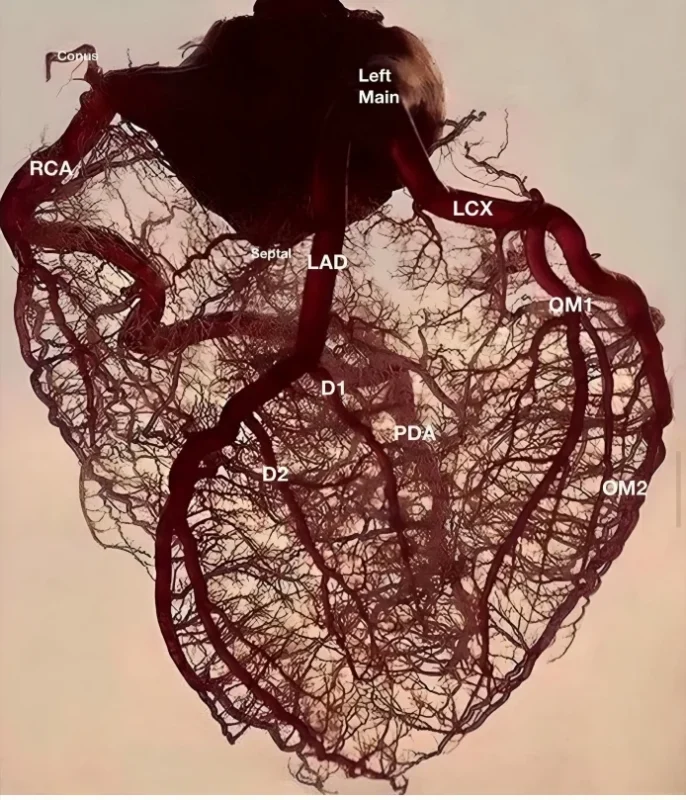
Coronary microvascular dysfunction (CMD) plays a central and increasingly recognized role in the pathophysiology of angina with non-obstructive coronary arteries, including both myocardial infarction with non-obstructive coronary arteries (MINOCA) and ischemia with non-obstructive coronary arteries (INOCA). Although epicardial coronary arteries may appear angiographically normal or minimally diseased, impairment of the coronary microcirculation leads to inadequate myocardial perfusion, ischemia, and adverse clinical outcomes.
Epidemiological data indicate that INOCA affects up to 40–50% of patients undergoing coronary angiography for angina, with a higher prevalence in women, particularly post-menopausal. In MINOCA, which accounts for approximately 5–10% of all myocardial infarctions, coronary microvascular dysfunction, microvascular spasm, and microembolization are implicated in up to 50–60% of cases when systematically investigated with invasive or advanced imaging techniques.
From a prognostic perspective, CMD is far from benign. Patients with INOCA and documented microvascular dysfunction have a 2–4-fold increased risk of major adverse cardiovascular events (MACE), including cardiovascular death, heart failure hospitalization, and recurrent angina. Reduced coronary flow reserve (CFR <2.0) has been independently associated with a 3-fold increase in cardiovascular mortality over long-term follow-up. Similarly, MINOCA patients demonstrate annual MACE rates of 3–5%, comparable to those observed in patients with obstructive coronary artery disease.
Recognition of coronary microcirculatory pathology in MINOCA and INOCA is therefore critical, not only for accurate diagnosis but also for risk stratification and targeted therapy, shifting clinical focus beyond the epicardial arteries toward the microvascular substrate of ischemic heart disease.
1. Taqueti VR, Di Carli MF.
Coronary microvascular disease: mechanisms and clinical implications.
J Am Coll Cardiol. 2018.
2. Ong P, Camici PG, et al.
Coronary microvascular dysfunction and microvascular angina.
Eur Heart J. 2018.
3. Tamis-Holland JE, et al.
MINOCA: contemporary diagnosis and management.
Circulation. 2019.
4. Pasupathy S, et al.
Myocardial infarction with nonobstructive coronary arteries.
Circulation. 2015.
5. Knuuti J, et al.
ESC Guidelines on chronic coronary syndromes.
Eur Heart J. 2020.”
Stay updated with Hemostasis Today.
-
Oct 16, 2026, 06:17Neha Rastogi Panda: Precision Diagnosis and Organ Preservation in Splenic Abscess
-
Oct 16, 2026, 05:53Alejandro González Veliz: Looking Beyond Coronary Anatomy to Understand Ischemia
-
Oct 16, 2026, 04:16Asmaa M. Gouda: Advancing Blood Bank Leadership at Alexandria University Hospitals
-
Oct 16, 2026, 03:52Saja Al-Zamili: Minimally Invasive Hematoma Evacuation in Intracerebral Hemorrhage
-
Oct 16, 2026, 03:13Bhumika Satija: Beyond the Diploma A Growing Passion for Blood Banking and Transfusion Medicine
-
Oct 16, 2026, 03:03Jamie Nash: Microfluidics in Transfusion Medicine Advancing Blood Component Quality Assessment
-
Oct 16, 2026, 02:53World Thrombosis Day 2026 Advancing Women’s Health Through Better Thrombosis Research and Care – World Thrombosis Day
-
Oct 16, 2026, 02:42Areej Wasi: Myocardial Infarction in Young Adults Advancing Cardiology Education and Medical Leadership
-
Oct 16, 2026, 02:33Mehak Trehan: ASH 2026 Myelofibrosis Guidelines 10 Practical Takeaways for Clinical Practice