


Salihu (Oyiza) Asimawu: What If Blood Could Be Prepared in the Lab?
Salihu (Oyiza) Asimawu, Medical Laboratory Science Student and Research and Innovation Enthusiast at Ahmadu Bello University, shared a post on LinkedIn:
”What if blood could be prepared in the lab?
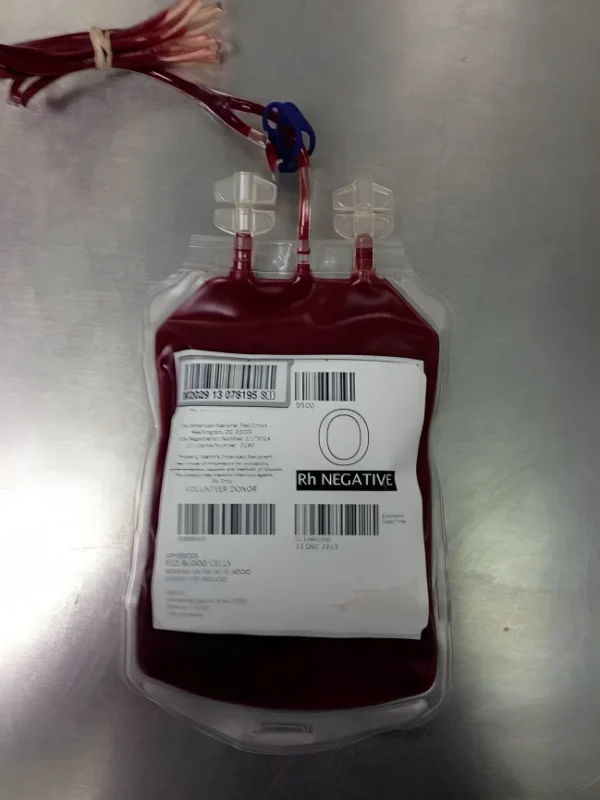
During my hematology lab posting at the cross-matching bench, I witnessed a situation that made me reflect deeply on innovation in healthcare. A patient required blood, but there was no exact match available in the blood bank. O-negative was in stock, yet the lab manager hesitated to release it immediately, as it is rare and may be urgently needed for another patient.
That moment sparked a discussion between a colleague and me: What if blood could be produced in the laboratory? What if bioengineered blood could reduce the constant pressure around scarce blood groups like O-negative?
We went on to ask a scientist about the possibility. He explained that while fully functional, clinically available lab-produced blood is not yet widely established, researchers have developed experimental red blood cells and oxygen-carrying substitutes that can mimic certain supplementary functions of blood.
Exploring further, I learned that although bioengineered blood vessels and some blood substitutes have been developed, fully functional lab-produced blood remains largely theoretical. Blood is not just red cells—it includes plasma, platelets, clotting factors, antibodies, and precise ABO/Rh antigens. Replicating all these components accurately makes it an incredibly complex scientific challenge.
This experience highlighted the vast potential for research and innovation in transfusion medicine and diagnostics. It strengthened my curiosity about contributing to solutions that could improve patient care and healthcare accessibility.”
Stay updated with Hemostasis Today.
-
Oct 20, 2026, 05:02Sanam Loghavi: Test Your Hematology Knowledge at ASH 2026!
-
Oct 20, 2026, 04:13Ifeanyichukwu Ifechidere: DOACs Are Not the Answer to Every Anticoagulation Question
-
Oct 20, 2026, 04:04Sadia Kamal: Honored to Receive the Outstanding Abstract Award at the 20th Midwest Platelet Conference
-
Oct 20, 2026, 04:03Yu-Hsuan Chen: One Antibody, Two Diseases from FcRn Biology to Clinical Translation
-
Oct 20, 2026, 03:49Domenico Simone Castiello: Rethinking Prolonged DAPT in Multivessel PCI – Insights from the DAPT-MVD Trial
-
Oct 20, 2026, 03:37Rucha Patil: Scaling POC Diagnostics for Haemophilia A and VWD Across India
-
Oct 20, 2026, 03:31Zena Vexler: Targeting Neutrophil Elastase and NETosis to Mitigate Infection-Triggered Childhood Stroke
-
Oct 20, 2026, 03:24Chaza Alaji: Diagnosing Protein C and Protein S Deficiency
-
Oct 20, 2026, 03:24Mou Nandi: How Maternal Health During Pregnancy May Shape Infant Development