

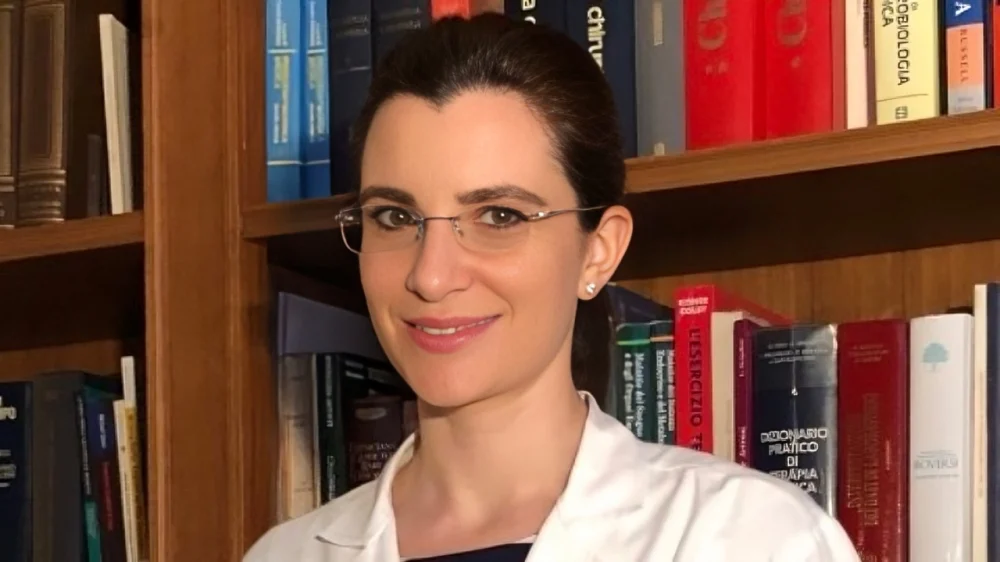
Roberta Gualtierotti: How Do Sex and Gender Influence VTE in Patients with Cancer?
Roberta Gualtierotti, Associate Professor of Internal Medicine at the University of Milan, posted on LinkedIn about a recent article she and her colleagues co-authored, adding:
”Cancer-associated thrombosis (CAT) remains one of the leading causes of morbidity and mortality in oncology.
Yet one important dimension of risk is still insufficiently explored: sex and gender differences.
How do sex and gender influence venous thromboembolism (VTE) in patients with cancer?
Men generally show a higher overall incidence of cancer-associated VTE.
- Women may experience earlier thrombotic events, often related to anticancer therapies.
- Biological differences in coagulation and inflammation may contribute to these patterns, although the underlying mechanisms are still not fully understood.
- Sex-related disparities also appear in treatment complications, including bleeding risk and abnormal uterine bleeding in anticoagulated women of reproductive age.
- In hematologic malignancies, evidence on sex differences in thrombosis remains limited and inconsistent.
In addition, gender-related inequalities in clinical trial participation still affect the interpretation of available data.
Overall, current evidence supports sex as a clinically relevant modifier of cancer-associated thrombosis risk.
Advancing research that systematically integrates sex- and gender-informed analyses and sex-stratified reporting will be essential to improve mechanistic understanding and support precision medicine in thrombosis and oncology.”
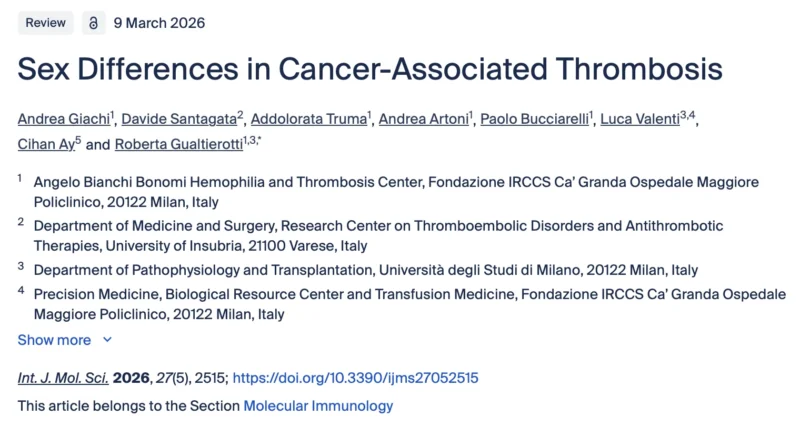
Title: Sex Differences in Cancer-Associated Thrombosis
Authors: Andrea Giachi, Davide Santagata, Addolorata Truma, Andrea Artoni, Paolo Bucciarelli, Luca Valenti, Cihan Ay, Roberta Gualtierotti
Read the Full Article on International Journal of Molecular Sciences
Stay updated on all scientific advances with Hemostasis Today.
-
Sep 15, 2026, 01:37Lesley Van Wyk: Exploring Sickle Cell Disease – The HbS Story
-
Sep 15, 2026, 01:31Luca Seffin: To the Science, the People, and the Journey – Thank You SR-Tiget
-
Sep 14, 2026, 23:49Heghine Khachatryan: New evidance – Antiphospholipid Antibodies and Ischemic Stroke
-
Sep 14, 2026, 23:42Eman M. Elsabbagh: Successful HCT Does Not End at Engraftment
-
Sep 14, 2026, 23:31Antonis Kattamis: Proud to Be Part of this Endeavour and Senior Author of the Pivotal Trial
-
Sep 14, 2026, 23:23Farjah Algahtani: Stroke Incidence and Risk Factors in Saudi Patients with Sickle Cell Disease
-
Sep 14, 2026, 20:53YoonHwa An: Rusfertide in Polycythemia Vera – From Clinical Benefit to Strategic Value
-
Sep 14, 2026, 20:52Andres Alberto Mercado Pompa: External Validation of Prognostic Risk Scores in Cerebral Venous Thrombosis
-
Sep 14, 2026, 20:50Balaji Kirushnan: Advancing Regional Citrate Anticoagulation in CRRT – From Experience to Implementation