


Reza Shojaei: The Presence of Microplastics in Blood Signals a New Era for Transfusion Medicine
Reza Shojaei, Chief Operating Officer at Canadian Plasma Resources, shared a post on LinkedIn:
“Emerging Contaminants, and Blood and Plasma Safety
In recent years, microplastics, tiny plastic particles typically smaller than 5 millimetres, have emerged as a global environmental and public health concern. These particles originate from the degradation of larger plastics or from manufactured micro-sized plastics used in industrial and consumer products. Microplastics have now been detected in air, water, soil, food, and human biological samples (Leslie et al., 2022).
More recently, scientists have begun identifying microplastics inside the human body, including in the bloodstream, raising new questions about potential implications for transfusion medicine and plasma-derived therapies.
Microplastics in the Human Body
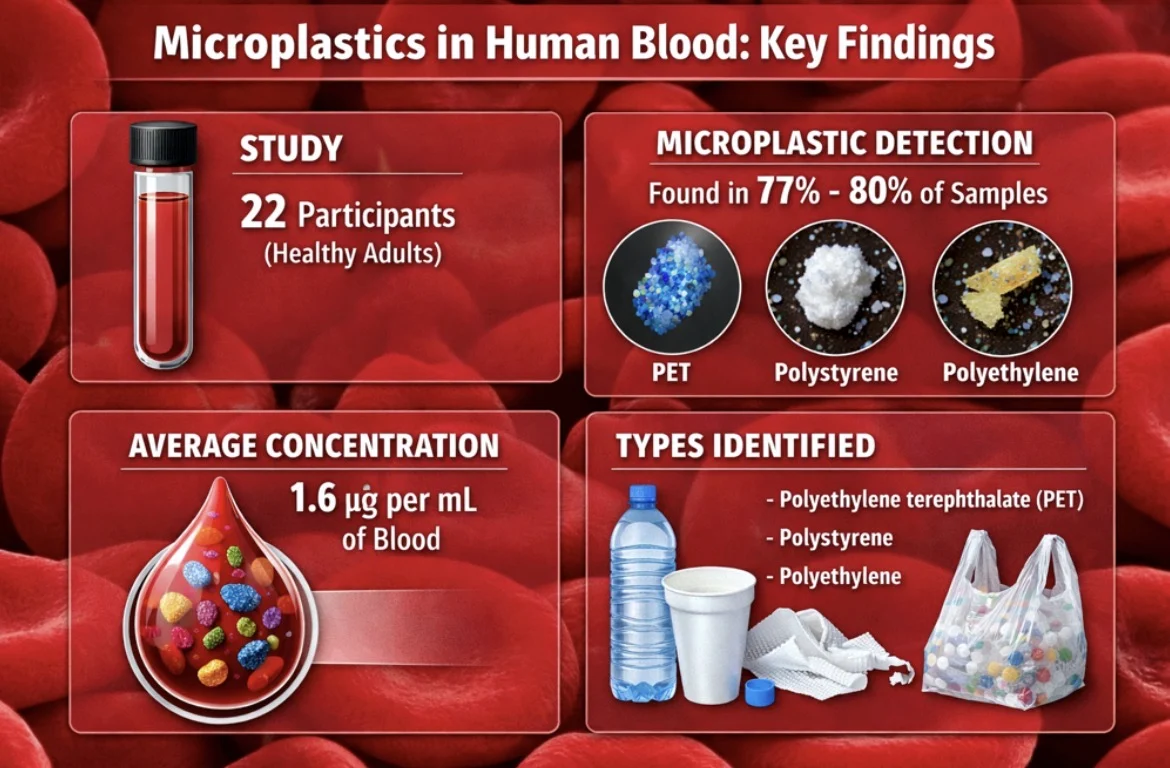
In a landmark biomonitoring study, researchers from the Vrije Universiteit Amsterdam reported the first detection of microplastic particles circulating in human blood (Leslie et al., 2022). The study analyzed blood samples from 22 healthy adult donors and found plastic particles in approximately 77–80% of participants (Leslie et al., 2022; Osborne, 2022).
The polymers detected included common industrial plastics such as:
- Polyethylene terephthalate (PET): used in beverage bottles
- Polystyrene: used in packaging materials
- Polyethylene: used in plastic bags and packaging
Average concentrations of plastic particles measured in the samples were approximately 1.6 micrograms per millilitre of blood, demonstrating that environmental plastic particles can enter the circulatory system (Leslie et al., 2022). Importantly, these findings confirmed that microplastics are bioavailable for uptake into the bloodstream.
Subsequent research has reinforced the concept that environmental microplastics can enter the human body through ingestion and inhalation and may circulate within biological systems, although the health implications remain uncertain (Lamoree et al., 2024).
Implications for Blood Donation and Transfusion Medicine
From a blood safety perspective, the presence of microplastics in human circulation does not currently pose a known transfusion risk.
Several factors provide reassurance:
- Exposure is population-wide: Microplastics are ubiquitous in the environment, so both donors and recipients are exposed through everyday life (Leslie et al., 2022).
- Concentrations detected in blood appear extremely low: Current studies measure concentrations in microgram ranges, far below levels associated with toxicological effects in experimental models.
- Blood processing systems incorporate multiple safety barriers: Modern transfusion systems include infectious disease testing, leukoreduction filtration, and strict quality control processes designed to reduce biological and particulate contaminants.
To date, no clinical evidence suggests that microplastics pose a transfusion-transmissible risk, and regulatory authorities have not identified microplastics as a recognized hazard in blood donation or transfusion medicine.
Plasma-Derived Medicinal Products and Purification Safety
The risk profile may be even lower for plasma-derived medicinal products (PDMPs).
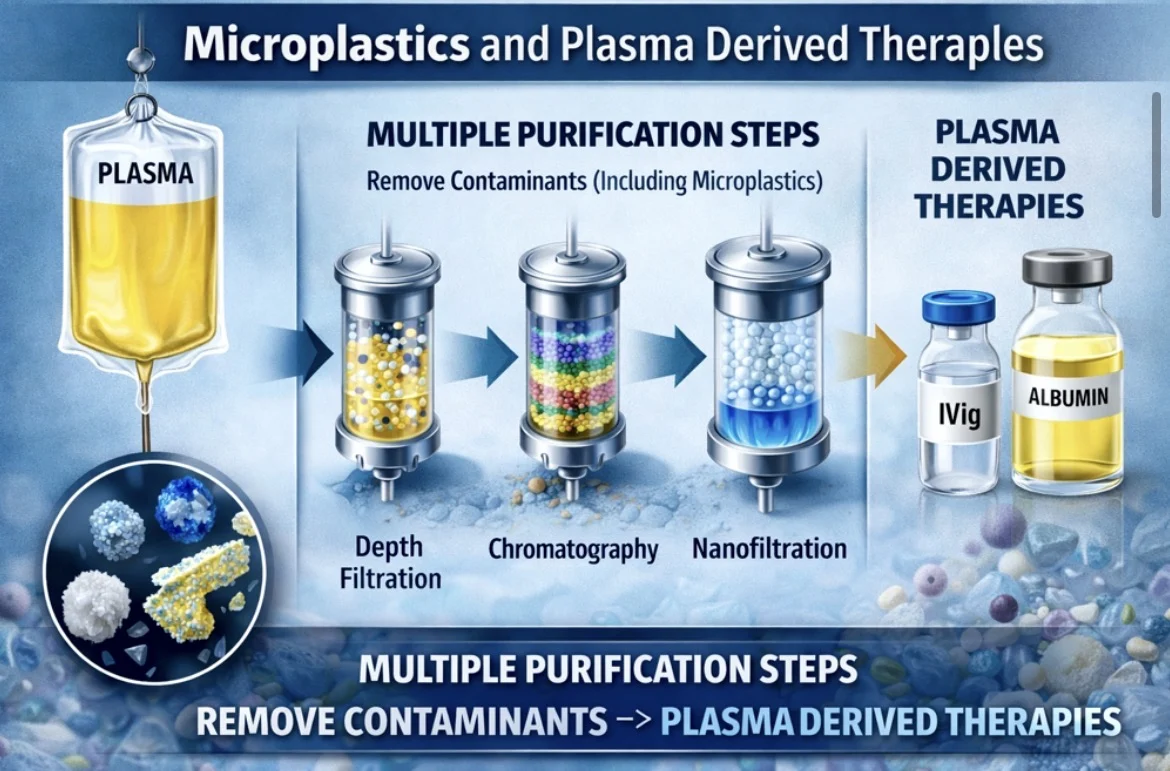
Plasma fractionation, used to produce therapies such as immunoglobulins, albumin, and clotting factors, includes multiple purification and filtration steps designed to remove impurities and pathogens (Burnouf, 2014).
These processes typically include:
- Cold ethanol fractionation
- Depth filtration
- Chromatography purification
- Nanofiltration
- Viral inactivation and removal steps
Many of these technologies can remove particles significantly smaller than microplastics, providing an additional margin of safety for plasma-derived therapies (Burnouf, 2014).
Emerging Environmental Contaminants
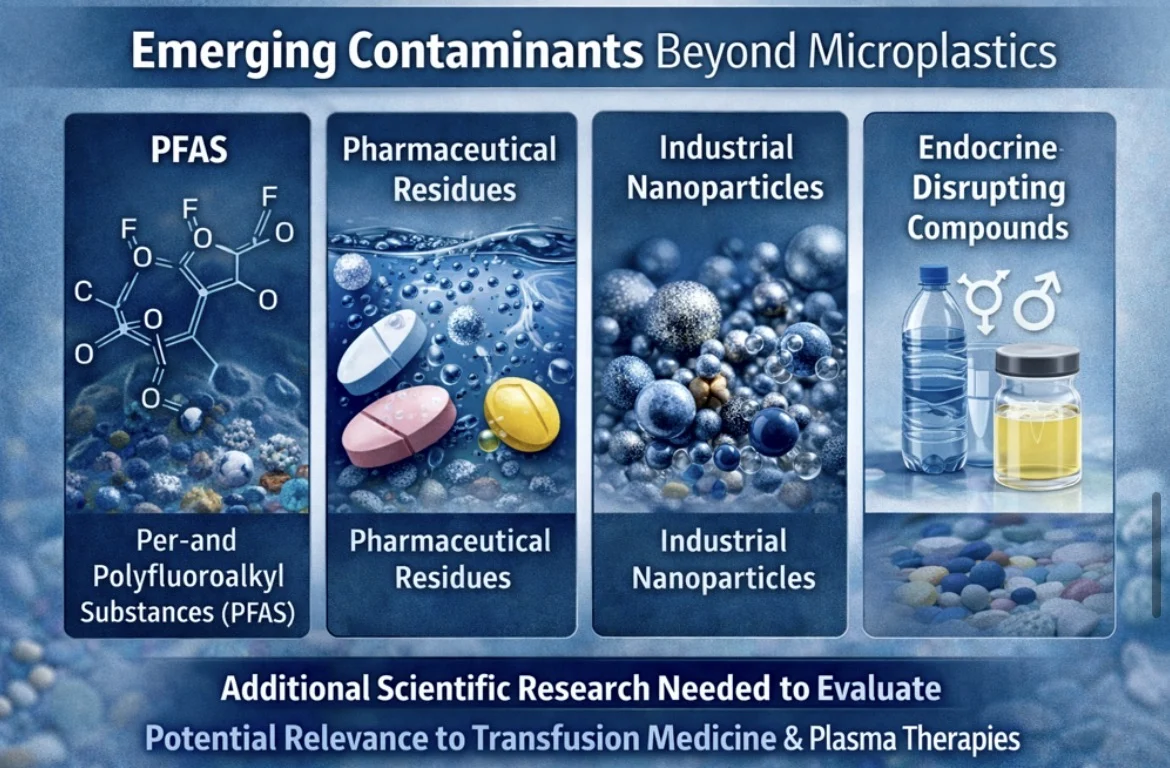
Microplastics represent only one category within a broader class of emerging environmental contaminants that scientists are studying in relation to human health and biological systems.
These include:
- Per- and polyfluoroalkyl substances (PFAS)
- Industrial nanoparticles
- Pharmaceutical residues in water systems
- Endocrine-disrupting compounds
Although these contaminants are increasingly detected in environmental monitoring studies, their relevance to blood donation and plasma manufacturing remains largely theoretical, and further interdisciplinary research is needed to assess potential risks.
Scientific Uncertainty and Research Gaps
Despite growing scientific interest, the field remains relatively young.
Key unanswered questions include:
- How long microplastics remain in circulation
- Whether they accumulate in specific tissues
- Whether they interact with immune or inflammatory pathways
- Whether environmental exposure patterns affect donor populations differently
Scientists emphasize that more rigorous and standardized analytical methods are required to accurately measure microplastics in human tissues and evaluate potential health implications (Lamoree et al., 2024).
Why This Matters for the Blood and Plasma Sector
Even though current evidence does not indicate a transfusion risk, the topic remains relevant for several reasons:
1. Public trust in blood safety: Blood systems rely on public confidence. Transparent communication about emerging scientific findings strengthens credibility.
2. Anticipatory risk management: Historically, blood safety improvements, from HIV screening to West Nile virus testing, have emerged from proactive surveillance of new risks.
3. Environmental health awareness: Microplastics highlight the broader intersection between environmental pollution and human health.
Final Thought
The detection of microplastics in human blood does not currently represent a clinical threat to transfusion medicine or plasma-derived therapies. However, it underscores a broader reality:
Human health and environmental health are increasingly interconnected.
For professionals working in blood collection, transfusion medicine, and plasma fractionation, continued scientific vigilance will remain essential as research evolves.
The next frontier of blood safety may involve not only infectious diseases but also environmental exposures that shape human biology.
References
Burnouf, T. (2014). Modern plasma fractionation. Transfusion Medicine Reviews, 28(4), 213–222.
Leslie, H. A., van Velzen, M. J. M., Brandsma, S. H., Vethaak, A. D., Garcia-Vallejo, J. J., & Lamoree, M. H. (2022). Discovery and quantification of plastic particle pollution in human blood. Environment International, 163, 107199.
Lamoree, M., Leslie, H., & colleagues. (2024). Micro- and nanoplastics in human blood detected again. Vrije Universiteit Amsterdam.
Osborne, M. (2022). Researchers find plastic particles in human blood for the first time. Smithsonian Magazine.
Zimmermann, L. (2022). Microplastics measured in human blood and mouse brains. Food Packaging Forum.”
Find more posts featuring Reza Shojaei Hemostasis Today.
-
Oct 7, 2026, 16:44Amor Salah: 2026 NCS/SCCM Guidelines for Managing Antithrombotic-Associated ICH
-
Oct 7, 2026, 16:04NETs in Thrombosis: From Mechanism to Therapeutic Target
-
Oct 7, 2026, 15:28Amir Samimi: Prognostic Value of Platelet Count in Resected HNSCC
-
Oct 7, 2026, 15:21Eloïse Laouenan: Bridging Immunity and Thrombosis in MVTE
-
Oct 7, 2026, 15:10Uthra Sundaram: Honouring Donors During International Plasma Awareness Week
-
Oct 7, 2026, 15:04Daniel Victor Ortigoza: Should Frail Older Patients With AF Switch From VKA to DOACs?
-
Oct 7, 2026, 14:53Susan Noone: Donor Turned Recipient Shares Lifesaving Transfusion Story
-
Oct 7, 2026, 14:49Aimee Burtenshaw: The Impact of the Infected Blood Inquiry on Hospital Transfusion Laboratories
-
Oct 7, 2026, 14:41Vikash Jaiswal: Does Timing Matter for Calcium in Pre-Eclampsia Prevention?