


Kalyan Roy: Wrong Blood in Tube – A Small Error with Life-Threatening Consequences
Kalyan Roy, Transfusion Medicine Specialist at Square Hospitals LTD, shared a post on LinkedIn:
“Wrong-Blood-In-Tube (WBIT):
A Small Error with Life-Threatening Consequences
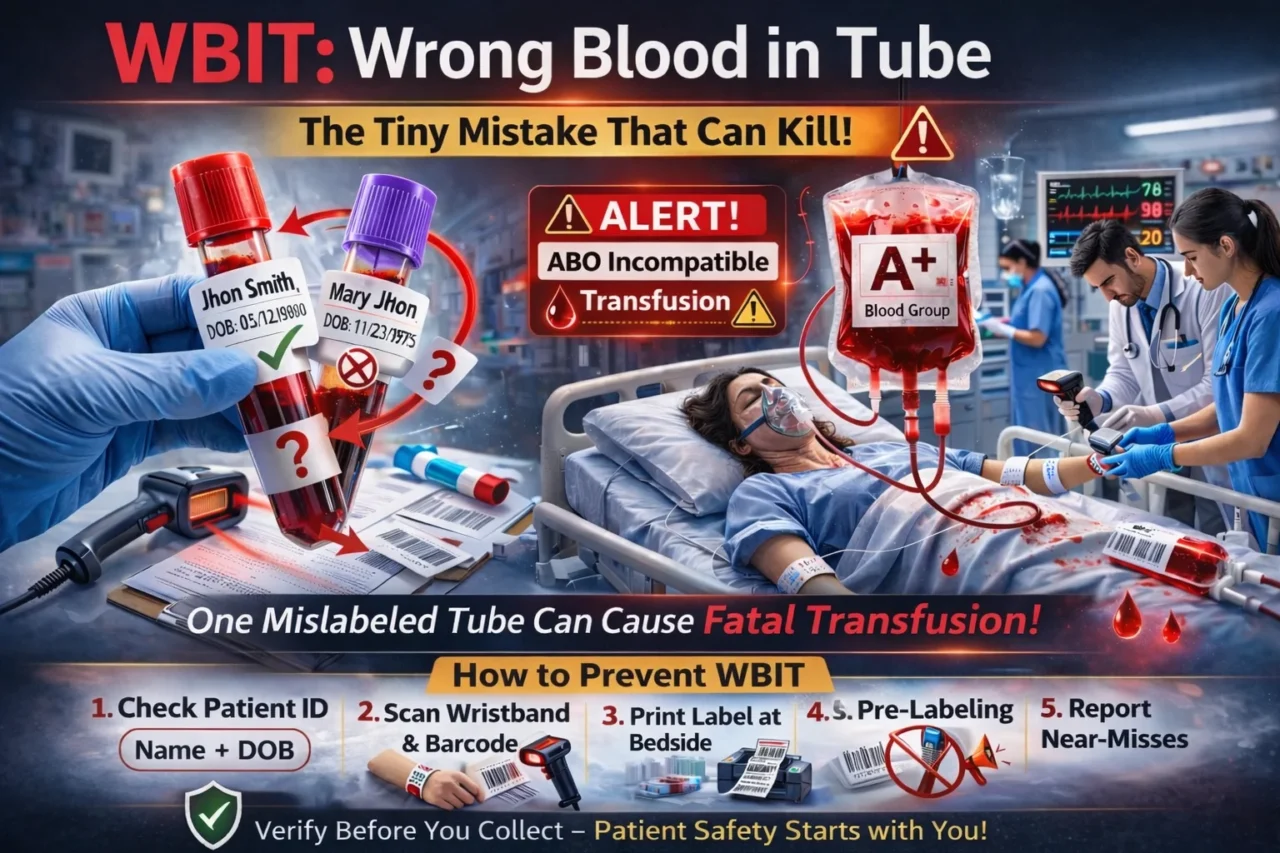
WBIT refers to the mislabeling of a blood sample with another patient’s identity – an error that can result in ABO-incompatible transfusion and potentially fatal outcomes.
Importantly, these incidents are largely preventable with robust systems and disciplined practice.
Why does WBIT still occur?
Despite awareness, failures persist due to system and human factors:
- Workflow pressures and time constraints
- Pre-labeling of sample tubes
- Environmental distractions during phlebotomy
- Inadequate patient identification practices
Even experienced professionals are vulnerable when processes are not standardized or enforced.
Evidence-based strategies to prevent WBIT
Adopting the following measures significantly reduces risk:
- Bedside patient identification using two unique identifiers (e.g., Name plus DOB / Hospital ID)
- Strict avoidance of pre-labeled tubes unless supported by validated bedside verification workflows
- Barcode-enabled systems linking patient wristbands, samples, and blood products
- On-demand bedside label printing to ensure correct patient-sample association
- Non-punitive incident reporting systems to capture and learn from near-misses
Standard Operating Practice (SOP)
A simple, non-negotiable sequence:
- Confirm patient identity at bedside
- Scan wristband (if available)
- Print and attach label immediately
- Collect sample
- No shortcuts. No deviations.
Why this matters
Preventable transfusion errors lead to:
- Serious patient harm or mortality
- Regulatory scrutiny and legal implications
- Significant institutional and financial burden
Investment in technology, training, and safety culture is minimal compared to the cost of a single adverse event.
Final Thought
Patient safety is built on consistent execution of basic steps – every patient, every time.”
Stay updated with Hemostasis Today.
-
Oct 10, 2026, 17:58Archo Farzana Batool: Exploring Medical Writing Through an Article on Iron Deficiency Anemia
-
Oct 10, 2026, 17:53Assessing Frailty in Adults With Hemophilia – JTH
-
Oct 10, 2026, 17:52Fatma Sadeghi: Reducing Maternal Health Inequalities Through Nursing Advocacy
-
Oct 10, 2026, 17:50Grzegorz Hensler: How Apheresis Transformed Blood Cell Separation and Collection
-
Oct 10, 2026, 17:47Hemant K Sharma: Japan’s Universal Artificial Blood Research – A Potential Breakthrough in Transfusion Medicine
-
Oct 10, 2026, 17:40John Strouse: Learning About Bleeding Disorders and Sickle Cell Disease at FWGBD
-
Oct 10, 2026, 17:34Mae Caime: Speaking at the Annual Women’s Retreat for the Hemophilia Community in Florida
-
Oct 10, 2026, 17:30Chokri Ben Lamine: PNH beyond the Textbook Triad
-
Oct 10, 2026, 17:29Ruah Alyamany: Thrombosis and Anticoagulation in Hematological Malignancies at SOHO KSA 2026