

Chokri Ben Lamine: Routine VTE Prophylaxis Is Not Recommended for Chronically Bedridden Patients at Home
Chokri Ben Lamine, Adult Hematology and SCT Assistant Consultant at Oncology Center of Excellence at King Faisal Specialist Hospital and Research Center, shared a post on X:
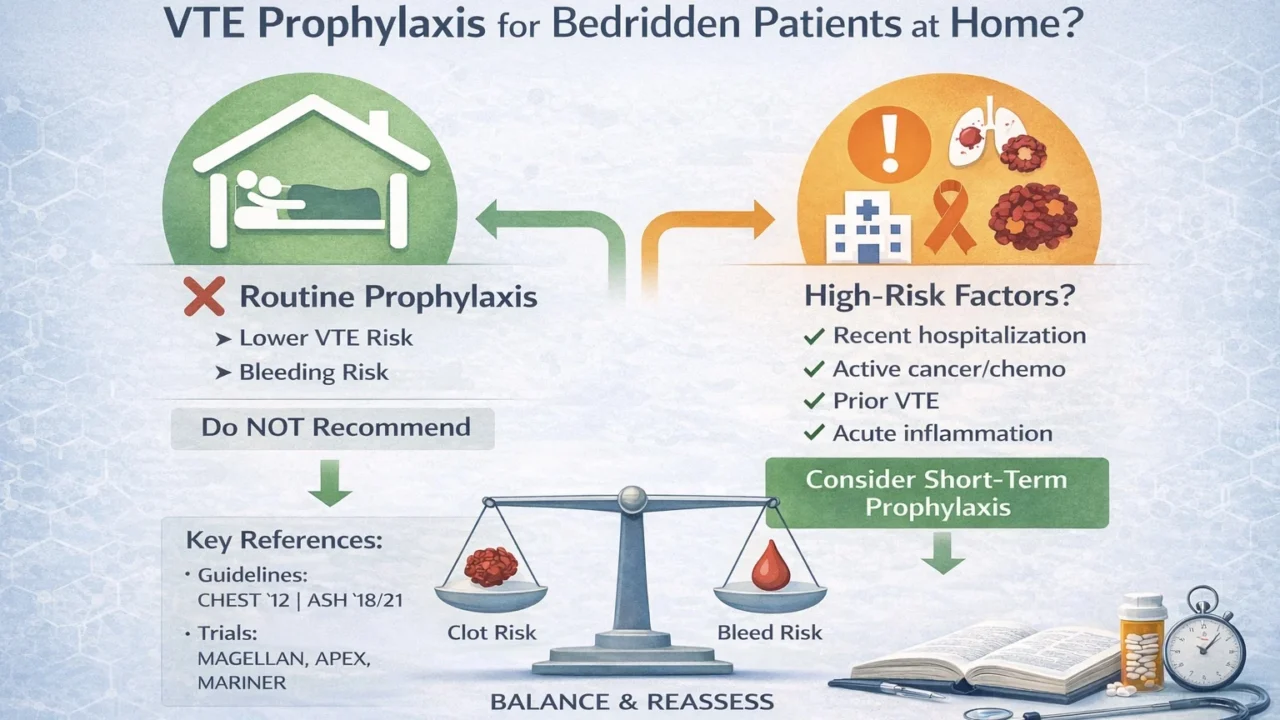
“Short answer (guideline-based): NO routine VTE prophylaxis for chronically bedridden patients at home.
Guideline Position
American College of Chest Physicians (CHEST Guidelines)
Do Not recommend pharmacologic prophylaxis for:
- Chronically immobilized patients
- Nursing home residents
- Home-bound patients without acute illness
Rationale:
- Lower VTE incidence vs hospitalized patients
- Higher bleeding risk outweighs benefit
American Society of Hematology (ASH 2018/2021 VTE Guidelines)
Suggest against routine prophylaxis in:
- Long-term immobile patients at home
- Unless additional strong transient risk factors present
When to Consider prophylaxis (exception cases)
Only if HIGH-RISK transient state, e.g.:
- Recent hospitalization (≤45–90 days)
- Active cancer (especially receiving chemotherapy)
- Prior VTE
- Acute infection or inflammation
- Marked reduced mobility with additional risk (Improce score high)
In such cases, short-term prophylaxis may be considered on a case-by-case basis.
Extended prophylaxis trials (important nuance)
- MAGELLAN trial
- APEX trial
- MARINER trial
Show benefit in selected high-risk recently hospitalized patients, Not applicable to stable chronically bedridden home patients
Practical Hematology Take
- Bedridden status alone is not an indication
- Always balance: VTE risk vs bleeding risk
- Focus on:
- Hydration
- Mobilization if possible
- Reassess if clinical status changes
Key References
- Kahn SR et al. CHEST Guideline (2012, updated concepts)
- Spyropoulos AC et al., MARINER Trial (NEJM 2018)
- Cohen AT et al., MAGELLAN Trial (NEJM 2013)
One-line clinical answer
No routine pharmacologic VTE prophylaxis for chronically bedridden patients at home unless additional high-risk transient factors are present.”
Stay updated with Hemostasis Today.
-
Oct 21, 2026, 02:52Aymar Akilimali: Bleeding During Anticoagulation as a Potential Signal of Occult Cancer
-
Oct 21, 2026, 00:58Anees Ur Rahman: Completing a Two-Week Clinical Rotation at Haemophilia Treatment Centre Rawalpindi
-
Oct 21, 2026, 00:56Caitlyn Mooney: Pulmonary Embolism in Athletes, Recognition and Return to Sport
-
Oct 21, 2026, 00:54Hani Karrar: Pleased to Share Our Review on Emicizumab in Hemophilia A Management
-
Oct 21, 2026, 00:53Akshay Sharma: HSCT Leads to Sustained Improvements in Sickle Cell Cardiomyopathy for Up to 3 Years
-
Oct 21, 2026, 00:51Prateek Meena: The F. A. T. R. N. Mnemonic for Recognizing TTP
-
Oct 20, 2026, 23:51Registration Is Open for WFH CCS 2027 – World Federation of Hemophilia
-
Oct 20, 2026, 23:44Edward Lee Carter: AF in Nursing Homes – When Stroke Risk Scores Tell Only Part of the Story
-
Oct 20, 2026, 22:59Building Effective Patient Advocacy Through Collaboration Between Patients and Clinicians – EHC