


Heghine Khachatryan: Diagnosing PNH in Resource-Limited Settings
Heghine Khachatryan, Editor-in-Chief of Hemostasis Today, Head of Hemophilia and Thrombosis Center at Yeolyan Hematology and Oncology Center, shared a post on LinkedIn:
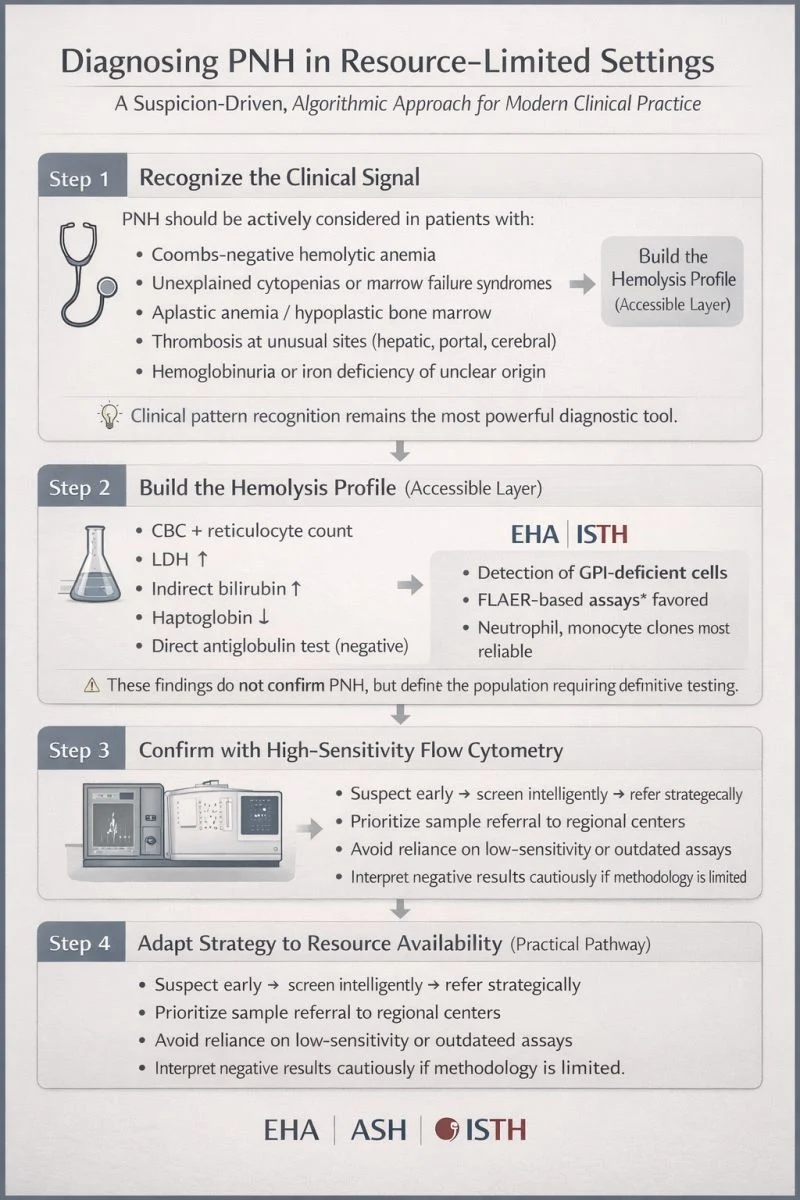
“Diagnosing PNH in Resource-Limited Settings
A Suspicion-Driven, Algorithmic Approach for Modern Clinical Practice
Paroxysmal nocturnal hemoglobinuria (PNH) is frequently underdiagnosed – not because it is rare, but because it is insufficiently suspected. In middle – and low-income settings, the diagnostic gap is driven by limited access to high-sensitivity flow cytometry and the protean nature of clinical presentation.
This necessitates a shift from technology-driven diagnosis to suspicion-driven medicine.
Step 1 — Recognize the Clinical Signal
PNH should be actively considered in patients with:
- Coombs-negative hemolytic anemia
- Unexplained cytopenias or marrow failure syndromes
- Aplastic anemia / hypoplastic bone marrow
- Thrombosis at unusual sites (hepatic, portal, cerebral)
- Hemoglobinuria or iron deficiency of unclear origin
Clinical pattern recognition remains the most powerful diagnostic tool.
Step 2 — Build the Hemolysis Profile (Accessible Layer)
Even in constrained settings, a structured laboratory panel can establish high suspicion:
- CBC plus reticulocyte count
- High LDH
- High indirect bilirubin
- Low Haptoglobin
- Direct antiglobulin test (negative)
- Urine hemoglobin / hemosiderin
These findings do not confirm PNH, but define the population requiring definitive testing.
Step 3 — Confirm with High-Sensitivity Flow Cytometry
According to International Society on Thrombosis and Haemostasis and European Hematology Association:
- Detection of GPI-deficient cells is the diagnostic cornerstone
- FLAER-based assays are preferred
- Neutrophil and monocyte clones provide the most reliable estimate of disease burden
RBC-based assays alone may underestimate clone size, particularly in hemolysis or post-transfusion states.
Step 4 — Adapt Strategy to Resource Availability
In low-resource environments, the optimal pathway is:
Suspect early – screen intelligently – refer strategically
- Prioritize sample referral to regional centers
- Avoid reliance on low-sensitivity or outdated assays
- Interpret negative results cautiously if methodology is limited
Why This Matters
Delayed diagnosis directly translates into:
- Missed prevention of life-threatening thrombosis
- Prolonged morbidity from untreated hemolysis
- Failure to identify bone marrow failure overlap syndromes
Key Insight
PNH is not difficult to diagnose.
It is difficult to think of.
In resource – limited settings, diagnostic excellence begins with clinical suspicion, not technology.”
More posts featuring Heghine Khachatryan on Hemostasis Today.
-
Oct 21, 2026, 00:58Anees Ur Rahman: Completing a Two-Week Clinical Rotation at Haemophilia Treatment Centre Rawalpindi
-
Oct 21, 2026, 00:56Caitlyn Mooney: Pulmonary Embolism in Athletes, Recognition and Return to Sport
-
Oct 21, 2026, 00:54Hani Karrar: Pleased to Share Our Review on Emicizumab in Hemophilia A Management
-
Oct 21, 2026, 00:53Akshay Sharma: HSCT Leads to Sustained Improvements in Sickle Cell Cardiomyopathy for Up to 3 Years
-
Oct 21, 2026, 00:51Prateek Meena: The F. A. T. R. N. Mnemonic for Recognizing TTP
-
Oct 20, 2026, 23:51Registration Is Open for WFH CCS 2027 – World Federation of Hemophilia
-
Oct 20, 2026, 23:44Edward Lee Carter: AF in Nursing Homes – When Stroke Risk Scores Tell Only Part of the Story
-
Oct 20, 2026, 22:59Building Effective Patient Advocacy Through Collaboration Between Patients and Clinicians – EHC
-
Oct 20, 2026, 21:22Intezar Mehdi: When Prolonged Bleeding May Indicate an Underlying Bleeding Disorder