


Tareq Abadl: Irradiated Blood – Safer, Not More Dangerous
Tareq Abadl, Medical Laboratory Specialist and Director of the Blood Bank at Dr. Abdelkader Al-Mutawakkil Hospital, shared a post on LinkedIn:
“Irradiated Blood – Safer, Not More Dangerous.
Did you know that some blood units are actually irradiated before transfusion… not to harm, but to protect the patient?
What Does ‘Irradiated Blood’ Mean?
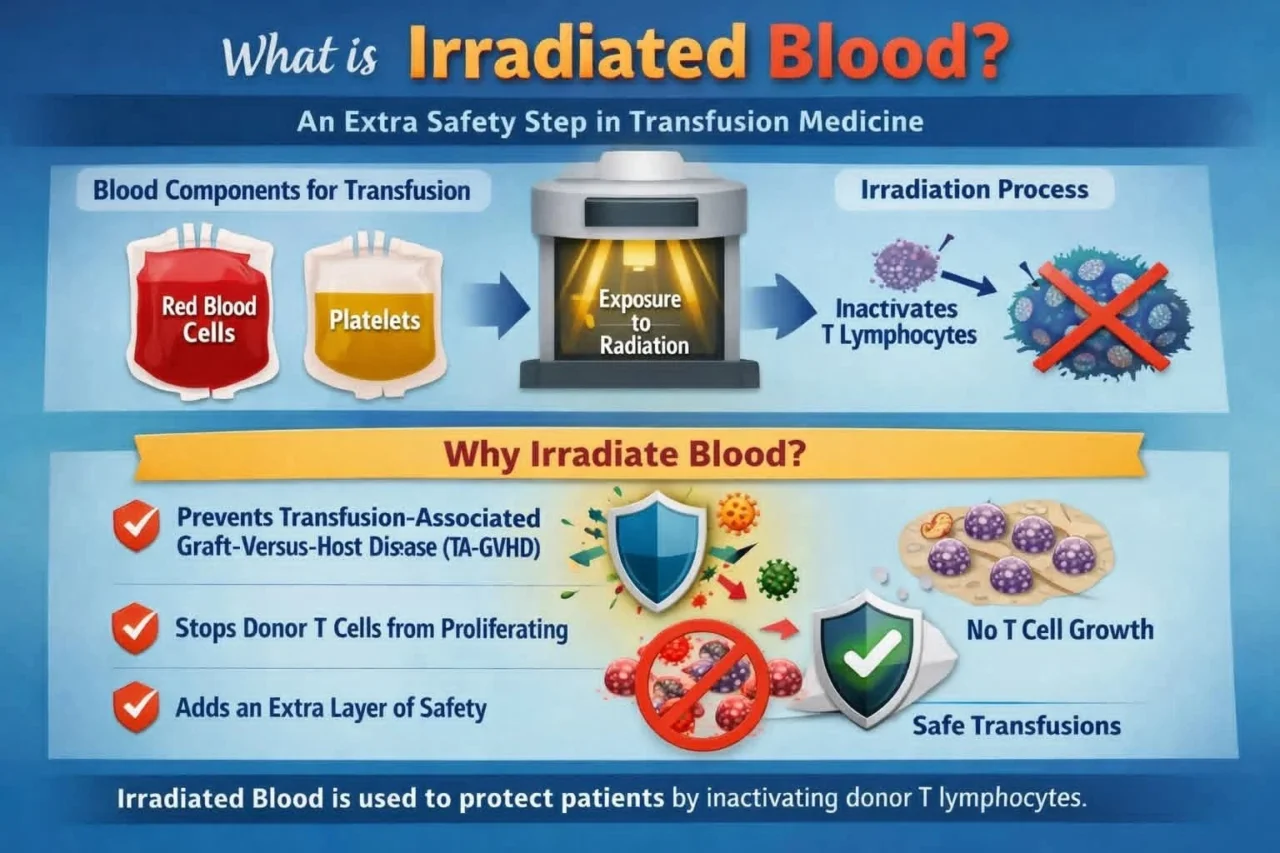
When we say a blood unit is irradiated, it means it has been exposed to controlled radiation to inactivate donor T lymphocytes.
Important:
Nothing ‘toxic’ is added to the blood — this is purely a safety modification.
Why Is Irradiation Needed?
The goal is to prevent a rare but serious complication:
Transfusion-Associated Graft-Versus-Host Disease (TA-GVHD)
This happens when:
- Viable donor T cells attack the recipient’s tissues
- Leading to severe, often fatal immune reactions
According to the AABB, irradiation is used to stop donor T cells from proliferating, eliminating this risk.
Which Blood Components Are Irradiated?
Irradiation is mainly used for cellular components, such as:
- Red Blood Cells (RBCs)
- Platelets
Plasma is not irradiated (it doesn’t contain viable lymphocytes).
Beyond ABO and Rh – Smarter Blood Banking
Modern transfusion medicine is not just about matching blood groups:
Blood banks also select specialized products based on patient needs, including:
- Irradiated components
- Washed red cells
- CMV-seronegative units
As highlighted by Canadian Blood Services, these modifications help reduce transfusion-related risks in specific clinical situations.
Does Irradiation Affect the Blood Itself?
Yes – and this is clinically important:
- Reduced shelf life
- Increased potassium levels
- Structural/biochemical changes in cells
Recent updates from AABB emphasize that irradiated products are used only when clearly indicated because of these effects.
Bottom Line
Irradiated blood is not ‘dangerous blood’ – it’s safer blood for the right patient.
In transfusion medicine:
It’s not just about giving blood…
It’s about giving the right product, to the right patient, at the right time.”
Other posts featuring Tareq Abadl on Hemostasis Today.
-
Oct 20, 2026, 23:51Registration Is Open for WFH CCS 2027 – World Federation of Hemophilia
-
Oct 20, 2026, 23:44Edward Lee Carter: AF in Nursing Homes – When Stroke Risk Scores Tell Only Part of the Story
-
Oct 20, 2026, 22:59Building Effective Patient Advocacy Through Collaboration Between Patients and Clinicians – EHC
-
Oct 20, 2026, 21:22Intezar Mehdi: When Prolonged Bleeding May Indicate an Underlying Bleeding Disorder
-
Oct 20, 2026, 21:06Nandini Pethe: Sharing My Experience as a Caregiver in the HOPE Factor Resource Guide
-
Oct 20, 2026, 16:51Suzan Nakasendwa: A Growing Stroke Challenge in Uganda
-
Oct 20, 2026, 16:38Steve Moon: How Does Smoking Cessation Duration Affect Ischemic Stroke Risk
-
Oct 20, 2026, 16:25Cedrice Mentor: Reducing Platelet Wastage Through Cold Storage
-
Oct 20, 2026, 16:09Thirunavukkarasu Angappan: Can a Purified Fibrinogen Concentrate Replace Cryoprecipitate